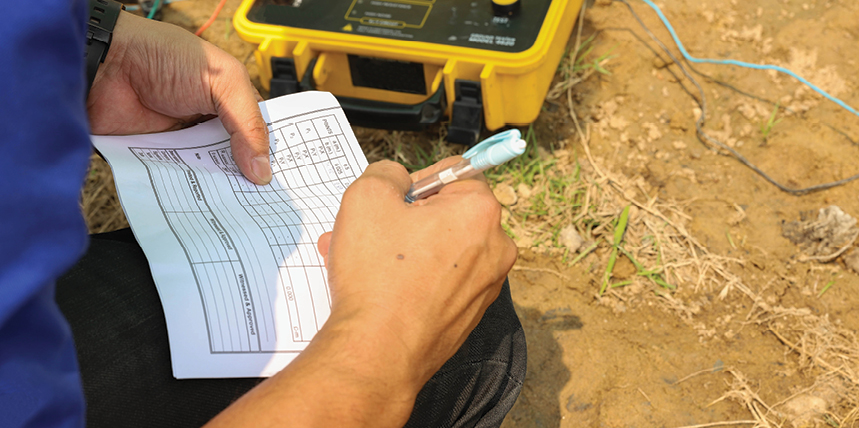
The fall of potential (FoP) test to measure the ground impedance of a data center building or substation is commonly specified as part of start-up and commissioning testing. This test procedure is spelled out in IEEE Std. 81, IEEE Guide for Measuring Earth Resistivity, Ground Impedance, and Earth Surface Potentials of a Ground System. To obtain good data,a properly executed …
Presence of Voltage
Electrical safety standards exist to help us work safely on or around electrical equipment. One key element in avoiding electrical hazards is identifying energized parts. NETA Certified Technicians must do everything possible to eliminate their exposure. 1. What is the best information source for selecting isolation points when preparing an isolation plan?a. Schematic diagramb. Single-line diagramc. Visual inspectionsd. Process and …
CPR: The First Link in the Chain of Survival
In October 2025, the American Heart Association (AHA) released the first full revision of its Guidelines for Cardiopulmonary Resuscitation (CPR) and Emergency Cardiovascular Care (ECC) since 2020. The AHA maintains that cardiac arrest claims more lives globally than colorectal cancer, breast cancer, prostate cancer, influenza, pneumonia, auto accidents, HIV, firearms, and house fires combined. Cardiac arrest is an immediate occurrence, …
Using AI to Do an Engineer’s Work
Recently, I challenged a proprietary AI platform to solve a simple protection problem: Use a CO-9 overcurrent relay to provide backup protection for a 150 MVA transformer; the high-side voltage is 230 kV. Plot the characteristic of the CO-9 versus the transformer damage curve. This was not an especially difficult problem to solve. I wanted to see if it would …
On Voltage Dividers: Applications and Hazards
Voltage dividers are simple devices consisting of series circuits that produce two or more lower voltages from a single source voltage via resistances. This is possible because of this mathematical fact: Given a series circuit with multiple resistances, the sum of the absolute values of all voltage drops across each resistance will equal the source voltage. This fact is illustrated …
Mascots and Electrical Safety Culture Engagement: Are You Reddy and Willie(ing)?
OK, let’s be honest. When you pull NFPA 70E off the shelf, it’s not exactly something you look forward to reading for entertainment. Yes, it matters. (It matters a lot!) But it’s not built to grab your attention or stick with you. And that’s not a knock on the standard. Consensus standards like NFPA 70E serve a clear purpose: to …
NETA: Standing for a Higher Standard
This Summer edition of NETA World arrives at a pivotal moment for our industry. Demand for electrical testing and commissioning has never been higher, expectations have never been greater, and the pace of change continues to accelerate. Across every segment, from data centers to grid modernization, we are being asked to do more, move faster, and deliver with absolute precision. …
Substation Safety: Are You Rock Solid?
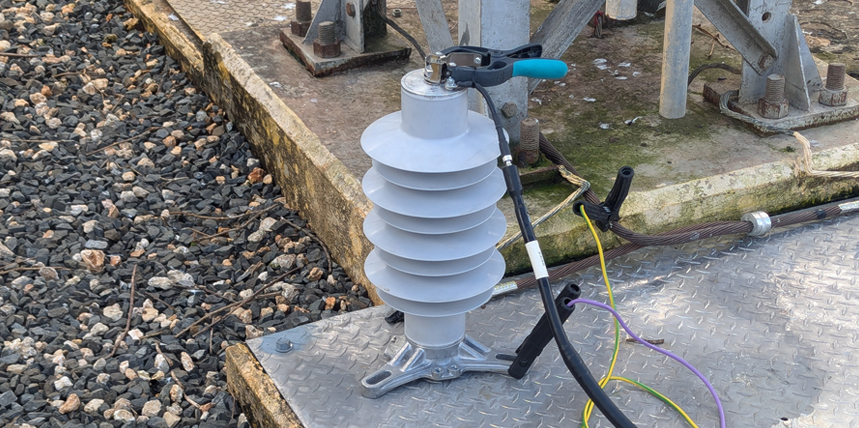
Substation design typically calls for two to six inches of aggregate (crushed rock) as a top layer upon completion of construction. This layer serves several purposes, including improved vehicle access, reduced erosion, and suppression of vegetation. Another significant function of this layer is to provide personnel safety by increasing the allowed (maximum permissible) touch and step potential values versus native …
Acceptance Testing and Commissioning
Electrical equipment is selected by a design engineer for a specific purpose. This includes operating within the manufacturer’s specifications, as well as how it functions within the system. For newly installed equipment, it is important for NETA Certified Technicians to critically verify that all aspects of the equipment work as intended to ensure proper and reliable operation of the electrical …
Safety Tips for Circuit Breaker Maintenance and Testing
Breaker testing and maintenance can expose personnel to many types of hazards. Mitigating them can be achieved in various ways. First, it must be verified that the personnel are qualified to perform the required tasks. The person doing the work must recognize and understand the hazards that may be encountered while performing the tasks. To better understand the many hazards …