Skilled Trades Survey: 5 Key Takeaways for Organizational Leaders

Jim Pauley, National Fire Protection AssociationSummer 2026 Training Talk, Training Talk

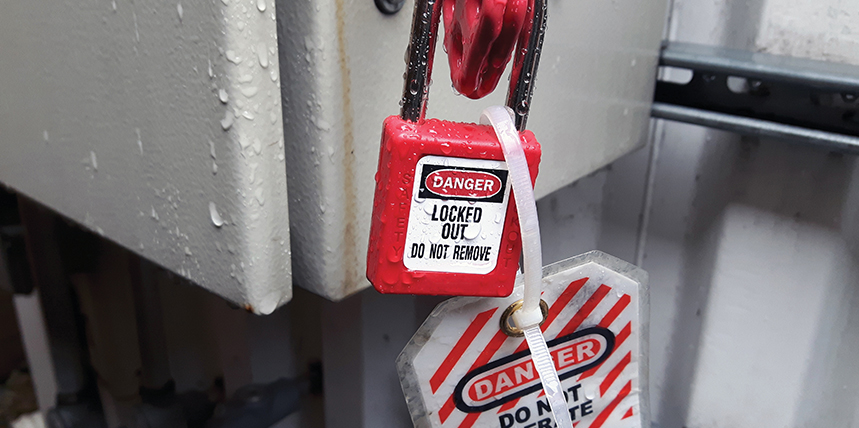
Tens of millions of people work in the skilled trades in the United States. A survey recently conducted by NFPA® sheds light on major trends across these industries, from the anticipated impact of artificial intelligence (AI) in 2026 to tradespeople’s desire for more education and training opportunities. The survey, conducted virtually between October 27 and November 3, 2025, gathered responses …
Equipment Deficiencies and Return to Service under NFPA 70B

Matthew J. Robinson, Sigma C Power Services LLCSummer 2026 Training Talk, Training Talk

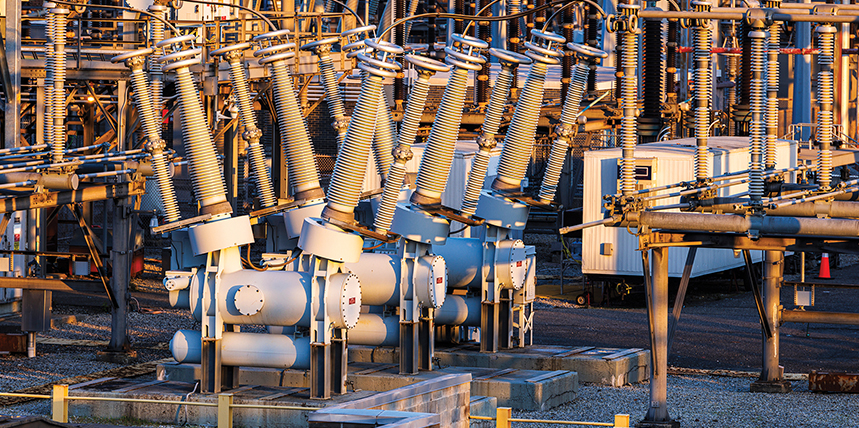
When electrical equipment is designated as non-serviceable, a natural question follows: What comes next? From the standpoint of NFPA 70B, Standard for Electrical Equipment Maintenance, this is a legitimate concern. While the standard provides clear criteria for classifying equipment as serviceable, limited service, or non-serviceable, it offers limited guidance on how to return that equipment to normal operation once deficiencies …

Is Your Electrical Safety Intentional?

Thomas Wire, USC Power ServicesSummer 2026 Training Talk, Training Talk

A proper safety program will be intentional, but what does that really mean? Let’s consider the ground circuits installed in homes and businesses. For normal operation, zero current will be flowing in the grounding conductors. By code, we are required to intentionally install a grounding circuit that we hope will never be used for current, and many measures are in …

Best Practices in Protection System Testing and Validation

Jacob Loyd and Michael Wilson, MeggerTraining Talk, Summer 2026 Training Talk

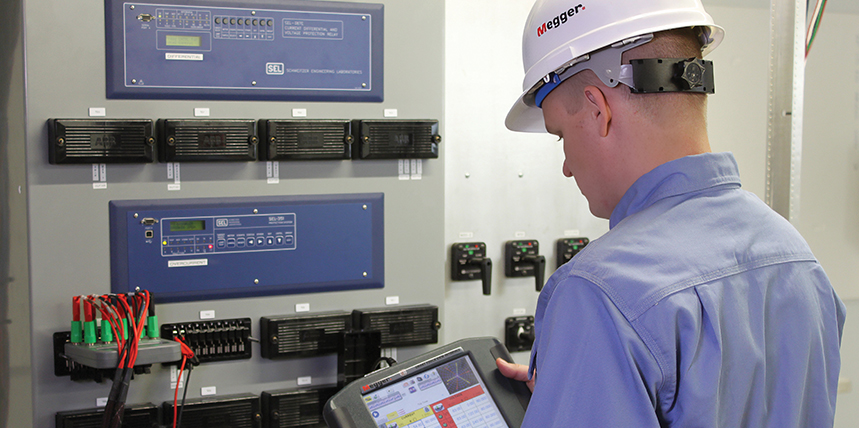
Testing plays a critical role in verifying that the protection scheme is designed to meet its intended purpose. It ensures the field wiring matches the schematics and everything works seamlessly. This article defines function testing and functional testing and explains the advantages and disadvantages of each test. WHY DO WE TEST? While engineers and electricians are highly skilled professionals, they …

Building the Future: Apprenticeships for America’s Electrical Testing Workforce

Robert Harriman, NETATraining Talk, Winter 2025 Training Talk

America’s power demand is increasing at a staggering rate, requiring more infrastructure and, with that, the workforce to ensure it is built, tested, and maintained to the highest standards. However, this is at odds with America’s shrinking labor market, a problem previously highlighted by Steve Park in his NETA World article titled “Workforce Development for NETA Testing Companies.”[1] This deficit …

Leadership Development for a NETA-Accredited Company

Stephanie McLaughlin, Hood Patterson & DewarTraining Talk, Winter 2025 Training Talk

Before joining Hood Patterson & Dewar (HP&D), I worked in the luxury automotive industry, where I managed an instructional design team for an organization responsible for the distribution, marketing, and customer service for their brand of products in the United States. Our team was responsible for all online and in-person sales and leadership training curricula for their dealerships in the …

Batteries: What Are The Options?

Andrew Sagl, MeggerTraining Talk, Winter 2025 Training Talk

As the world increasingly turns to renewable energy sources and grid-scale energy storage,  understanding the various battery technologies available is beneficial. Each type of battery offers unique characteristics that make it suitable for specific applications, from grid stabilisation to backup power systems. This article explores the main types of stationary batteries, their underlying chemistry, typical applications, and the pros and …

Enlightening the Minds of the Electrical Industry’s Next Generation: The NFPA Electrical Cycle of Safety

Corey Hannahs, National Fire Protection AssociationTraining Talk, Winter 2025 Training Talk

Whether the path you are forging in the electrical industry leads you to a role as an engineer, electrician, or inspector, one commonality is that your education will be based heavily on NFPA 70®, National Electrical Code® (NEC®). But does the NEC provide all that is needed to achieve comprehensive electrical safety?  Electrical safety based on NEC requirements must be …

Tariffs, Failures, and the Case for Technician Training in a Tough Economy

Emily Alcantar, AVO Training Institute by MeggerTraining Talk, Winter 2025 Training Talk

In an uncertain economy, every dollar counts — and for utilities and industrial firms, the temptation to cut training budgets is strong. But when it comes to electrical systems, that’s a gamble few can afford. Electrical failures cost U.S. facilities over $1.5 billion annually in direct damage, not to mention the ripple effects of downtime, safety risks, and regulatory penalties. …

Guide to Low-Voltage Distribution Systems

Ben Gulick, Maddox Industrial TransformersSummer 2025 Training Talk, Training Talk

A low-voltage distribution system is the final stage of the electric grid. It is the infrastructure that moves electric power inside buildings and dwellings. Let’s define a low-voltage distribution system. These systems rely on transformers (Figure 1) to step utility voltages down to usable levels. The most common voltages in such systems in the United States include 120, 240, 208, …