

Before joining Hood Patterson & Dewar (HP&D), I worked in the luxury automotive industry, where I managed an instructional design team for an organization responsible for the distribution, marketing, and customer service for their brand of products in the United States. Our team was responsible for all online and in-person sales and leadership training curricula for their dealerships in the country.
Our CEO at the time believed that customers were looking for luxury vehicles as well as luxury experiences in sales and service. He believed that cultures within the dealerships determined whether customers would experience the level of luxury they expected. He also believed that the leaders within the dealerships were directly responsible for creating the necessary cultures. Therefore, he envisioned a leadership program built specifically for these leaders. Thus was the launch of the “Driven to Delight” mantra that would become the guiding principle for us in the leadership training department.
Personally, I have experienced great leaders as well as…we’ll say not-so-great leaders. Intuitively, I enjoyed my work and felt more engaged under the great leaders. After seeing the success of this leadership program and the impact of leaders who engaged themselves and committed to creating Driven to Delight cultures, I became a believer in the importance of providing leaders with development opportunities.
Everyone at Hood Patterson & Dewer is a leader. Whether they’re leading themselves, a project, or a team — everyone is leading something. At HP&D, we have utilized various approaches in providing leadership development opportunities.
This article shares what we have done — and are still doing. I hope that at least one of these ideas will inspire you and that you can leverage them in your organization. In the world of training and development, there are always new things to learn from each other and new ideas to explore.
LEADERSHIP TRAINING TOPICS
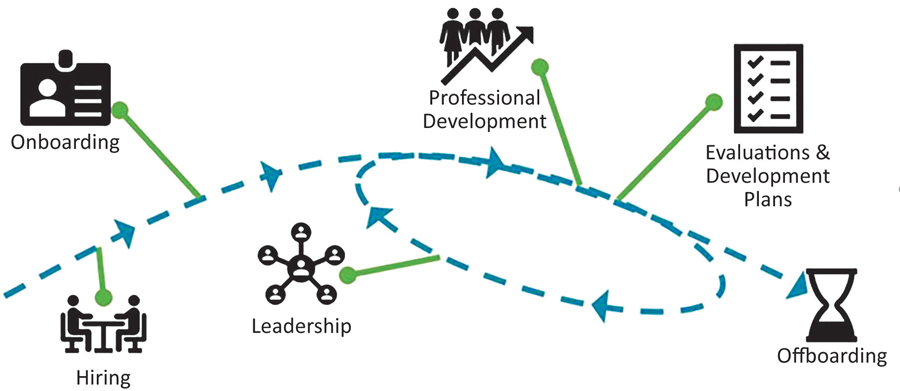
When we created our employee development program, The Employee Journey, leadership development was identified as one of the main elements. Our intent was to provide leadership development opportunities to all employees, including current managers, emerging leaders, and individual contributors.
In collaboration with senior leaders, we determined it would be beneficial to create a list of leadership training topics for the leadership development program. Here is our brainstorming list in no particular order:
- Coaching and providing feedback
- Mentoring
- Hiring and interviewing
- Managing vs. leading
- Motivation and engagement
- Change management
- Strategic growth
- Managing effective meetings
- Having tough conversations
- Strengths-based leadership
- Developing others
- Leading in a volatile, uncertain, complex, and ambiguous (VUCA) environment
- Conflict resolution
- Leading innovation
- Goal setting
- Problem solving
- 360-degree leaders
- Effective communication
- Delegating and empowering
- Growing a team
- Emotional intelligence (EQ)
- Building trust and relationships
- Tactical management topics
- Time management
- Team health and organizational health
- Servant leadership
- Evaluating others
We decided to create a series of training courses for each topic, and so far, we have created courses on approximately 60% of these, with plans to develop the rest.
DEVELOPMENT MEDIUMS
Once we had our brainstorming list, we needed to determine how we would deliver the content to our learners. The mediums we have used so far include:
- Leadership mentoring
- In-person training, including:
- Lunch and learn (L&L) training classes
- Standalone leadership workshops
- Leadership cohorts
- Online training (eLearning)
- Core competency books (CCBs)
- Young professionals groups
Leadership Mentoring
All new leaders are matched with experienced leaders to answer any questions and provide any guidance or advice while they transition into their new roles. This leadership mentoring program is designed to last for the first year. We have found that it is essential to provide new leaders with a mentor who can guide them effectively during this transition process. All of our leadership mentors are volunteers who want to help, which means they are much more likely to take it seriously and actively reach out to their mentees.

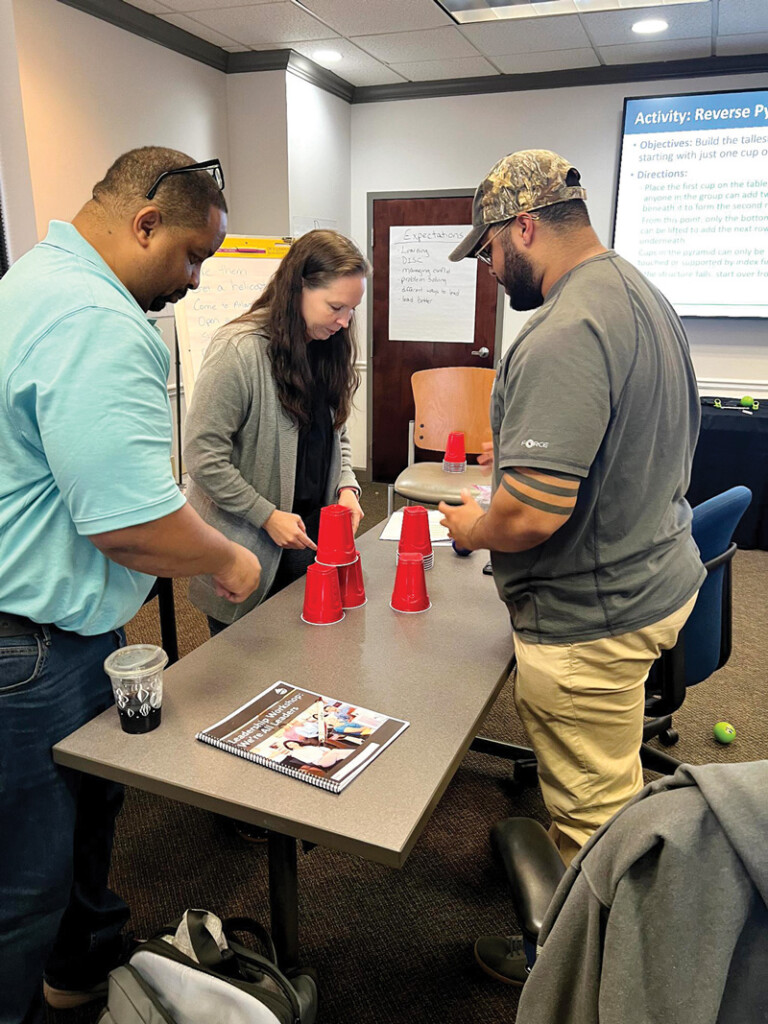
Leadership Workshop: “We’re All Leaders”
As Employee Development Director, I reach out periodically to the mentor and the mentee to confirm how the process is progressing. We have received fantastic feedback from mentees as well as mentors, including this quote from one of our new leaders: “I **cannot** stress how important it has been to have someone I can confide in and get advice from. This year has brought many new challenges, and I’ve been grateful to have help.”
In-Person Training
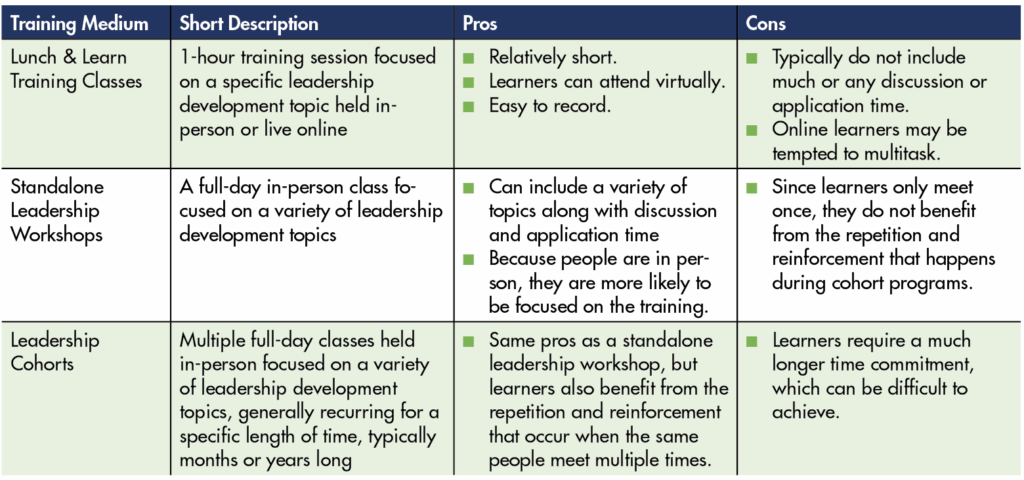
Leadership training lends itself well to in-person, live delivery, as it often involves discussions around real-world scenarios. Within HP&D, we offer lunch and learn (L&L) training classes, standalone leadership workshops, and leadership cohorts. Each medium has specific times when it is the best fit within the program, and we use each one as appropriate. Above is a bit more about each one.
Online E-Learning
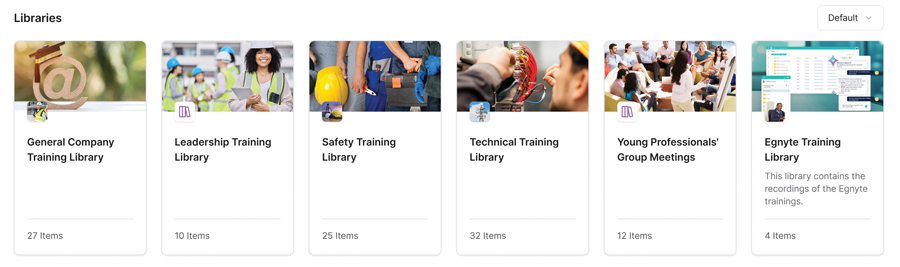
Our learning management system (LMS) allows employees to complete eLearning courses virtually. We offer a variety of courses, including a training library dedicated solely to leadership development. Many of our leadership training courses are recordings of leadership L&L courses. We have found this is an efficient way to deliver a training course in multiple mediums, allowing learners to select the medium that works best for them. Our training libraries also include eLearning courses focused on technical, safety, and general topics.
Core Competency Books
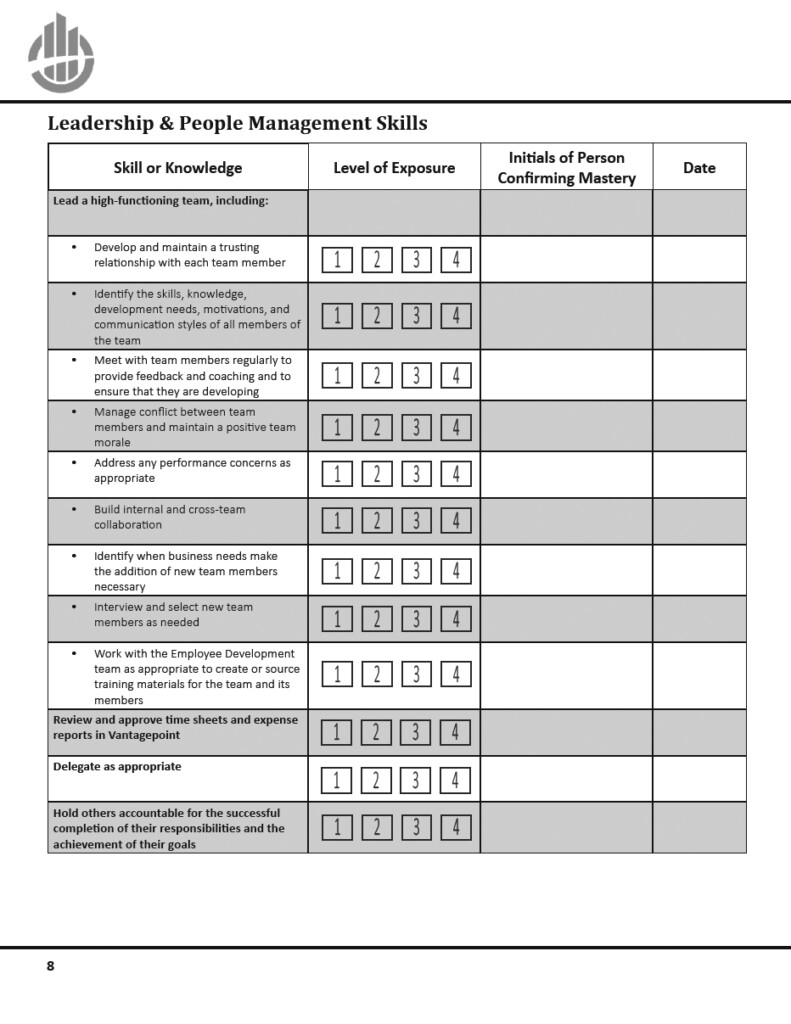
Our core competency books (CCBs) provide new leaders with a comprehensive list of the tasks that must be completed during the transition and a list of leadership and people management skills to be mastered throughout their tenure in the position. Each role has a unique CCB. These books empower employees to take the reins of their onboarding and professional development, serving as a valuable tool for mentors and supervisors to facilitate development discussions throughout the employee’s career.
Young Professionals Group
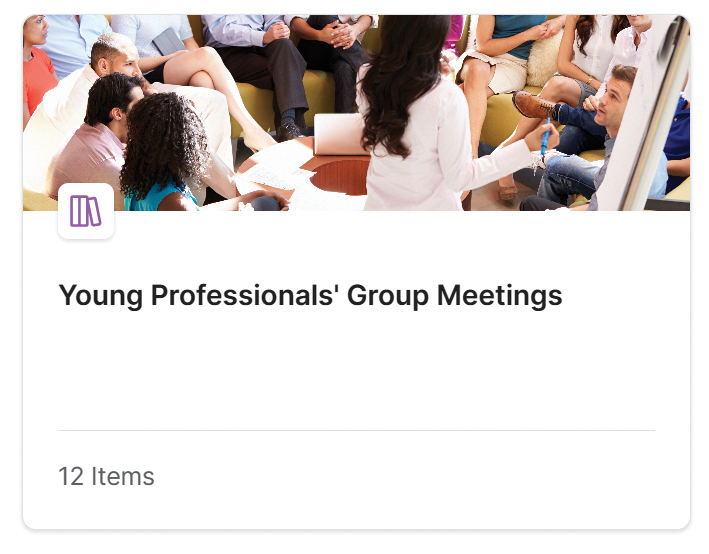
The Young Professionals Group meets monthly, offering young and young-at-heart professionals an opportunity to gather and discuss a relevant business topic. Each month, we invite a different leader to share their career journey and speak about a topic that’s important to them.
For example:
- The HP&D President talked about servant leadership.
- The VP of Operations spoke about the importance of seeing the bigger picture.
- The CFO demonstrated how to interpret financial documents.
- The HP&D CEO and President shared the best career advice he ever received.
- The Safety Director talked about how safety processes can impact a company.
- The Regional Area Manager for Virginia shared his career journey and the project management lessons he learned along the way.
- The Sales Manager spoke about the importance of client experience and communication
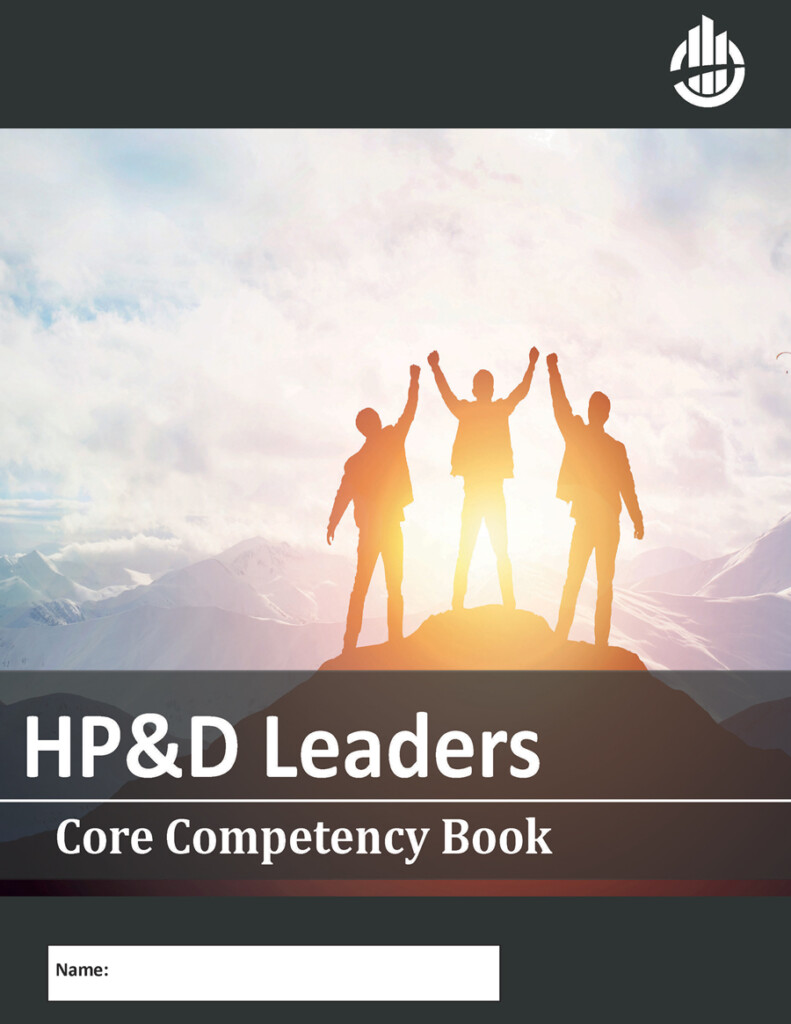
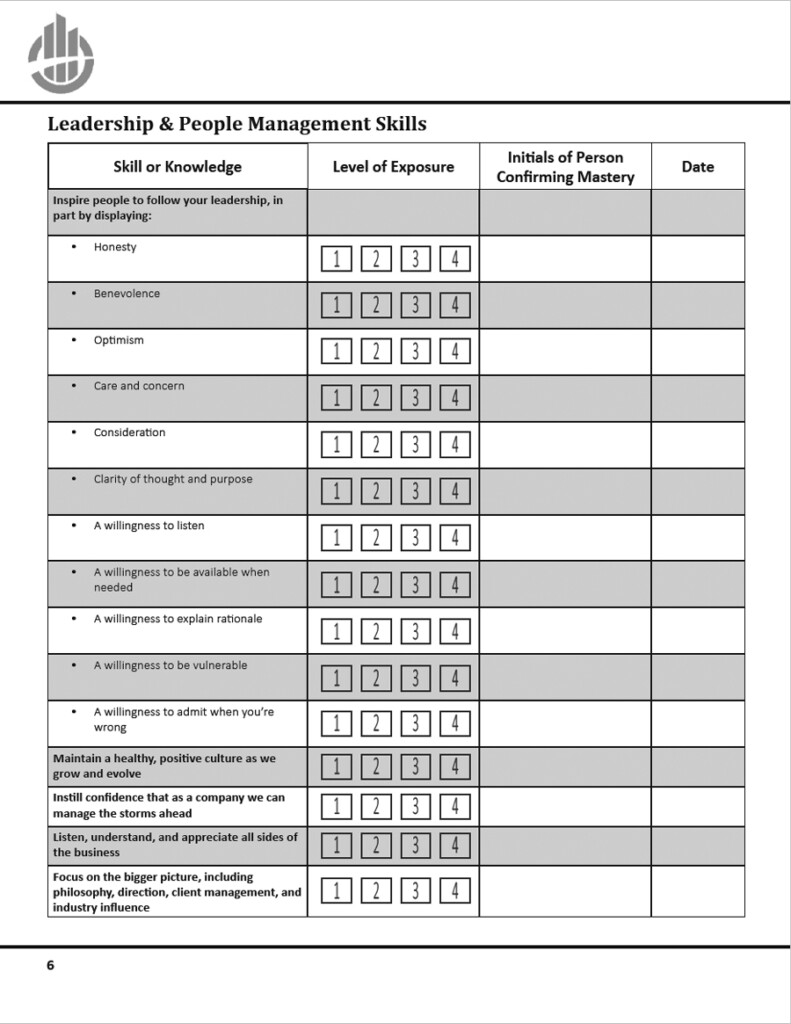
Screenshots from HP&D Leaders CCB

The purpose of these meetings is to connect experienced leaders with others within the organization, including new leaders, emerging leaders, less-experienced employees, and individual contributors. Since we believe that everyone leads something or someone, we created this group to cultivate the leadership skills that are vital to our success.
All meetings include a Teams link, allowing anyone to join from anywhere. We recently began recording these meetings so people can watch them later if they are unable to join live.
GETTING STARTED
When starting new leadership development initiatives, one of the biggest decisions to make is whether to utilize internal resources or leverage external resources. If you decide to begin creating leadership development opportunities internally, I encourage you to select someone who can dedicate themselves fully. In a testing firm, it can be challenging for a billable employee to work on non-billable projects, such as creating a training course or leading a small group. A dedicated resource is more likely to execute your expectations.
When internal capacity is limited, utilizing external resources is a great way to get started. Numerous providers are available, including LinkedIn Learning, Dale Carnegie Training, and John Maxwell Leadership Training, among others. While some free materials are available, many external providers require compensation.
Personally, I prefer a hybrid approach to leadership development. Internally, we develop the courses and lead the small groups that require the most customization to fit our culture. We focus on servant leadership, which is leading by caring for others. Since this has been key to our success, we have found we are best suited to creating materials around this topic and leading small group discussions.
However, there are times when an external leadership resource is the most sensible choice. For example, when we receive training on a specific assessment tool, such as DISC, or a straightforward topic, such as coaching, external resources can provide fresh perspectives and convey this information effectively.
CONCLUSION
At the end of the day, my best advice is just to get started. We started slowly; now we have multiple initiatives all moving forward concurrently.

Stephanie McLaughlin is Director of Employee Development & Marketing for Hood Patterson & Dewar, where she led the development and implementation of HP&D’s employee development program that supports employees in offices in five states, including a large team of registered Professional Engineers (PEs), degreed engineers, and career test technicians. Stephanie specializes in analyzing learners’ needs and then designing and developing components to meet those needs. She has experience creating development initiatives in the automobile, hospitality, and cloud computing industries, as well as developing initiatives for Gwinnett County (Georgia) Public Schools. Stephanie earned a BS in technical and professional communications at Southern Polytechnic State University and an MBA from Georgia Institute of Technology as well as an education certificate from Brenau University.