
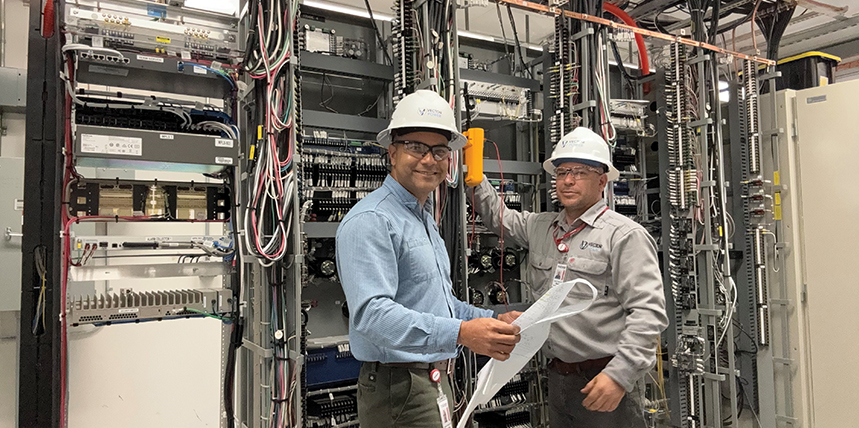
We work around electricity every day.
We are exposed to hazards every day.
But what’s the most dangerous task YOU do every day?
DANGEROUS TASKS
The Starting Point: Turn It Off!
My guess is you treat switching operations like surgery—plan the task, determine the proper shutdown sequence, see which loads are affected, check the one-line diagrams, verify the labels, double-check the switching order, figure out the lockout/tagout needs, and execute the tasks.
Dangerous? It can be, but you have likely put a lot of brain cells into the situation to help minimize risk.
The Part in the Middle: Gotta Test It Now
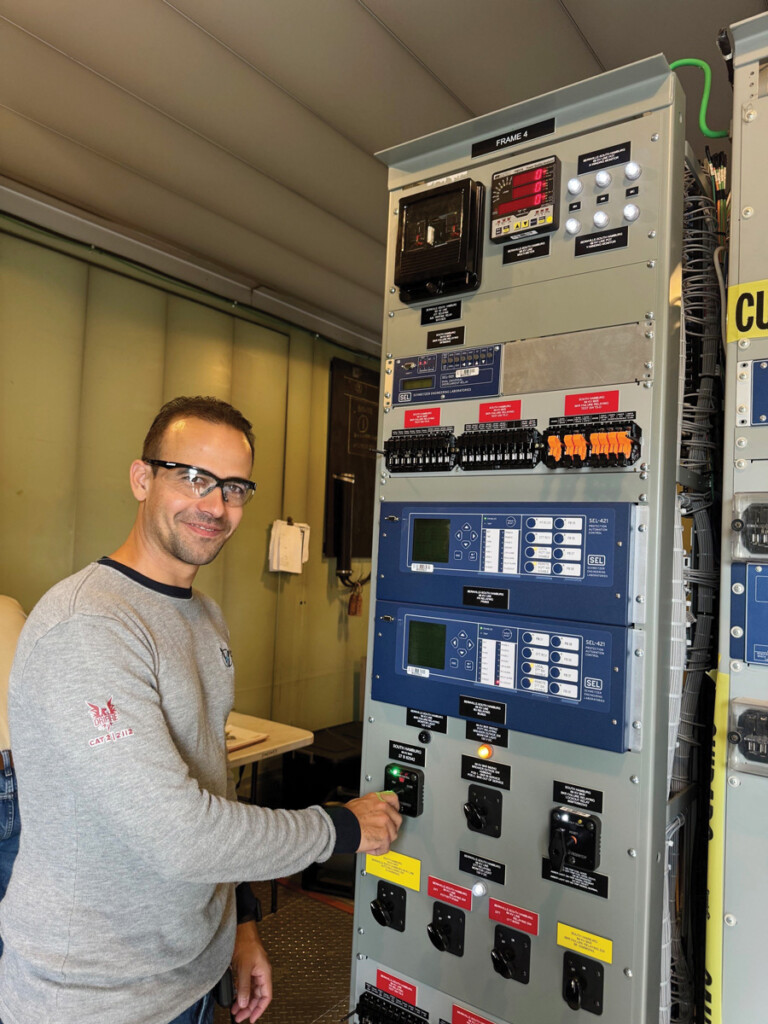
Circuit breakers, medium-voltage cables, power transformers, protective relays, switchgear lineups—you have switched everything off, so the testing part is probably routine. You’re qualified, you know what you’re doing, you execute the tasks.
Dangerous? Not as much—but there are elements of risk.
The Last Part: Turn It Back On!
Put it all together, account for all your tools, double- and triple-check the cable connections, restore the settings if you moved them, and clean up the mess. It’s time to step back and turn it back on.
Dangerous? Shouldn’t be…You did, after all, check everything out. Just make sure you aren’t in front of the gear or next to the transformer when you do turn it back on.
THE MOST DANGEROUS TASK?
OK—we turned it off, we tested the equipment using the NETA standards, and we turned it back on when we were done. So what is the most dangerous task in all of that?
Testing for voltage using portable test instruments.
Arguably, NFPA 70E® doesn’t treat switching as the riskiest moment in electrical work. Your real exposure shows up in using portable meters to test and verify energized electrical conductors and circuit parts.
That includes testing for the absence of voltage, testing for the presence of voltage, troubleshooting, load checks, verifying lockout scenarios, proving circuits before touching them…anything involving portable test instruments.
You do this work every day. You also have opportunities to take more shortcuts here than anywhere else.
These exposure combinations will likely put you closer to an arc or shock event than a breaker operation or a switching procedure, not to mention how many times a day you might (or should) be doing this.
Portable metering steps place your hands and body closer to energized parts than switching ever does.
- You lean in.
- You open covers.
- You reach into unknown conditions.
NFPA 70E COVERS IT
NFPA 70E®, Standard for Electrical Safety in the Workplace®, centers your risk right here, and it addresses the process for verifying the absence of voltage in a few key sections. The primary procedure for verifying absence of voltage is detailed in Section 120.6, and it is supported by additional test instrument requirements in 110.6(E), as well as lockout/tagout procedural elements in 120.5(B)(6).
Section 120.6, Process for Establishing and Verifying an Electrically Safe Work Condition, details step-by-step procedures, including:
- Using an adequately rated portable test instrument
- Testing each phase conductor or circuit part, both phase-to-phase and phase-to-ground
Section 110.6(E) Operation Verification, provides guidance on verifying the test instrument’s operation on a known voltage source before and after testing for the absence of voltage.
Let’s look at a few common scenarios that lead to injury when testing for voltage.
Scenario One: What About Those Instrument Ratings?
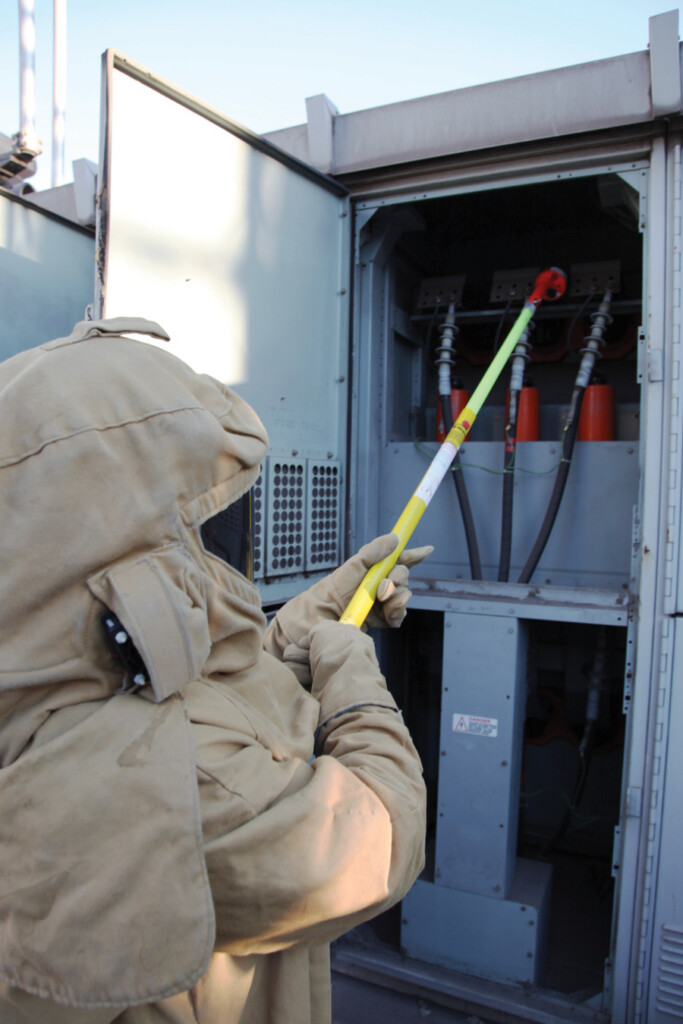
Portable test instrument ratings and misapplications are likely a failure point nobody plans for, even though a portable meter is part of your PPE arsenal. NFPA 70E requires test instruments to be “adequately rated” for the environment and the use.
Many field failures of portable meters come from:
- CAT II meters used on CAT III or IV systems
- Leads with cracked insulation
- Fused leads replaced with solid wire.
- Meters not reverified after drops or rough handling
- Using the wrong voltage class of meters
When meters fail, they can fail violently, and they can become ignition sources.
And think about this: You protect your hands and face with PPE, but you will trust an unverified test instrument that is just inches from an exposed (and possibly energized) electrical component!
Scenario Two: Live-Dead-Live Is Not a Ritual, It’s a System Test
If you follow NFPA 70E, the standard requires live-dead-live circuit verification (Section 110.6(E) Operation Verification).
Many times, this simple, but very important, task is treated as a box to check on the paperwork—unless you make it an ingrained part of your safety DNA.
Think about these typical activities:
- You are going to touch a (possible) known live source
- You test your circuit
- You do your work
Most failures hide in actions that you do not check:
- You do not confirm your meter works before the dead test (live-dead-live)
- You skip the second live source verification (live-dead-live)
- You test at one point instead of all of the conductors you are about to work on
- You trust (ASSume!) the disconnect orientation without confirming which is line and which is the load.
When you touch a circuit part that you believe is dead—and you haven’t followed the necessary steps to verify all of it—this is where shock injuries happen!
REMBEMBER THIS: DON’T MAKE TEMPORARY PROTECTIVE GROUNDS THE MISSING CONTROL POINT
OK, you’ve tested the system for absence of voltage (70E requires us to test for the absence of voltage “at each point of work.”) and you have locked out everything. What needs to happen before you actually work on the equipment?
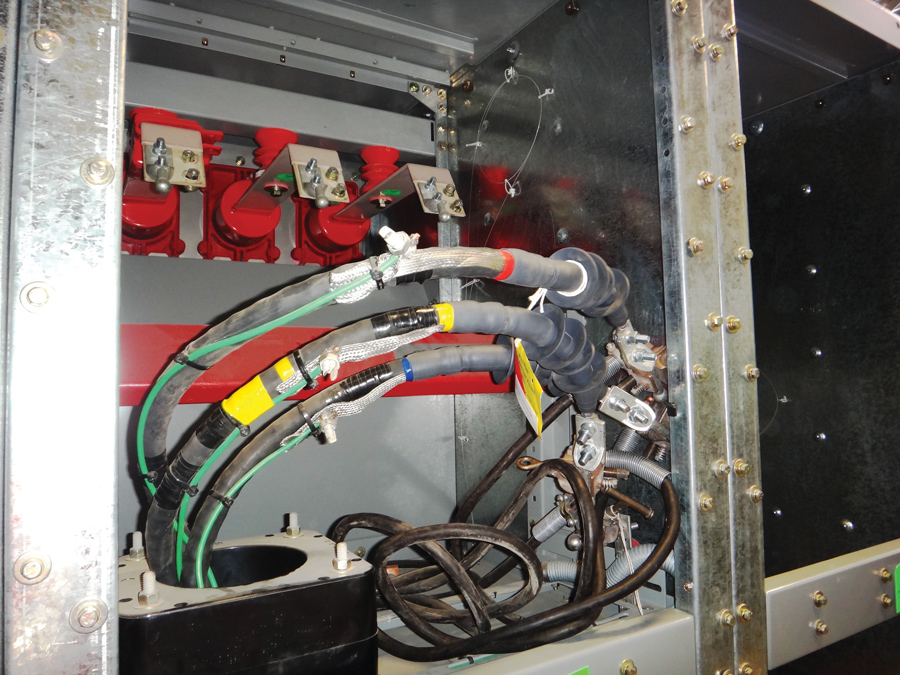
You should be placing temporary protective grounds on large systems after testing for voltage…and I’ll bet you rarely ground the smaller systems down the line. NFPA 70E addresses temporary protective grounding as a requirement, not an option, so be careful here.
Those requirements are addressed in Section 120.6(8) Process for Establishing and Verifying an Electrically Safe Work Condition, where 70E tells us that temporary protective grounding equipment is required where there is a possibility of induced voltages, stored electrical energy, or the potential for contact with energized conductors during the work.
An increase in the risk of injury shows up when:
- Induced voltage sits on isolated conductors.
- Backfeed appears through control circuits.
- Capacitors have a residual charge.
- Parallel feeders share stray voltages.
- Temporary generation is misapplied.
- Tie breaker or alternate feed circuits are coming from a different source.
You test it once, and you remove your rubber insulating gloves. You ASSume the circuit is safe. But what about all of the touch points? Did you map all of the possible scenarios, even on the smaller circuits? Did you sweep all of the exposed conductors and circuit parts? It’s “the other parts” that can sneak up and get you with unexpected energy that finds your hands and body.
WRAP IT UP: DO THESE FIELD CORRECTIONS AND REDUCE RISK
Challenge yourself to do these simple tasks to reduce risk and improve your safety DNA when it comes to testing circuits with portable instruments:
- Use the correct PPE for circuit verification work.
- Inspect portable meters and leads every day, before every use.
- Replace any lead that shows wear. No exceptions!
- Use properly rated meters only. Match the environment.
- Execute a complete live-dead-live process every time.
- Place temporary grounds on conductors after verification on medium- and high-risk systems—and be thorough in analyzing where to place them, including the higher-risk low-voltage circuits.
- Do not remove rubber insulating gloves until temporary protective grounds are in place.
- Test. Before. Touch.
These risk controls cost very little, don’t take much time….and ultimately can prevent a high percentage of electrical injuries related to metering tasks.
WHAT’S THE FINAL MESSAGE?
You might perform switching tasks a few times a week, maybe a few times a month. You probably do NETA performance testing on electrical equipment all the time. But throughout these processes, you should be performing portable metering checks/tasks dozens of times a day….placing you in harm’s way each time.
Real exposure often happens in the work you treat as routine….the task that feels normal often causes the most injuries. Don’t let testing for the absence of voltage become routine.
When you think about it, you don’t need more rules. You need vigilant discipline where your hands and body are exposed the most, especially when using portable test instruments.
So stay sharp, keep on your game, and test before touch!

Ron Widup has worked in the electrical power testing and maintenance industry for more than 45 years. He serves as Chief Technical Marketing Officer for Vector Power in Plano, Texas. Ron has been an active member of several NFPA technical committees, including NFPA 70E, NFPA 70B, NFPA 790/791, and NEC CMP-11. He serves on the InterNational Electrical Testing Association (NETA) Board of Directors and the NETA Standards Review Council. He is also Chairman of IEEE P902, IEEE Recommended Practice for Maintenance and Operational Safety of Electrical Power Distribution Systems in Industrial and Commercial Facilities. Ron currently serves as Chairman of the Texas State Technical College (TSTC) System Board of Regents. His credentials include NETA Certified Level 4 Senior Test Technician, State of Texas Journeyman Electrician, NFPA Certified Electrical Safety Compliance Professional (CESCP), and Senior Member of IEEE.