Residual Voltage in Power Cables: A Little-Known Hazard in Field Testing

Nilson Baroni Jr and Daniel Bento, Baur USA Corp; Danilo de Souza, UFMT; and Marcelo Plantier, Baur BrazilFall 2026 Industry Topics, Industry Topics

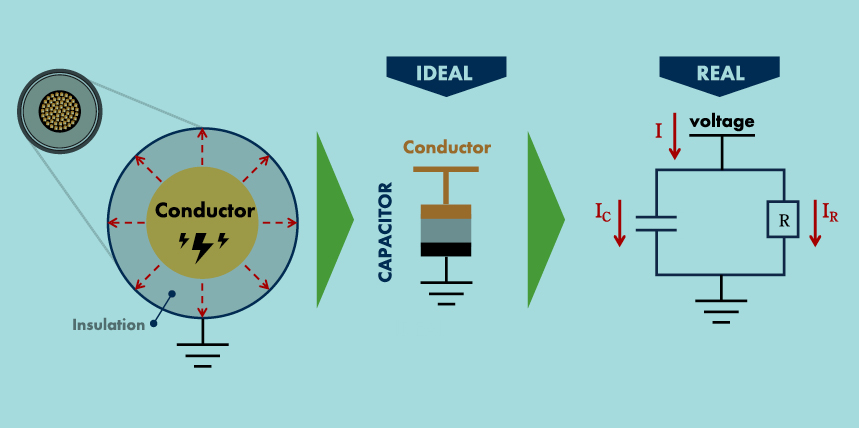
Verifying the integrity of power cable insulation is an essential step to ensure the reliability and safety of electrical systems. Applied-voltage tests are widely used before commissioning new cables and during maintenance and diagnostic activities throughout their service life. These tests enable identification of insulation defects, dielectric degradation, or installation issues that could lead to operational failures, supply interruptions, or …
Techniques for Conducting Fall-of-Potential Testing in Adverse Conditions

Andreas Burkart, AEMC, and Matthew J. Robinson, Sigma C Power ServicesFall 2026 Industry Topics, Industry Topics

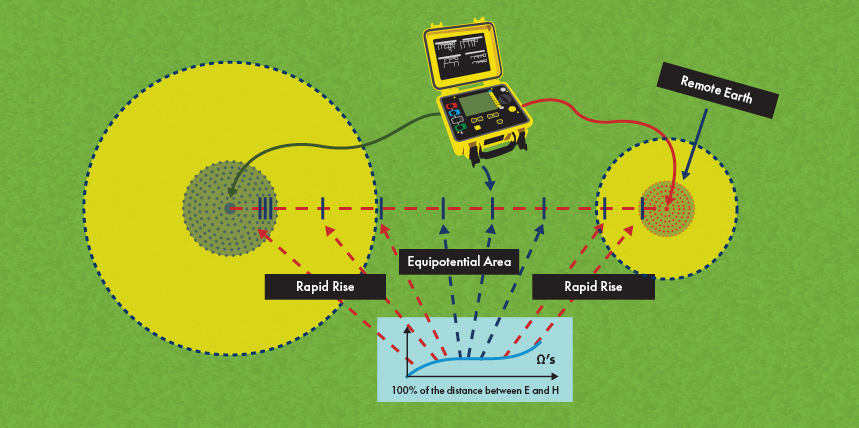
Fall-of-potential (FOP) testing is widely regarded as one of the most reliable methods for evaluating grounding system performance. Under ideal conditions, the procedure is straightforward: Electrodes are driven into the soil at prescribed intervals, measurements are recorded, and resistance values are calculated with a high degree of confidence.  In practice, however, technicians often encounter less-than-ideal environments. Urban and industrial sites …

Transformer Ground Differential Element Behavior with CT Error and Misoperation Event Analysis

Seth Barnes and Tim Condra, Tennessee Valley Authority; Joshua Hughes, Qualus; and Akram Saad, University of Tennessee at Chattanooga & Quanta TechnologyFall 2026 Industry Topics, Industry Topics

This paper analyzes the ground differential or restricted earth fault (REF) element for transformer protection and compares its performance against various levels of current transformer (CT) error and saturation. An empirical analysis was performed to determine the limits of today’s common digital relays as they experience CT errors. This can help engineers develop general guidelines for designing protection systems related …

A Partial Discharge Case Study from an Insurance Perspective

Vincenzo Pagliuca, The Hartford Steam Boiler Inspection and Insurance CompanyFall 2026 Industry Topics, Industry Topics

I have spent many months researching how, as an equipment insurer, to enhance our understanding of underwriting risk by improving the assessment of electrical risk at medium- and high-voltage facilities through predictive analytics. The answer I found was partial discharge (PD) testing that uses touchless acoustical methods with intrinsic AI capability. Partial discharge is a localized voltage discharge within an …

Artificial Intelligence in Practice: Lessons and Applications for NETA Accredited Companies (Part 1)

Valer Banushi and Adis Talović, RESA PowerFall 2026 Industry Topics, Industry Topics

Artificial Intelligence (AI) is rapidly influencing industries worldwide, and the electrical testing field is no exception. This two-part article presents a comprehensive perspective on the role of AI within the electrical testing industry. It offers insights into future applications for NETA Accredited Companies, while considering opportunities and challenges AI may bring to the electrical testing industry.

NETA QEMC Partners

NETAFall 2026 Industry Topics, Industry Topics

WHY HIRE A NETA-VERIFIED QEMC AND QEMW TEAM?  Facility owners, utilities, contractors, and industrial operators need qualified organizations and personnel to perform maintenance in support of NFPA 70B. One of the most effective ways to achieve this objective is to partner with an electrical contractor that is a NETA Qualified Electrical Equipment Maintenance Company (QEMC) staffed by Qualified Electrical Equipment …