
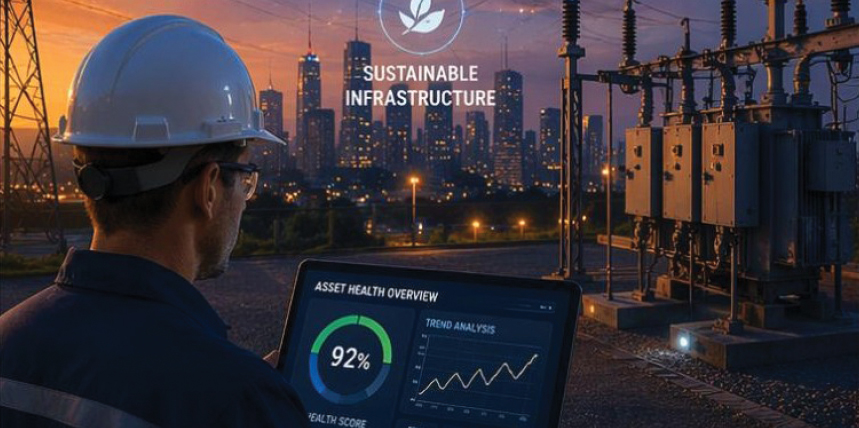
Artificial Intelligence (AI) is rapidly influencing industries worldwide, and the electrical testing field is no exception. This two-part article presents a comprehensive perspective on the role of AI within the electrical testing industry. It offers insights into future applications for NETA Accredited Companies, while considering opportunities and challenges AI may bring to the electrical testing industry.
VALER BANUSHI—IN THE FIELD: SAVING TIME AND ENSURING SAFETY
For a field technician, time and accuracy are paramount. AI agents deployed on mobile devices can act as an interactive technical library, but the operational realities demand perfection.
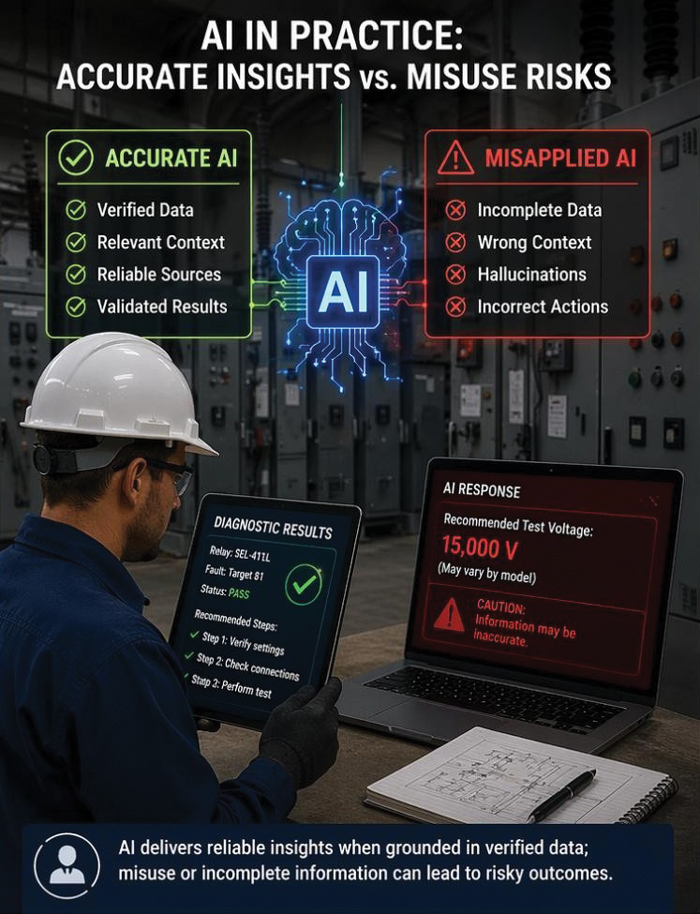
Imagine a NETA Level 3 Certified Technician troubleshooting an unexpected trip on a complex protective relay system during a high-stakes plant turnaround. Instead of paging through hundreds of pages of OEM manuals in a PDF viewer, the technician queries the AI: “What are the standard diagnostic steps for a Target 81 fault on an SEL-411L relay under these specific load conditions?”
When backed by a secure, internal database (a process known as retrieval-augmented generation (RAG), the AI accurately pulls the exact diagnostic sequence from the manufacturer‚’s latest documentation, cross-references it with recent maintenance logs, and presents a step-by-step testing procedure. It saves the technician hours of manual searching, allowing them to restore power safely and efficiently.
MISAPPLICATION: HALLUCINATIONS
AI hallucinations are a unique phenomenon associated with AI systems. If AI relies on generalized internet training data rather than a strictly controlled internal knowledge database, the results may be unsuccessful.
For example, a technician might ask for the injection testing parameters for a specific legacy medium-voltage circuit breaker. The AI, lacking the exact manual, might stitch together parameters from three similar but fundamentally different breaker models. It might confidently output an incorrect trip curve or suggest a test voltage that exceeds the equipment’s insulation rating. If the technician blindly follows this misapplied information, it could result in severe equipment damage or compromised system reliability.
IN THE OFFICE: EMPOWERING PROJECT AND RESOURCE MANAGERS
Behind every successful field operation is a project manager balancing resource allocation, equipment availability, and strict outage windows. Here, AI agents are evolving from simple text generators into planning assistants.
Consider a project manager tasked with planning a week-long, plant-wide shut down for comprehensive NETA maintenance testing. The manager feeds the AI agent the scope of work, the roster of available technicians, including their NETA certification levels, and historical data from previous outages at similar facilities.
The AI agent successfully processes this multivariable puzzle and accurately predicts that testing the facility‚’s aging transformers will take 15% longer than standard baselines, flags a scheduling conflict where two teams need the same primary injection test set simultaneously, and suggests an optimized daily workflow. The result is a highly efficient schedule that maximizes the limited outage window and minimizes costly overtime.
Misapplication: The Context-Blind Schedule
The danger arises when AI misapplies logic by missing crucial, real-world context. For instance, it might generate what appears to be a flawless operational schedule, completely ignoring site-specific safety protocols, including mandatory lockout/tagout (LOTO) clearance delays, union shift-change rules, or the extra time required to navigate a facility with strict protocols.
Because AI lacks common sense and only understands the data it was explicitly fed, a project manager who takes AI‚’s schedule at face value could quickly find their teams bottlenecked on day one. The result is a blown budget, a frustrated client, and a delayed return to service.
SECURING THE FUTURE: THE HUMAN IN THE LOOP
The integration of AI in electrical testing is inevitable, but its safe deployment requires strict guardrails. NETA companies looking to leverage large language models (LLMs) should adopt the following practices:
- Closed-loop systems (RAG). AI should never be allowed to guess answers from the open internet. Systems must be restricted to querying only vetted OEM manuals, ANSI/NETA MTS, Standard for Maintenance Testing Specifications for Electrical Power Equipment, ANSI/NETA ATS, Standard for Acceptance Testing Specifications for Electrical Power Equipment and Systems, and proprietary company data.
- Mandatory citations. AI must be required to cite the exact page and document from which it pulled its answer, allowing the technician or manager to instantly verify the source.
- Human-in-the-loop mandate. AI must be treated as an assistant, not an authority. It is a tool to accelerate information retrieval, but the final execution‚—whether applying test voltage or finalizing a project schedule‚—must always rely on the judgment of a certified, experienced professional.
AI is poised to be one of the most powerful tools in a NETA company’s arsenal. By understanding the line between accurate delivery and dangerous misapplication, we can harness its efficiency while protecting the safety and reliability that define our industry.
ADIS TALOVIĆ—OPPORTUNITY, RESPONSIBILITY, AND COMPETITIVE ADVANTAGE
AI quickly evolved from a technology primarily discussed in software and research circles into a practical business tool that is influencing nearly every industry. The electrical testing industry is no exception. As NETA Accredited Companies continue to support the reliability and safety of critical electrical infrastructure, many organizations are beginning to explore how AI can improve operations, reporting, maintenance strategies, and customer service.
Like many emerging technologies, AI has generated both excitement and concern. Some view it as a revolutionary tool capable of transforming asset management and maintenance programs, while others question its reliability and long-term impact on the workforce. The reality likely falls somewhere in between. AI will not replace qualified technicians or engineers, nor the standards that have established NETA as the benchmark for electrical testing excellence. However, it has the potential to significantly enhance how we collect, analyze, interpret, and present information.
For NETA Accredited Companies, the question is no longer whether AI will become part of the industry, but how to leverage it responsibly to improve safety, efficiency, reliability, and profitability.
TRANSFORMING TEST DATA INTO PREDICTIVE ASSET INTELLIGENCE
One of the most significant opportunities AI presents for NETA Accredited Companies is the ability to transform large volumes of testing data into meaningful asset intelligence. While historical test data has traditionally been used to determine pass/fail results and trend equipment performance, many facilities now possess more information than personnel can effectively analyze.
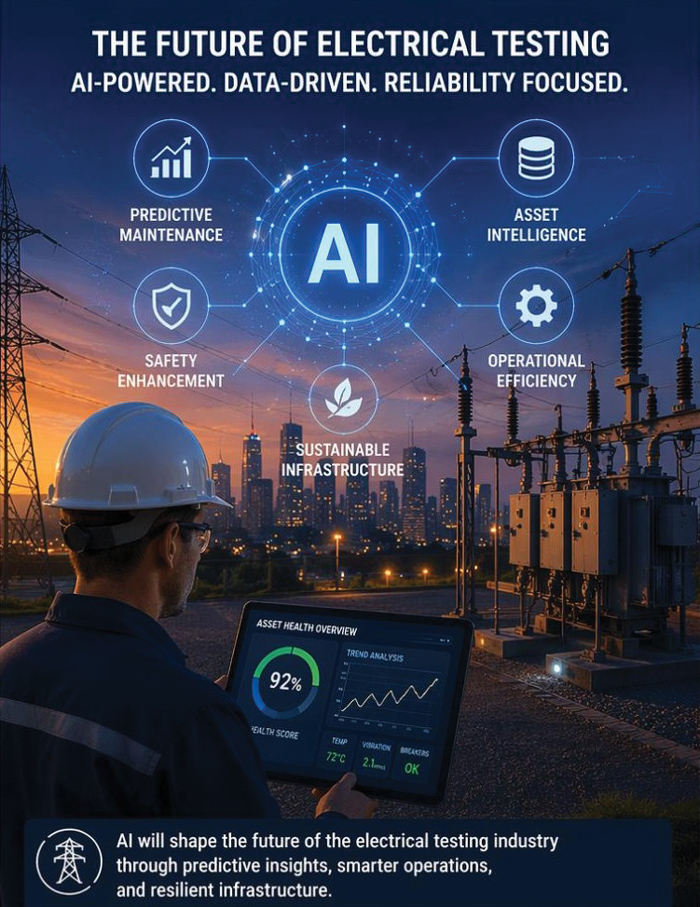
AI excels at identifying patterns within large data sets. By evaluating historical test results, maintenance records, and operating conditions, AI can detect early indicators of equipment deterioration that may otherwise go unnoticed. This capability supports a shift from traditional calendar-based maintenance to condition-based and predictive maintenance strategies.
By combining electrical test data with asset history and operational information, AI can help identify equipment at the highest risk of failure and prioritize it for maintenance or replacement. As customers increasingly seek actionable insights rather than simply receiving test reports, NETA Accredited Companies that can transform data into meaningful recommendations will be well-positioned to deliver additional value and differentiate themselves in the marketplace.
However, AI is not a replacement for engineering expertise. It is a tool to help technicians and engineers focus their attention where it matters most. Interpreting test results, assessing equipment condition, and developing corrective action recommendations will continue to rely on the knowledge, experience, and judgment of qualified NETA professionals.
IMPROVING REPORTING AND CUSTOMER DELIVERABLES
AI may also significantly improve one of the most time-consuming aspects of the testing process: report preparation. Many testing projects generate hundreds or even thousands of pages of data. AI-assisted tools can organize findings, identify deficiencies, compare results against historical trends, and assist in developing executive summaries. The value is not simply faster report generation. The real benefit lies in consistency and improved communication that can transform technical test results into information that supports better business decisions.
CHALLENGES THAT CANNOT BE IGNORED
While the opportunities are significant, AI adoption also presents important challenges:
- Data quality. AI systems are only as reliable as the information they receive. Inconsistent equipment naming, incomplete records, inaccurate test results, and poor documentation can reduce the effectiveness of even the most advanced analytical tools.
- Cybersecurity. NETA companies frequently work within critical infrastructure environments, including data centers, hospitals, utilities, and manufacturing facilities. Any AI platform handling customer information or electrical system data must be implemented with strong security controls and appropriate oversight.
Perhaps most importantly, professional responsibility remains unchanged. AI can assist with analysis and recommendations, but it cannot replace the experience, judgment, and accountability of qualified technicians and engineers. Customers rely on NETA Accredited Companies for their expertise, independence, and adherence to recognized standards‚—not for software.
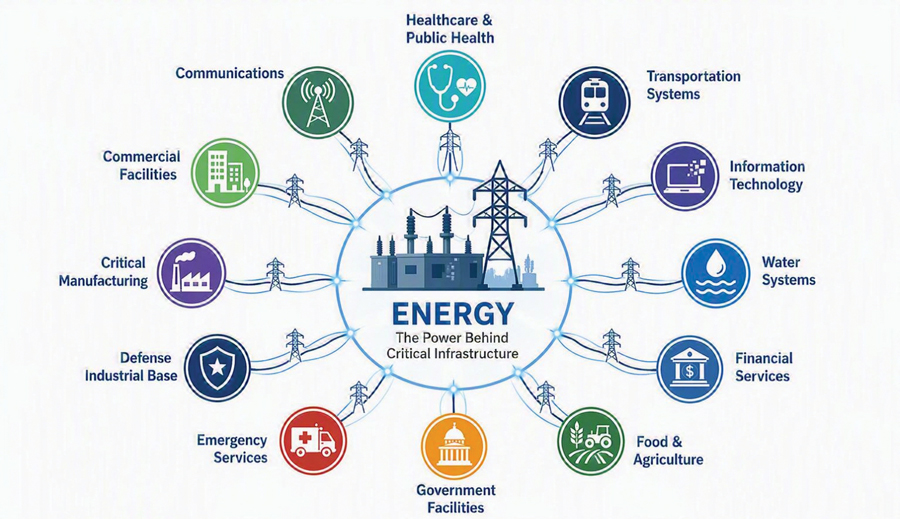
play a vital role in helping maintain the reliability and resiliency of the power systems that support critical infrastructure.
LOOKING AHEAD
To someone working within the electrical testing industry, AI should be viewed not as a threat to NETA Accredited Companies but as an opportunity to enhance the value we provide. The core principles that define NETA‚—technical competence, safety, independent testing, and standards-based evaluation‚—will remain unchanged. What will change is our ability to extract greater insight from the information we already collect.
The most successful organizations will adopt AI thoughtfully, using it to improve efficiency, strengthen safety programs, enhance customer service, and provide deeper reliability insights. At the same time, they will recognize that no algorithm can replace the expertise of a technician interpreting test results in the field or an engineer making critical reliability decisions.
CONCLUSION
The future of electrical testing will not be driven by AI alone. It will be driven by experienced professionals using advanced tools to make better decisions, improve reliability, and deliver greater value to their customers. For NETA Accredited Companies, that future presents both challenges and tremendous opportunities.
Coming in the Winter 2026 issue: Neno Pasic shares how Tony Demaria Electric is moving beyond discussing AI to implementing it in day-to-day operations. Learn how a NETA Accredited Company is using AI responsibly to improve productivity, strengthen decision-making, and support both field and office teams‚—while maintaining the human oversight essential to our industry.
Note: Images created by Neno Pasic using AI.

Valer Banushi is a degreed Environmental Health and Safety (EHS) executive with twenty years of experience driving EHS, operational excellence, quality assurance, and cultural transformation across the manufacturing, electrical services, and energy sectors. He currently serves as the Vice President of EHS & Operational Excellence at RESA Power. Throughout his career, Valer has successfully designed and scaled comprehensive EHS programs for major North American organizations, leading cross-functional teams and managing rigorous compliance frameworks. Valer holds a BS in occupational health and safety from Northern Illinois University and is an authorized OSHA Outreach Industrial Trainer and certified ISO Lead Auditor.

Adis Talović his an Electrical Engineer and NETA Level 4 Senior Technician with more than 20 years of experience in electrical testing, power system reliability, and engineering leadership. He currently serves as a Lead Power Systems Engineer with RESA Power, where he supports critical power infrastructure projects across a wide range of industries. A graduate of the University of North Carolina at Charlotte, NC, with a BS in electrical engineering technology, Talović has extensive experience leading NETA-accredited operations, developing technical professionals, and driving organizational growth. An active member of the NETA community, he serves on the NETA Membership Application Review, Volunteer Engagement, and Training Committees. He is passionate about advancing the electrical testing industry through mentorship, education, and the practical application of emerging technologies.