Partial discharge in electrical equipment insulation can lead to catastrophic failure. NETA Certified Technicians must understand the reasons partial discharge may occur and how to properly detect, diagnose, and correct it. 1. What is partial discharge within an insulating system?a. A brief short circuitb. A voltage spikec. A small explosiond. A small electrical discharge 2. How frequently might partial discharge …
Better Questions = Better Outcomes
For great leaders, safety is typically not their number one priority; it is an unwavering core value. Priorities change, while values remain constant in all situations. Great leaders also typically want to have success….operational success, individual success, and especially safety success. SAFETY SUCCESS How do you define safety success? Have you achieved safety success if you have zero recordable …
Improvements to REF Protection for Low-Resistance Grounded Systems
A restricted earth fault (REF) protection element provides sensitive detection of ground faults near the neutral of a transformer wye-connected winding. The sensitivity gains from the REF element are especially more valuable if the equipment is low-impedance grounded. Security of the REF element may be jeopardized by external faults, such as a phase-to-phase-to-ground or an evolving fault with CT saturation. …
Ensuring Proper Insulation Power Factor Test Procedures
Electrical insulation is designed to keep current from flowing where it shouldn’t. Insulation integrity is therefore critical and is assessed via a battery of tests. Many things can compromise the results of these tests, including temperature, humidity, erroneous test procedures, etc. Previously, I wrote about the effects of humidity on insulation integrity tests. This time I focus on erroneous test …
The Importance of NFPA 70E to OSHA Violations and Fines
You have probably seen OSHA’s recent guide titled Protecting Employees for Electric-Arc Flash Hazards. If not, you can find it here: https://www.osha.gov/electrical/flash-hazards. OSHA produced the guide to assist employers and employees in understanding and protecting against arc flash hazards, which brings about an interesting thought about OSHA and its relationship to NFPA 70E. It reminds us of how important it …
Eric Beckman: Leading through Rough Waters
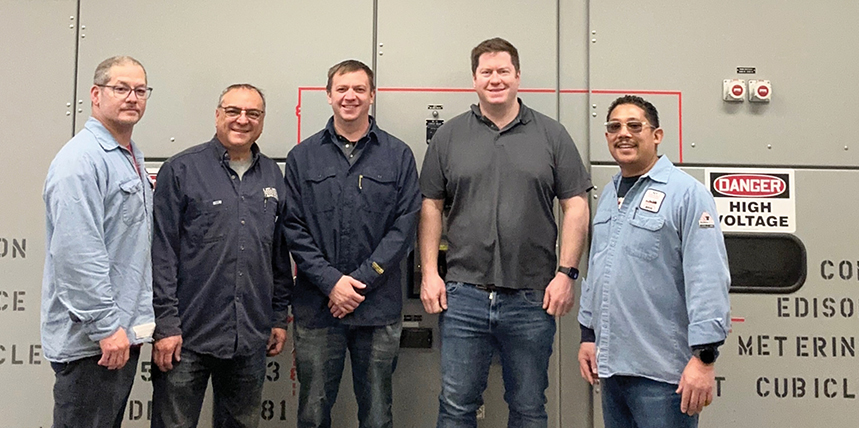
While our Insight and Inspiration articles, which have appeared in every issue of NETA World since Fall 2021, have most often focused on NETA’s valuable technicians, we sometimes feature a person or team whose impact on NETA and its member companies is substantial. This first NETA World issue of 2025 celebrates Eric Beckman’s contributions as NETA President from 2021 to …
PowerTest25: An Invaluable Opportunity
As we step into 2025, I am thrilled to welcome you to the Spring issue of NETA World. I hope you are reading this at PowerTest25, NETA’s premier event bringing together the brightest minds in the electrical power systems industry and offering a platform to learn, share, and grow. The field of electrical power systems continues to evolve, and one …
Real-World Causes of Partial Discharge
Over the past decade, we’ve gained critical insights into partial discharge (PD), recognizing it as a real issue that can lead to catastrophic equipment failures. We’ve also developed on-line and off-line methods to detect PD. Yet many still find it unclear why partial discharge occurs and inconceivable that something as simple as a poorly positioned tie-wrap can bring down a data center. …
Navigating On-Site PD Testing Methods to Assess Power Transformer Insulation
Partial discharge (PD) is a localized dielectric breakdown that only partially bridges the insulation between conductors. PD in transformers can be categorized into two types: The continuous presence of PD activity in a transformer’s solid insulation during operation can lead to the degradation of surrounding materials and potentially result in a complete failure of the electrical insulation system over time. …
Demystifying Off-Line PD Testing for an Effective CBM Strategy
Off-line partial discharge (PD) testing has emerged as a valuable diagnostic tool for assessing the insulation health of power cables, accessories, and switchgear. By detecting and measuring PD activity, this technique provides insights into the presence of insulation defects, which can lead to premature insulation failure if left undiagnosed. Off-line PD testing is particularly useful in creating a condition-based monitoring …