May 2020 was a difficult month for our nation, and 2020 is certainly shaping up to be a difficult year. As essential service providers, many in our industry were called upon to maintain or continue building the nation’s infrastructure. We all understand and appreciate that hospitals, emergency services, government facilities, manufacturing, and even residences could not function without power, and …

Effect of CT Saturation on Transformer Differential Protection
This article demonstrates how CT saturation can adversely affect transformer differential protection and how to easily mitigate its effects via inbuilt relay functions. The solution is to provide calculations and simulation for a three-phase fault on the low side of the transformer just external to the CTs. Application The application is for a three-phase delta-wye connected transformer serving station load …
NFPA 70E–2021 Is Here — How Did That Happen?
In September 2020, the newest (2021) edition of NFPA 70E, Standard for Electrical Safety in the Workplace® will be available to the industry. So how is it that such an important safety standard, put forth as a national consensus document, is reviewed, revised, and improved every three years? We’ll look at the process a little later in this article. But …
Medium-Voltage Cables
Welcome to the fall edition of NETA World. In this issue, our authors cover the various methods for performing testing on medium-voltage cables. I recommend you start with the article by Tom Sandri of Shermco Industries, which lays out the current test methods for acceptance and maintenance testing of medium-voltage cables. Next, dive into the articles on specific testing methods …
Partial Discharge Tests for Medium-Voltage Power Cable Systems
Medium-voltage (MV) power cables are the backbone of the power distribution systems developed over two hundred years. Currently, 2.3 million miles of MV cables are installed in the USA, most with extruded insulation. Diagnostic testing technologies can differentiate MV cables by their operational condition and aging process prior to faults, thereby providing guidance for proactive maintenance and asset management. This …
In Memoriam: John Hauck — “Students FIRST”
John Hauck, 67, recently retired Electrical Technology Instructor at Long Beach City College (LBCC) and dear friend of NETA and Tony Demaria Electric, Inc. (TDE), passed away on May 31, 2020. John was actively involved in successfully implementing the NETA Electrical Power Testing Technician (EPTT) Curriculum into LBCC’s existing Electrical Technology Program. He worked diligently with NETA and TDE to …
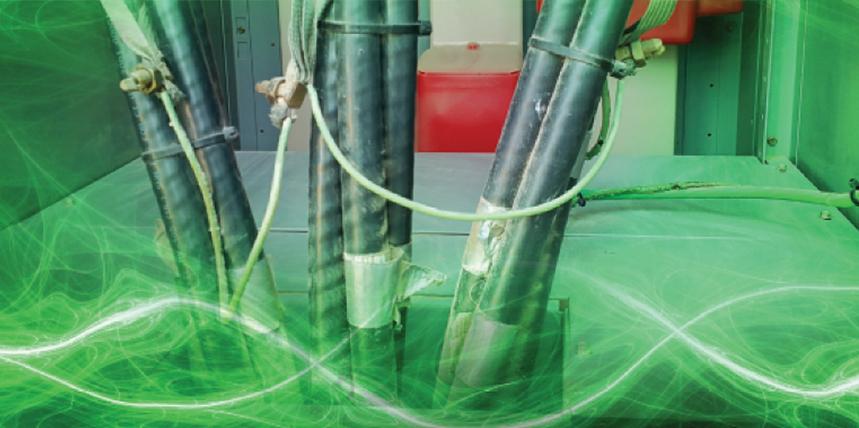
Onsite PD Measurement During Commissioning: Safe…Right From the Start
Partial discharge (PD) measurement has been used for several decades to assess the condition of high-voltage (HV) and medium-voltage (MV) electrical apparatus. In the past, PD measurements were largely limited to the production stages of various assets (e.g., during R&D, factory-type tests, and factory acceptance tests). However, the advantages of such testing have resulted in it being used more often …
Power Quality, Reliability, and Sophisticated Automated Systems
What do robotics, artificial intelligence (AI), automation, synaptic performance indicators (SPI), and machine learning (ML) have in common? In addition to being buzzwords for the reliability professional to throw around, the reliability world uses these terms to get practitioners to spend a lot of money on the shiny new thing. Sadly, too much of that money will be wasted by …
Partial Discharge Secrets, Tips, and Tricks
Most of us started our electrical careers with fairly good knowledge about the practical aspects of our jobs. We understood voltage, current, power, resistance, etc. We mastered the more esoteric areas such as electrical fields and stress control and only revisited these topics if our day-to-day job required it. Partial discharge (PD) is one of those areas where we might …
ANSI/NETA Standards Update
ANSI/NETA ATS–2017 Revision Underway ANSI/NETA ATS–2017, Standard for Acceptance Testing Specifications for Electrical Power Equipment & Systems continues an American National Standard revision process that is scheduled to be completed by the end of 2020. The new edition will be released in March 2021. A project intent notification published in ANSI’s Standards Action on January 3, 2020, announced the opening …