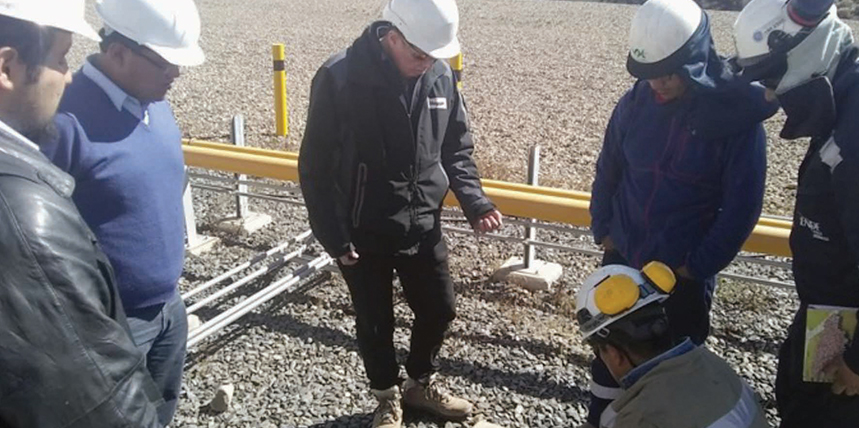
Fall protection requirements and equipment varies depending upon where the work is being performed. The regulations can be confusing for some employees, so it is up to the manager or safety professional to understand the work, the environment the work is being performed in, and the equipment needed to mitigate the hazard of falling from height. When Is Protection Required? …

Combustion Turbine Generator Trip Analysis
Relay personnel responsible for testing protective relays are often called upon to troubleshoot and gather system data such as settings and event recordings when a major event occurs (for this example, a large generator trip). If only electromechanical relays are installed and no digital fault recorder is available, it can be difficult to determine the root cause of the trip …
Investigating an Electromechanical Differential Relay Misoperation
Transformer differential protection based on ANSI 87 is one of the most common protection methods for large power transformers due to its outstanding speed and accuracy. However, given the complexity of this method when applied on delta-wye grounded transformers, mistakes made during the design and/or installation phases might not be detected promptly and can eventually cause an undesired operation — …
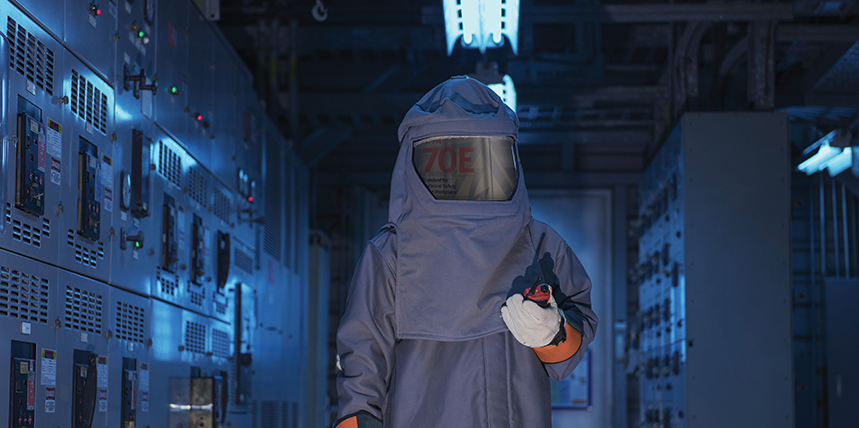
Looking at NFPA 70E 2021: Part 1
In this issue of NETA World, we begin to explain some of the major changes in the 2021 edition of NFPA 70E. So whether you love the 70E, or find it a challenge and don’t want to deal with it…because your life at work is mandated by it, and you know what that means: Do it or else! But that …
Welcome to the Winter Edition
This edition of NETA World features articles on electrical power system protection. Protection schemes covering feeder, generation, transmission, and transformers may have many similarities, but they often contain specific functions or schemes unique to that type of equipment. Be sure you check out this edition’s four feature articles: “Challenges in Transformer Protection Testing,” by Scott Cooper of OMICRON electronics “Testing …
Testing Techniques for Protection-Class Current Transformers
Relaying current transformers serve as critical components in the design of a protection scheme. CT performance under fault conditions should be within its operating characteristics for a true representation of fault magnitudes and reliable operation of the protection scheme. To ensure proper installation and operation, CTs are often subjected to one or more tests performed in accordance with standards including …
Testing and Commissioning a Distribution Recloser in Grid-Tie Solar Farms
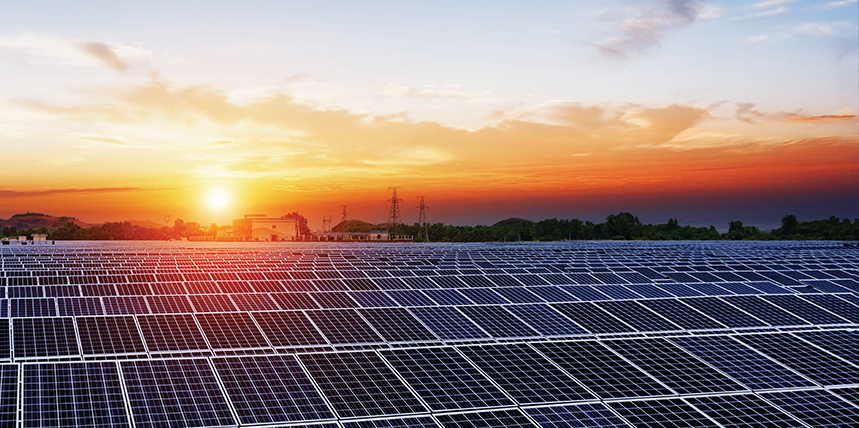
Rapid photovoltaic (PV) penetration into the electric grid has mandated deeper operational and technical understanding of protection schemes in PV farms. An effective protection scheme ensures a grid-connected system functions reliably and securely, and testing and commissioning the entire protection scheme to prove its operational success is of paramount importance. This article presents a standard grid-tie photovoltaic farm architecture and …
Medium-Voltage Grounding
First, let’s look at some industry-accepted definitions to establish context. Low voltage is anything below 1 kV. The common building-wiring voltages are 120, 240, 480, and 600 V. To the uninitiated, this can seem confusing and even ridiculous. Get across 600 V, and it can fry you like bacon, but in industry parlance, it is still low voltage. Put into …
Cable Testing
Cable testing is one of the oldest forms of testing in the industry. At first, cables were tested using DC voltages, but this was found to damage newer cable types, so additional cable testing methods were developed. This issue’s Tech Quiz takes a look at cable testing. 1. During the early years of cable testing, which two primary types of …
Programs, Policies, Manuals, Procedures, and Training
Many regulatory agencies direct which documents are required to perform a company’s tasks. In some cases, federal and state requirements must be adhered to for the same task or hazard. For example, the United States Environmental Protection Agency (US EPA) and state environmental agencies, such as the Massachusetts Department of Environmental Protection (MA DEP), regulate potential environmental impacts that may …