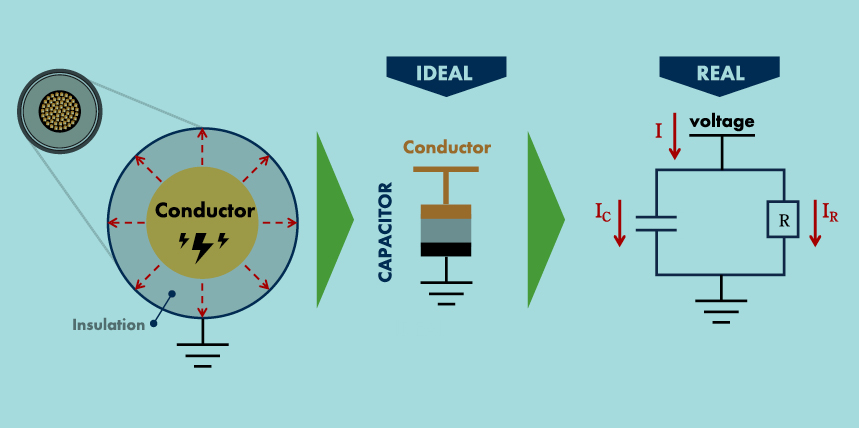
The rapid growth of electrical systems in the industry is placing increasing demands on infrastructure and on medium-voltage (MV) networks. Utilities and service providers are expected to deliver higher reliability at lower cost. In this environment, unplanned outages caused by insulation failures are no longer acceptable. Shutdowns remain important opportunities for electrical maintenance, but these windows are narrow and heavily …
CAP Spotlight: MVA: Our Assets Are Found in Our People
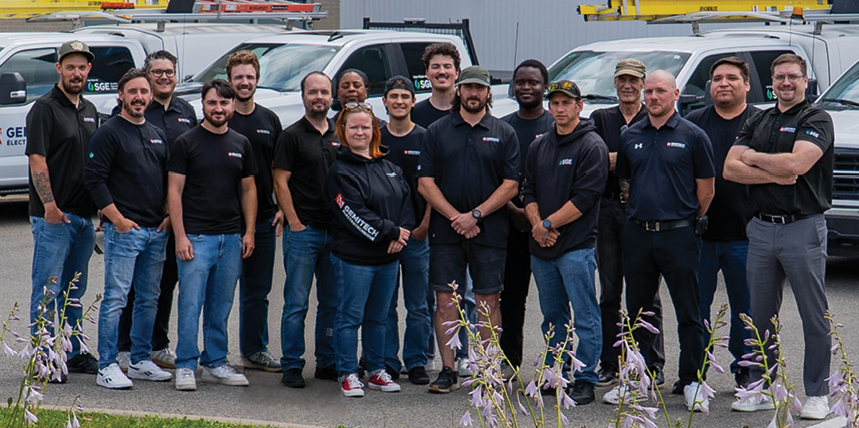
NETA’s Corporate Alliance Partners (CAPs) are industry-leading companies that have joined forces with NETA to work together toward a common aim: improving quality, safety, and electrical system reliability. This ongoing NETA World series focuses on the thought leadership behind these successful companies. For this issue’s CAP Spotlight, we talked to President Scott Reed, who founded MVA in 2014. “Many in …
Condition-Based Maintenance Using Remote Infrared Camera Systems
Infrared thermography has long been a cornerstone of electrical panel maintenance, traditionally performed through periodic, time-based inspections using handheld infrared cameras. This method has been widely adopted as a best practice due to its ability to detect early signs of failure, mitigate catastrophic risks, and support the longevity of electrical infrastructure. However, recent regulatory changes have elevated the role of …
Advancing Multi-Sensor Inspection Intelligence for Power Grid Reliability
This article discusses best practices for managing inspection data in electrical utilities, emphasizing the importance of standardized collection, metadata tagging, and compliance with IEEE 1808-2024. It highlights the value of integrating data from multiple sensors, including RGB, thermal, and ultraviolet imaging, with geographic and asset information, and applying structured, industry-based diagnostics. These practices support traceable condition assessments, consistent severity scoring, …
The Modern Circuit Breaker Trip Unit: A Protective Relay by Another Name
Low-voltage protection is undergoing rapid evolution. For decades, microprocessor-based protective relays have been the gold standard for medium- and high-voltage power systems, offering highly configurable protection, metering, and communication capabilities. Meanwhile, circuit breaker trip unit technology remained relatively static for many years, remaining confined to the breaker frame and focused primarily on basic overcurrent functions. This is no longer the …
Fall of Potential Testing Gone Wrong
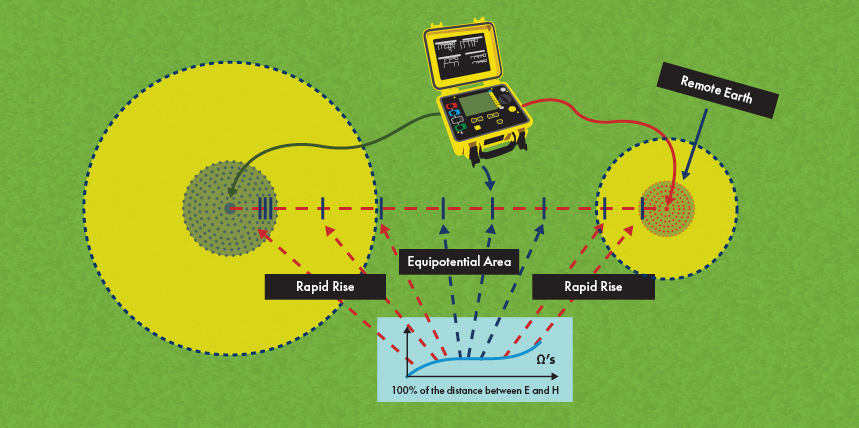
As testers, where should we start? The standards! For grounding testing, the industry reference is IEEE Std. 81, Guide for Measuring Earth Resistivity, Ground Impedance, and Earth Surface Potentials of a Grounding System. As with most standards, familiarity and interpretation are key. It can be a challenge to understand the intent, methods, and implementation of the prescribed testing. Fall of Potential …
Power System Life Extension
All electrical equipment has a finite lifespan. Recognizing the signs of aging and understanding how to assess equipment health is essential. As NETA Certified Technicians, we play a critical role in helping to extend the operational life of electrical systems by implementing proactive maintenance strategies that enable our customers to maximize performance and reliability for as long as possible. 1. …
Walking and Working Surfaces
The most common injury in any industry is a slip, trip, or fall. Whether a fall occurs on the same level — or worse, from a higher level — any fall can cause significant injury, resulting in production downtime, reduced maintenance activity, loss or reduction of wages for the employee, loss of profit for the company, trips to doctors and …
From Bolted Pressure Switches to Modern Breakers: The Evolution of 480-V Distribution Systems
The bolted pressure switch (BPS) once occupied a central role in 480-V distribution systems across industrial, commercial, and institutional facilities. Known for its rugged construction and ability to withstand high fault currents, the BPS was a workhorse of mid-20th-century, low-voltage power distribution. By using spring-driven mechanical force to bolt contacts together, the BPS ensured a low-impedance path for current flow, …
Sizing the Neutral Grounding Resistor for Subharmonic Voltage Injection
Stator ground faults are one of the most common disturbances for high-impedance grounded generators. A resistor is connected across the secondary of a single-phase distribution transformer connected from the machine neutral to ground to insert the high-impedance ground. The purpose of the high-impedance ground (Figure 1) is to limit the magnitude of single line-to-ground fault current flowing in the stator …