
Power equations are very useful. For example, they help ensure that specific North American Electric Reliability Corporation (NERC) Protection and Control (PRC) standards remain satisfied when a generator’s power output is uprated.
Assume for this particular example that the following generator real power output is to be uprated from 1,220.58 MW (P1) to 1,241 MW (P2). The pertinent nameplate original power output data is as follows:

While the real power output is to be significantly increased, the nameplate values shown above are to be held constant; that is, S1 never changes. Here is how to calculate the original real power output for a power factor of 0.9 lagging:

Calculate the net gain in real power output as follows:

The power factor must increase to generate the additional real power output ∆P:

Calculate the change in reactive power (Q) as follows:

This loss in reactive power must be absorbed from the grid.
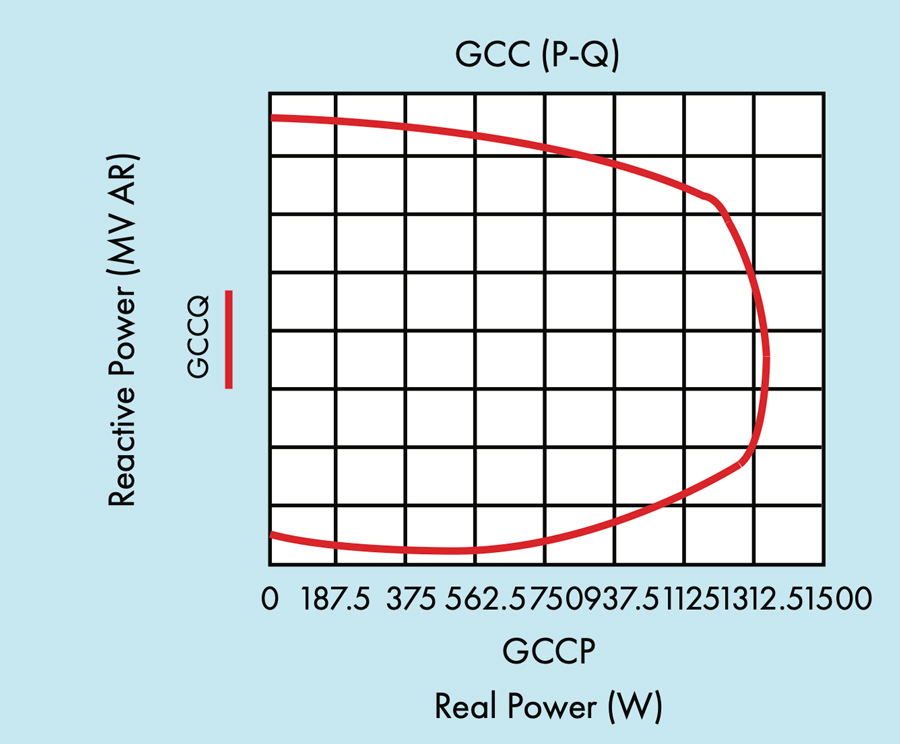
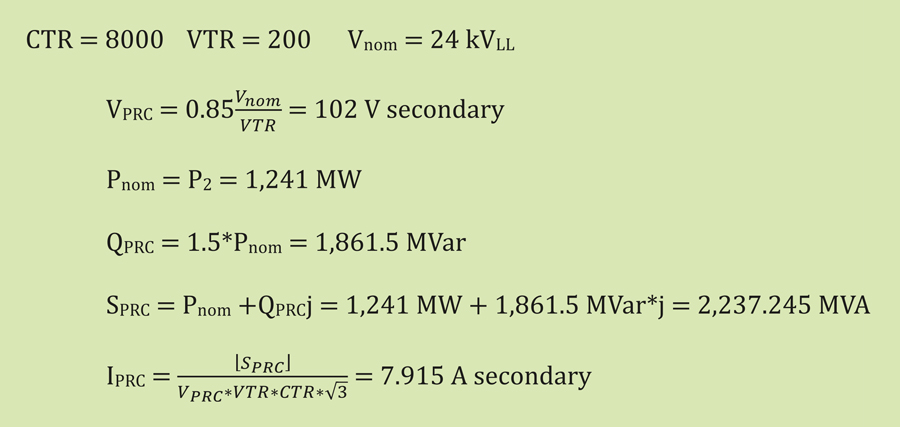
Assume this generator is protected by a 51V, voltage-restrained phase time overcurrent relay. Check NERC PRC-025-2, Generator Relay Loadability, to ensure 51V still complies.
CONCLUSION
51V has an effective tap of 8.614 A secondary; the relay will not pick up during periods of heavy load as defined by this particular NERC PRC (that is, the pickup is greater than the maximum load current). Thus, no setting changes are required.

Steve Turner is a Consultant at Sargent & Lundy. He was previously in charge of system protection for the Fossil Generation Department at Arizona Public Service Company for five years. Turner formerly held positions at Beckwith Electric Company, GEC Alstom, SEL, and Duke Energy, where he developed the first patent for double-ended fault location on overhead high-voltage transmission lines and was in charge of maintenance standards in the transmission department for protective relaying. He has BSEE and MSEE degrees from Virginia Tech University. Turner is an IEEE Senior Member and a member of the IEEE PSRC and has presented at numerous conferences.