

The rapid growth of electrical systems in the industry is placing increasing demands on infrastructure and on medium-voltage (MV) networks. Utilities and service providers are expected to deliver higher reliability at lower cost. In this environment, unplanned outages caused by insulation failures are no longer acceptable.
Shutdowns remain important opportunities for electrical maintenance, but these windows are narrow and heavily scheduled. To meet modern reliability expectations, maintenance strategies are shifting to be driven by objective data, such as on-line partial discharge (PD) measurement before and after shutdown.
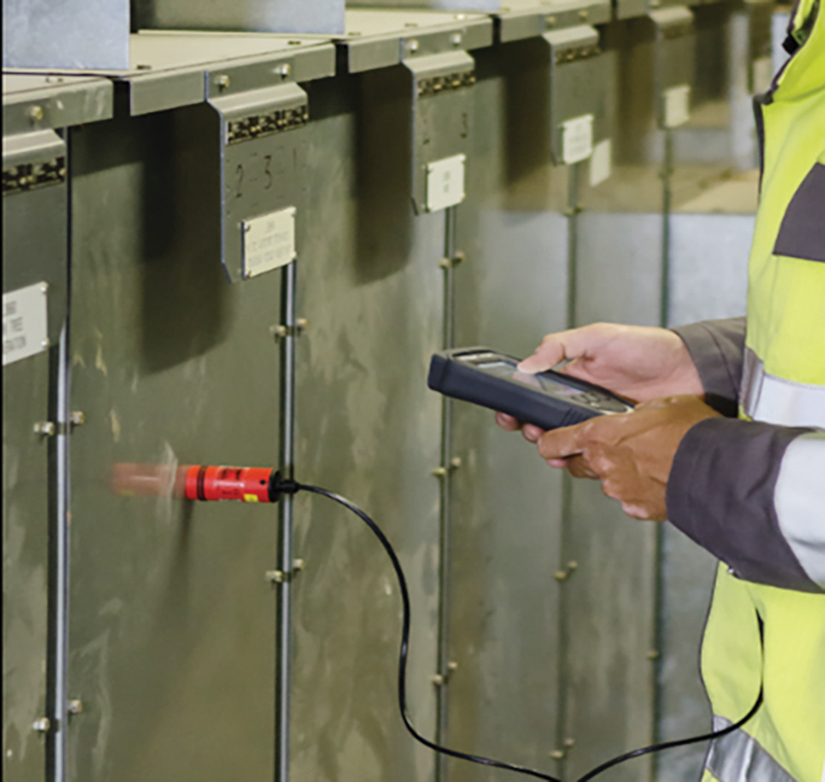
PD surveys address this challenge by providing a non-invasive diagnosis of insulation health. Conducted on-line while the equipment remains energized, PD testing detects the earliest signs of localized insulation weakness. In this way, PD surveys bridge the gap between increasing demands for reliability and the realities of limited maintenance windows in today’s electrical world.
PARTIAL DISCHARGE AS AN EARLY INDICATOR
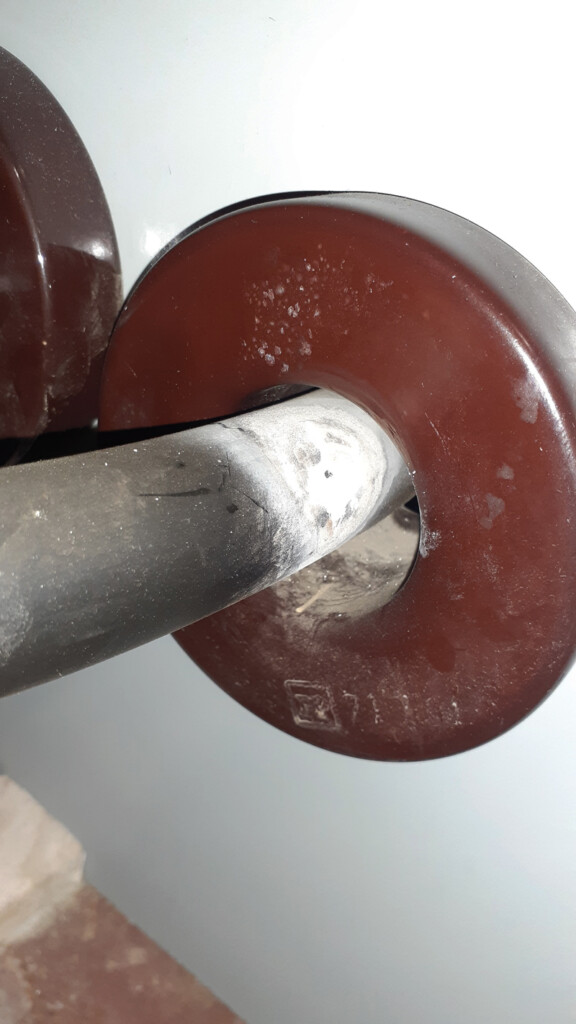
Partial discharge is a localized electrical discharge that occurs within a small portion of an insulation system without completely bridging the electrodes. In practical terms, it is a microscopic breakdown of the insulation material caused by voids, cracks, sharp edges, surface contamination, or aging stresses. Although each individual discharge carries only a small amount of energy (low-energy arcing), repeated activity progressively weakens the insulation and can eventually lead to catastrophic failure.
One critical value of PD testing lies in its role as an early indicator of insulation weakness. Because PD usually appears well before a complete breakdown, its detection provides asset owners with an opportunity to intervene while the defect is still manageable. Identifying PD at an early stage allows maintenance teams to prioritize repairs during planned shutdowns, rather than waiting for an unexpected outage. This makes PD surveys one of the most powerful tools for proactive, condition-based maintenance (CBM) of medium-voltage equipment.
By trending PD activity over time and correlating patterns with asset type, utilities and service providers can detect insulation defects at their inception, verify the effectiveness of corrective actions, and prevent recurrence. In short, PD is not just a symptom of aging insulation; it is a warning signal that, if captured early, protects equipment reliability, system uptime, and worker safety.
WHY PD TESTING MATTERS FOR MV ASSETS
Medium-voltage (MV) assets — cables, switchgear, transformers, rotating apparatus, breakers, or bushings — are all built around one thing: insulation. When that insulation starts to break down, failure is just a matter of time. The tricky part is that insulation problems are usually not visible from the outside. A splice may look fine, and a transformer may pass a visual check, but inside, tiny electrical discharges are eating away at the insulation. That’s where PD testing comes in.


PD testing is essentially the electrical equivalent of listening for a slow leak in a tire. According to IEC 60270, High-Voltage Test Techniques – Charge-Based Measurement of Partial Discharges, PD is a localized electrical discharge that only partially bridges the insulation. It doesn’t short the system immediately, but repeated discharges erode insulation until one day it fails. Standards such as IEEE Std. 400.3, Field Testing of Shielded Power Cables with VLF and PD, recognize PD as one of the most reliable indicators of insulation health. In practice, that means catching issues before they escalate into an unplanned outage.
PD ENERGY AND PD DETECTION — PD SENSORS
Partial discharge is both a challenge and an opportunity. On one hand, each discharge event releases energy that gradually degrades the surrounding insulation, leading to long-term deterioration and eventual failure if left unaddressed. On the other hand, this same energy produces electrical, acoustic, and electromagnetic signals that can be detected with specialized sensors. By capturing these signals, maintenance teams can identify and locate insulation defects well before catastrophic breakdowns occur.
For most portable on-line PD measurements — commonly called PD surveys — the primary sensors are HFCTs, TEV sensors, acoustic probes, and capacitive voltage dividers. Together, these tools offer a practical way to capture PD activity across a wide range of MV assets. The main detection approaches are outlined below.
Electromagnetic Radiated and Conducted Signals
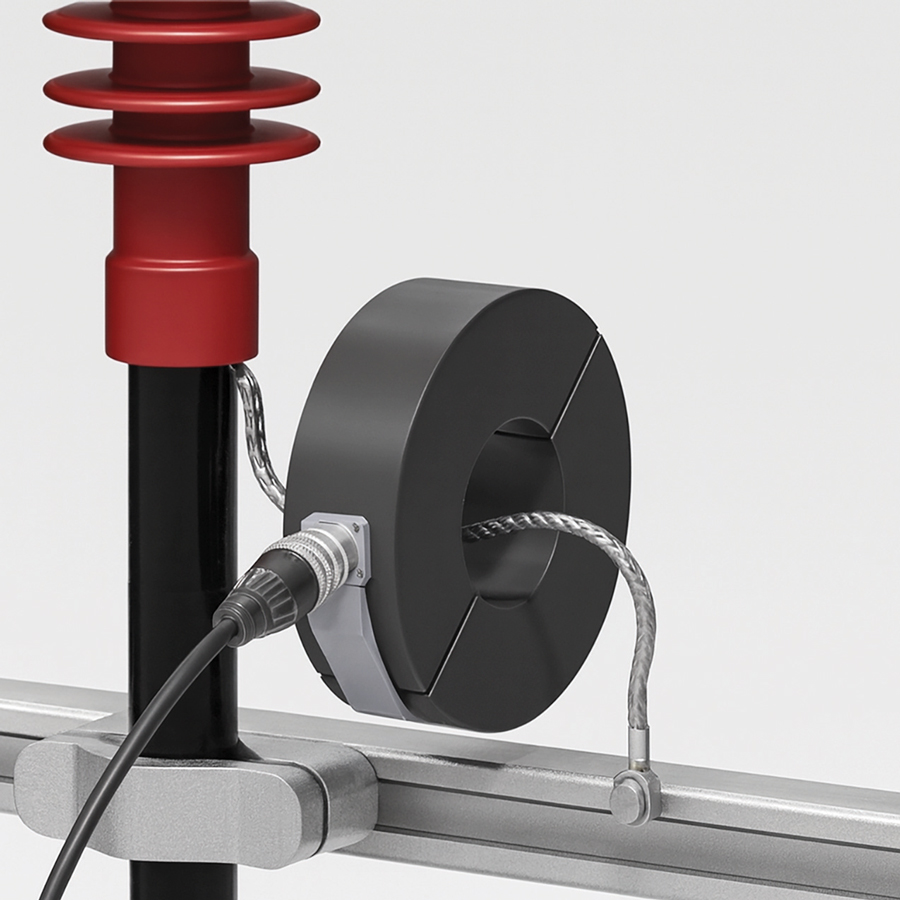
- Clamp-on high-frequency current transformers (HFCTs) are widely used in portable PD surveys. Installed on grounding leads, they detect high-frequency PD currents as they return to ground. HFCTs are sensitive, easy to deploy, and suitable for many types of medium-voltage assets.
- Transient earth voltage (TEV) sensorsdetect electromagnetic pulses that strike metal surfaces and travel to ground. They are particularly useful for switchgear and other metal-enclosed equipment where internal PD can couple effectively to grounded enclosures.
Acoustic Signals
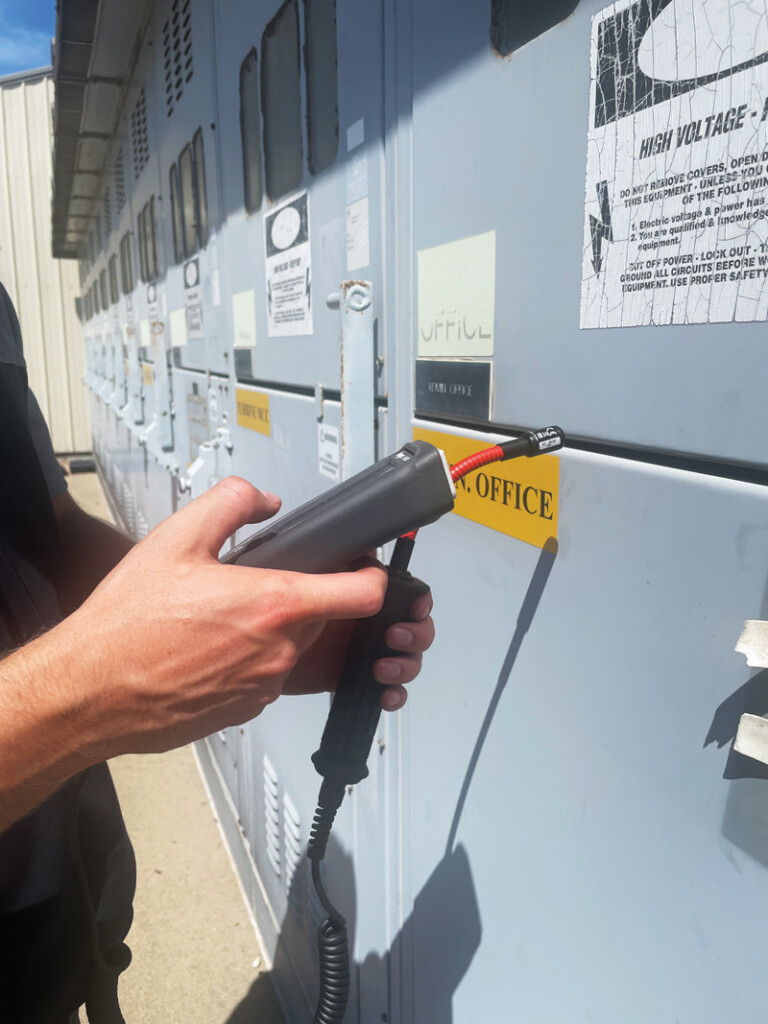
- PD activity also produces tiny mechanical vibrations, and acoustic sensors — such as ultrasonic microphones or contact probes — capture these sound waves, making them useful for detecting surface PD or corona activity, especially in switchgear or open bus structures. This method is based on the vibration of air molecules caused by PD rather than the electrical signal itself, and the results are very sensitive to the distance from the defect location.
Ultrahigh Frequency (UHF) Sensors
- UHF antennas detect electromagnetic radiation in the gigahertz range. While their use is less common in portable surveys, UHF detection can be valuable in specific applications such as large substations or gas-insulated switchgear (GIS) yards, where traditional sensors may be less effective.
Installed Capacitive Sensors
- In some facilities, capacitive sensors such as coupling capacitors or capacitive voltage dividers are permanently installed as part of the system design. These sensors provide a convenient way to capture PD signals during routine surveys or continuous monitoring without additional hardware setup.
It is worth noting that ultraviolet (UV) detection methods also exist, but their application is limited to open-air corona or arc tracking. They are generally not used in routine MV PD surveys, so they are not covered further here.
PRE-SHUTDOWN PD SURVEYS
By conducting pre-shutdown PD testing while equipment is energized, service providers can identify insulation defects that are actively developing in medium-voltage assets such as cables, switchgear, transformers, rotating apparatus, and bushings. Because PD activity often begins long before a complete insulation failure, the ability to pinpoint these early warning signals while equipment is still in service provides maintenance teams with critical foresight.
The insights gained from pre-shutdown surveys directly influence outage planning. Instead of approaching the shutdown with only generic work orders or assumptions based on historical issues, teams can prioritize specific components that exhibit measurable insulation stress. For example, a PD survey may reveal localized activity in a particular cable termination or switchgear cubicle, enabling the repair crew to plan targeted interventions rather than broad, time-consuming inspections. This focused approach avoids wasted effort, reduces unnecessary teardowns, and ensures that the most at-risk components are addressed within the limited outage period.
In short, pre-shutdown surveys complement historical maintenance data and transform a shutdown into a more proactive, data-driven event, ensuring that scarce outage time is focused on the most critical areas.
POST-SHUTDOWN SURVEYS
Post-shutdown surveys can help confirm whether maintenance efforts were effective. After repairs, replacements, or cleaning have been carried out, on-line PD testing verifies whether the insulation defects detected during the pre-shutdown survey have been fully resolved. This validation step is critical.
Equally valuable, post-shutdown surveys may uncover new issues that have been introduced during maintenance. For instance, a cable termination installed under time pressure or without proper stress control may exhibit fresh PD activity, even if the original defect was corrected. Detecting such issues before energizing the system prevents premature failures and protects both personnel and equipment from costly setbacks.
Finally, post-shutdown surveys establish a baseline for trending. The PD activity measured immediately after maintenance becomes the new reference point for future condition assessments. By comparing subsequent survey results to this baseline, service providers and asset owners can confidently monitor whether the insulation system remains stable or if deterioration resumes over time. This continuous improvement cycle strengthens reliability, justifies maintenance decisions, and supports long-term condition-based asset management.
In combination, pre- and post-shutdown surveys form a closed-loop strategy: One identifies and prioritizes defects for action; the other validates and documents the effectiveness of those actions. Together, they ensure that shutdowns not only address existing problems but also deliver measurable improvements in system reliability.
CHALLENGES IN ON-LINE PD MEASUREMENT
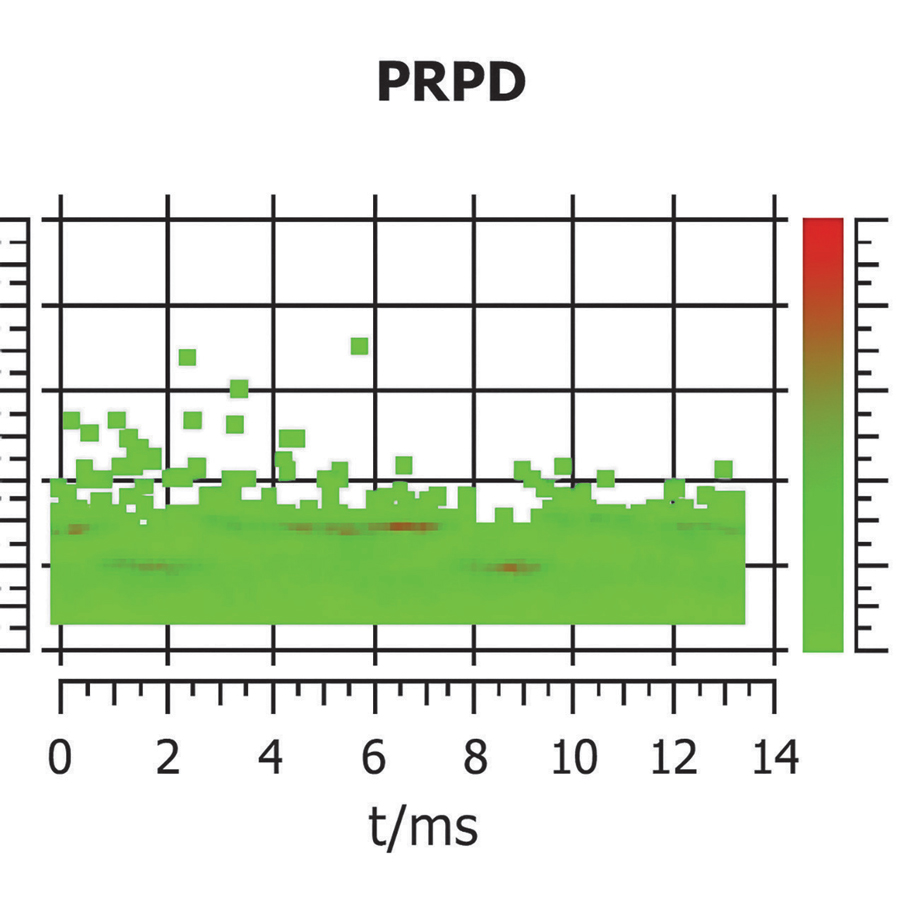
While on-line PD measurement is a powerful tool for assessing insulation condition under real operating stresses, it is not without challenges. One of the primary obstacles is the presence of electrical noise and disturbances in field environments. Modern MV systems are filled with switching devices, power electronics, and background electromagnetic activity that generate signals in the same frequency range as PD. These external disturbances can easily mask or mimic true PD activity, complicating the interpretation of results.
In practice, this means that weak PD signals — especially those originating from defects located farther away from the sensor — may be hidden beneath stronger noise. As a result, real insulation defects can remain undetected if their discharge activity does not rise above the noise floor. For example, a void discharge inside a cable joint may be overlooked when high background interference from variable frequency drives or corona on nearby hardware dominates the measurement.
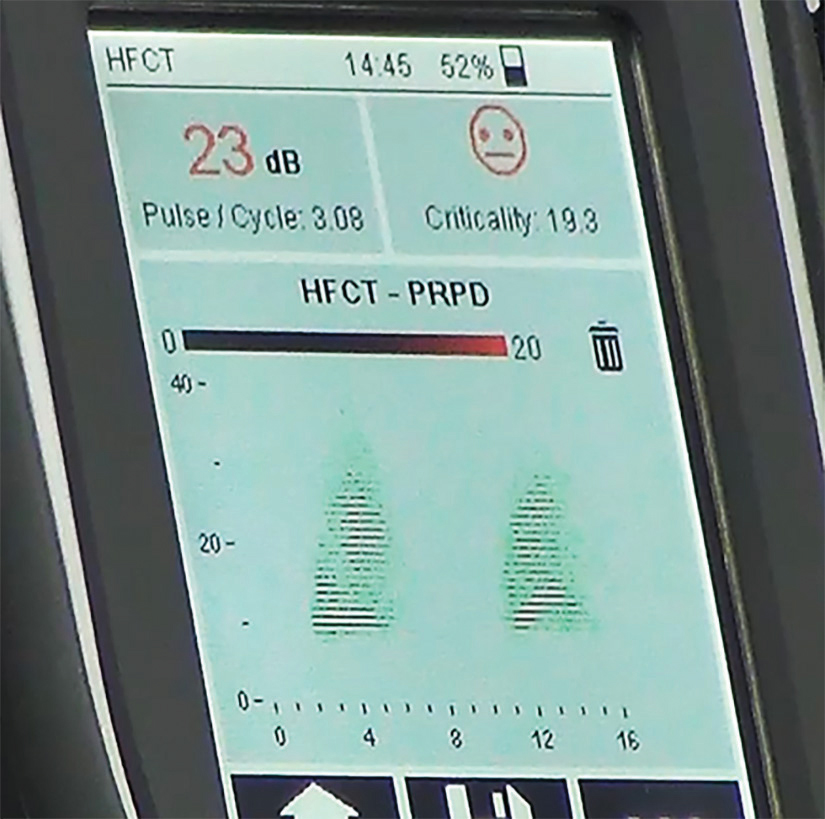
Another challenge lies in the variability of PD propagation paths. PD signals attenuate as they travel through insulation, conductors, and grounding systems, and their strength decreases with distance from the source. When combined with strong external noise, this attenuation can further reduce the likelihood of detecting subtle but important defects.
To address these issues, practitioners often use multiple sensors, advanced filtering, and pattern recognition techniques to separate real PD from noise. Even so, interpretation requires experience, and there is always a risk of missing early-stage defects if they are weak or obscured. Recognizing these limitations is critical: While on-line PD testing provides valuable insight, it should be complemented with other diagnostic methods and careful judgment to ensure a reliable insulation assessment.
BEST PRACTICES FOR MANAGING NOISE IN ON-LINE PD MEASUREMENTS
The following suggestions can help improve the reliability of on-line PD measurements in the field. It is important to note, however, that most strong PD signals can still be readily detected using basic PD testing tools. These practices aim to improve sensitivity and confidence in detecting weaker or more distant defects.
- Use multiple sensor types (HFCT, TEV, UHF, acoustic) to cross-check findings and strengthen signal validation.
- Optimize sensor placement to reduce attenuation by minimizing the distance from likely PD sources.
- Perform measurements under varying load and operating conditions, since noise levels often change with system state.
- Correlate PD results with other diagnostics (off-line PD, DGA, visual inspection, etc.) for confirmation.
- Trend PD activity over time rather than relying on a single snapshot, which helps distinguish consistent PD signals from transient noise.
- Apply advanced signal processing techniques such as digital filtering, time-gating, or measuring across different frequency bands to suppress repetitive noise and enhance true PD patterns.
- Document findings with clear severity ratings, making results actionable for maintenance teams.
- Always conduct both pre- and post-shutdown surveys to capture the full value of PD testing: prioritizing repairs before an outage and validating them afterward as much as possible.
CONCLUSION
PD surveys are a valuable component of modern maintenance strategies, particularly as the industry demands higher reliability.
Like any diagnostic tool, PD surveys have limitations. Noisy environments can obscure weak or distant PD signals, and in some cases, experienced interpretation is required to distinguish true activity from background disturbances.
Nevertheless, most significant PD activity can be readily detected using standard measurement tools. Best practices employing multi-sensor approaches, trend analysis, and correlation with other diagnostics can further enhance accuracy and confidence in results.
It is important to recognize that PD surveys are complementary to, not replacements for, existing maintenance techniques. They provide an additional layer of insight by often helping to localize anomalies that improves decision-making and reduces the risk of unplanned failures.
Pre- and post-shutdown PD surveys bring measurable value. Pre-shutdown testing supports proactive prioritization, while post-shutdown testing verifies repairs and establishes a new baseline. Together, they transform shutdowns from reactive events into data-driven processes, strengthening reliability in an increasingly electrified world.
REFERENCES
- IEC 60270, High-Voltage Test Techniques – Charge-Based Measurement of Partial Discharges.
- IEEE Std. 400.3, Field Testing of Shielded Power Cables with VLF and PD.
- IEEE Std. C35.301, IEEE Standard for High-Voltage Switchgear (Above 1000 V) Test Techniques—Partial Discharge Measurements.

Shahryar Farhang, PE, is an Applications Engineer (Team Lead) at Megger, specializing in partial discharge and online condition monitoring. He provides consulting and technical support for PD testing, DGA monitoring, and Megger grid analytics (MGA) systems. Farhang is a licensed Professional Engineer and Master Electrician, holding a BS in electrical engineering and an MS in management information systems and econometrics.

Andrea Martinez is an Applications Engineer at Megger. She obtained her BS and MS in electrical engineering from the University at Buffalo, where she conducted research in partial discharge (PD) analysis in the Energy Systems Integration Lab, resulting in multiple publications and being awarded a National Science Foundation Graduate Research Fellowship Program (GRFP). After graduating, she joined Sandia National Laboratories to continue her research into PD degradation. Martinez then joined Moog to work on actuation test equipment for notable projects, including Artemis and SLS, and served as Moog’s Ambassador to the Society of Women Engineers (SWE), where she worked with local schools and SWE chapters to bring engineering to a more accessible level for the Buffalo community. Martinez has been featured on Buffalo Public Schools’ Science Week, taught the University at Buffalo’s Louis Stokes Alliances for Minority Participation (LSAMP) course, and presented at SWE20.

Yash Godhwaniis the Cable Applications Team Lead at Megger, where he has been contributing for over five years. He holds a BS and an MS in electrical engineering and has extensive experience in transformer testing and substation asset diagnostics. His expertise lies in advanced cable testing and diagnostics, including partial discharge analysis, tan delta, very-low-frequency (VLF) testing, and fault location. Godhwani is an active member of IEEE and CIGRE, reflecting his commitment to advancing industry knowledge and best practices.