
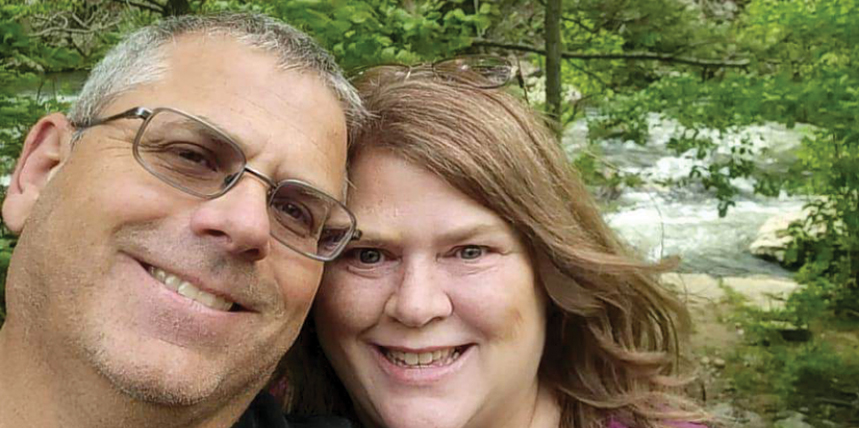
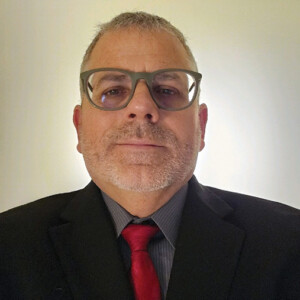
This issue of NETA World’s “Insight & Inspiration” series features Ken Morton, Quality Manager at Vector Power. With 33 years in the electrical industry, Morton’s career has taken him from commercial and light industrial electrical work to the U.S. Army Prime Power School and ultimately into electrical testing, training, quality, and technical leadership. Today, he manages Vector Power’s quality program, develops and facilitates training, provides safety training and technical support, serves as the company’s NETA Technical Advisor, and participates in a variety of industry committees and educational programs. He is a NETA Level 4 Certified Senior Technician.
NW:How long have you been in the field, and what was your path to your current position?
Morton: I’ve been in the electrical industry for 33 years. I started as a commercial and light industrial electrician and worked my way up to project superintendent. When the 2008 recession hit, my family took a huge financial blow. The Las Vegas construction economy was devastated, and we lost everything. I reenlisted in the Army as a reservist, driving heavy equipment transports, with plans to move to Wyoming and start driving in the gas fields.
Someone had a better plan, though. An officer encouraged me to apply to the U.S. Army Prime Power School. I went into the year-long program determined to learn everything I could and graduated as Distinguished Honor Graduate for both the overall course and my specialty phase as an instrumentation technician. I spent 12 years as a reservist performing electrical maintenance and repairs on emergency systems, distributed generation, and critical infrastructure for the Army before retiring with 28 years of total service.
My NETA journey also began after Prime Power School. Shermco Industries hired me as a protection and controls technician right out of school. Going from that intense training environment to applying the knowledge through hands-on work for 12- to 16-hour days really solidified my understanding of how things work. It also showed me how little I actually understood and that there is always another layer to learn, even with things that seem simple.
Working out of Shermco’s Tulsa office exposed me to all types and vintages of equipment as well as excellent in-house training. I eventually became production manager and moved into a hybrid role involving operations, environment, health, safety, and training. I later worked for EPS, helping to develop its training facility in Nashville and to standardize operating procedures across business units.
When Vector Power started up, I jumped at the opportunity to work with Pat Beisert and Tom Sandri again, and it has been a very exciting ride.
NW:What attracted you to electrical testing?
Morton: Even after spending 20 years as an electrician, I had no idea testing existed as a separate trade and didn’t really know what I was getting into. Everyone at the schoolhouse told me to apply to a testing company, so I did. I have always wanted to understand the why behind how things work, so testing has really allowed me to lean into that curiosity.
NW:Who influenced or mentored you along the way?
Morton: There have been so many. Mark Cade and James Grant contributed significantly to my technical and leadership development during my years as an electrician. There were also many Army leaders and technical experts who influenced me, especially LTC Mike Schilling, SFC Kenneth Smalls, and MSG William Davenport, along with everyone in Delta Company.
Within the testing world, there have again been so many: Chris Haire, Jim Harrison, Pat Beisert, Monica Griggs, Ernie Victory, and many others. I’ve been fortunate to learn from a lot of great people throughout my career.
NW:What about this work keeps you committed to the profession?
Morton: I’m fascinated by how electricity and power systems work. I also love the people and teaching. It may sound corny, but I love my country, and I see this profession as a way to continue contributing to its health and security now that I can’t be a soldier anymore.
NW:Describe one of your best workdays. What happened?
Morton: I got a call from a local hospital at 10:00 PM on Christmas night. They were desperate for help, and three other companies had turned them down.
A fuse had blown in an incoming medium-voltage switch that fed the neonatal intensive care unit and burn ward, and the replacement fuse had also blown. The hospital was operating on generator backup, but the generator had recently been submerged in water, so they didn’t trust it to last. I got to the site, identified the problem as a failed surge arrester, had parts hot-shotted up from Dallas, and had the hospital back on utility power by 10:00 AM.
Days like that make it very clear why this work matters.
NW:Tell us about a day that didn’t go as planned. How did you respond, and what did you learn?
Morton: We were about 14 hours into a long day of brownfield work in a substation, cutting circuits over from old electromechanical relays to modern digital relays. We discovered a problem with the drawings. If we wired the system as shown, a blocking scheme wouldn’t work properly.
The site engineer had already left and told us we had to complete the scope that day. We were certified as protection and controls leads for the client and had some latitude to make this type of correction as long as it was redlined and reviewed afterward, so we corrected the drawing and implemented the change.
But finding the error distracted us from our normal routine of verifying that a control cable was isolated and de-energized before cutting it.
About 30 seconds after cutting into a control cable, the station phone rang. That’s not something you want at 9:00 PM when you’re the only ones there. The operator told us a circuit breaker had opened in the yard.
We confirmed it and quickly realized what we had done. Fortunately, no load was dropped, and we were able to close the circuit breaker back in and finish the rest of the task without issue.
Reviewing the incident afterward reinforced some major lessons: Stop and reassess whenever something distracts you from a critical task, and use place-keeping practices to mitigate the effects of distraction. The client understood how we had gotten into the situation because of the incorrect drawings and appreciated that we recovered and stayed on schedule. But I maintain that continuing when you are unsure is always risky.
NW:Which energy or industry trend do you think will most affect your work in the future?
Morton: For my part of the industry, the massive influx of young, inexperienced workers is going to be a huge challenge. As an industry, we are way behind the curve in replacing retiring experts while also building a larger workforce to accommodate the explosion in infrastructure. We need to find ways to accelerate the safety and technical expertise of this new workforce without sacrificing quality—all while recognizing that nothing fully replaces experience and seasoning.
That makes training and knowledge transfer incredibly important. We have to prepare people more quickly, but we also have to prepare them well.
NW:What advice would you give a young person interested in becoming an electrical testing technician?
Morton: I talk to young people about this every chance I get. I always encourage them to learn as much as they can, as soon as they can.
Instead of going to the bar every night after work, spend some of those nights reading and learning about your trade. Ask yourself, “What did I see or do today that I didn’t fully understand?” Then look it up and chase the rabbit.
This field offers incredible opportunities for people willing to go above and beyond their peers when it comes to knowledge. You may have to put in years of very long days away from home, but if you become the person everyone turns to for answers, you will eventually be given opportunities to move out of the field and into roles that help support and shape the future of companies and the industry.
This industry has completely changed the trajectory of my family’s future, as it has for many others we know, unlike any other trade I have seen. It—and the people I work with—has been an incredible blessing.