
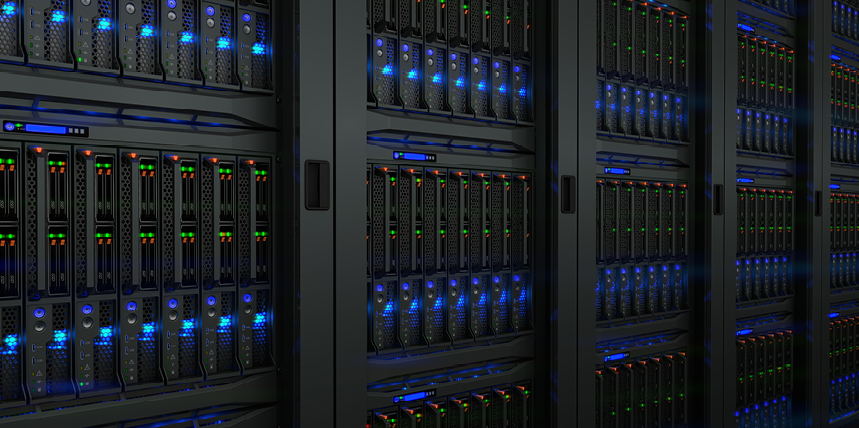
Today, data centers have become the essential infrastructure underpinning the digital world. They are responsible for running cloud services, hosting applications, processing data, and supporting artificial intelligence (AI), the Internet of Things (IoT), and other technologies that individuals and organizations rely on daily. With the exponential growth in data volume, the continuous rise in user numbers, and the rapid evolution of digital applications, it is no longer feasible for data centers to continue relying on the traditional approaches of standalone physical servers, manual operations, and limited automation that were common during their inception.
Over the past several decades, this industry has faced a series of technical challenges, including limited computing resources, low server utilization efficiency, high energy consumption, and the complexity of infrastructure management, alongside a constant demand for faster, more reliable, and scalable services. Overcoming these challenges was not the result of a single innovation; rather, it came through a succession of technological advancements that entirely reshaped the concept of the data center—from simple server rooms through virtualization and cloud computing to hyperscale data centers, accelerated computing, digital twins, and intelligent automation.
As data centers evolved to support increasingly critical and demanding applications, their electrical infrastructure also had to develop to provide greater continuity, reliability, and visibility. The need to maintain uninterrupted operation drove the adoption of increasingly sophisticated power-supply and backup systems, while the growing complexity of data center infrastructure created a need for more advanced methods of monitoring and managing system performance. Technologies such as digital twins and intelligent automation now extend this capability by enabling data center infrastructure to be monitored, analyzed, and managed with greater accuracy and responsiveness.
This article reviews the major phases through which the data center industry has passed, highlighting the drivers behind each stage, and how each development addressed the challenges of the previous phase while paving the way for the next generation of technologies. This evolution has not only transformed how data is processed and managed, but has also fundamentally changed the infrastructure required to keep data centers operating reliably.
FROM SERVER ROOMS TO ENTERPRISE DATA CENTERS
In the early stages of the data center industry’s evolution, most organizations relied on small server rooms to run their applications and store their data. These rooms were not designed as integrated infrastructure; instead, they were created to meet specific operational needs, with new hardware added whenever business requirements grew. As a result, servers and storage systems operated in isolation, lacking a unified mechanism to connect them or allow them to share resources efficiently.
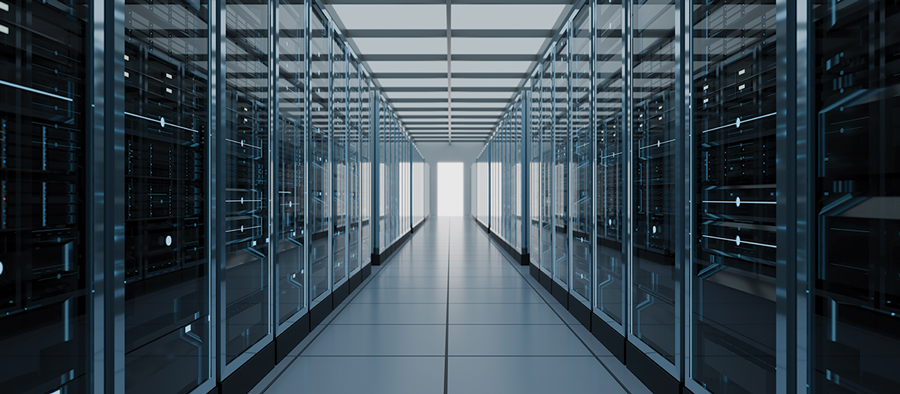
The management of these environments relied almost entirely on human intervention. Many processes were executed manually, such as moving backup tapes between devices or locations, in addition to carrying out numerous operational tasks that required the continuous presence of technicians. While this approach was suitable at the time, it was slow, increased the likelihood of human error, and was unable to keep pace with the growing volume of data.
As organizations expanded, data was no longer just files stored when needed; it became one of the most critical assets companies relied on to run their operations and make decisions. Concurrently, servers and storage systems underwent significant development, and multiple manufacturers emerged to offer different solutions and technologies, leading to great diversity in infrastructure within a single organization. It became necessary to connect these disparate systems into a unified network so they could exchange data, share storage resources, and operate as a single, cohesive system rather than remain isolated.
With the increasing number of systems and the complexity of managing them, it became clear that relying on manual operations was no longer a practical option. From here, a new phase began, relying on data center automation, in which storage management, resource allocation, and system monitoring were programmatically managed rather than manually executed. The impact of this shift was not limited to reducing human error; it also improved service delivery speed, increased resource utilization efficiency, and enhanced data storage reliability, while ensuring continuous system uptime.
This transformation had a direct impact on the electrical infrastructure supporting these facilities. As data centers develop from small server rooms into larger, more integrated environments, their electrical systems had to evolve accordingly to support increasing power demands and provide the greater continuity and reliability required for critical operations.
THE FIRST MAJOR REVOLUTION
After organizations transitioned from traditional server rooms to enterprise data centers, a new challenge emerged regarding resource efficiency. At that time, companies relied on purchasing physical servers with high computing capacities to meet the highest expected peak demand, even if that peak occurred only for brief periods. Consequently, most servers operated at a limited fraction of their actual capacity most of the time, while the rest of the resources remained unutilized.
This approach led to significant waste across multiple areas. The problem was not just poor utilization of computing power; it also included higher power consumption, the need for larger physical space in data centers, and rising costs for purchasing, operating, and maintaining a large number of servers. Organizations needed a smarter way to leverage existing resources instead of adding new hardware for every application or service.
This is where virtualization emerged as one of the most critical turning points in data center history. This technology relies on creating virtual computing environments within a single physical server, allowing the server’s capacities to be divided into multiple independent virtual servers running simultaneously. This is achieved through a software layer known as a hypervisor, which manages the server’s physical resources and allocates them to virtual systems while keeping each environment isolated from the others.
As virtualization technologies matured, the next stage of evolution arrived in the form of cloud computing, which was not just about data hosting or file storage, but rather introduced a new model for building and utilizing digital infrastructure. Cloud computing relies on pooling computing, storage, and networking resources within a flexible environment that can be managed and allocated on demand.
In the past, setting up a new server inside a data center required purchasing equipment, provisioning it, installing cabling, and configuring systems manually—a process that could take days or weeks. With cloud computing, however, it became possible to spin up a new virtual server or scale up computing resources within minutes from anywhere in the world, using software-driven management platforms instead of traditional physical procedures. This transformation changed how data centers are designed and operated, making infrastructure highly flexible and scalable according to business needs.
THE HYPERSCALE REVOLUTION
With the continuous, massive growth of internet usage, data centers were no longer serving just thousands of users; they were required to handle millions of search queries, file download requests, encryption processes, identity verifications, and cloud application tasks simultaneously. With this expanding volume of workloads, relying solely on traditional central processing units (CPUs) has become insufficient to deliver the required performance, efficiency, and speed.
As applications and services grew more diverse, these processors faced an escalating burden. Microsoft was among the pioneers to adopt a new direction, adding field-programmable gate arrays (FPGAs) inside its servers. These chips are distinct in that they can be reprogrammed even after manufacturing, allowing them to be customized to execute specific tasks more efficiently than a central processor. Instead of the CPU bearing all operations, certain tasks were executed directly by the FPGA, which eased the load on the processor, enhanced performance, and reduced latency and power consumption.
However, the real breakthrough was not just in using these chips but in how thousands of servers were interconnected within the data center. Servers began operating on a high-speed network that allowed workloads to be dynamically distributed across machines. If one server experienced high pressure, a portion of the tasks could be transferred within fractions of a second to other servers with available resources, without the user noticing any impact to the service.
As a result of this intelligent interconnection, the data center was no longer viewed as thousands of separate servers; rather, it began functioning as a single, massive computing unit, sharing its resources and capabilities to process workloads with high efficiency. From this emerged the concept of hyperscale data centers, which rely on the integration of hardware, networking, and software to provide an infrastructure capable of continuous scaling, running millions of services and serving users simultaneously with unprecedented efficiency and reliability.
WHEN THE CPU IS NO LONGER ENOUGH
As the internet and digital services continued their rapid growth, data centers entered a new phase that differed radically from previous stages. Their mission was no longer limited to running websites or storing data; they became responsible for processing AI applications, big data analysis, scientific simulations, and high-performance computing (HPC)—applications that require executing billions of mathematical calculations within incredibly short timeframes.
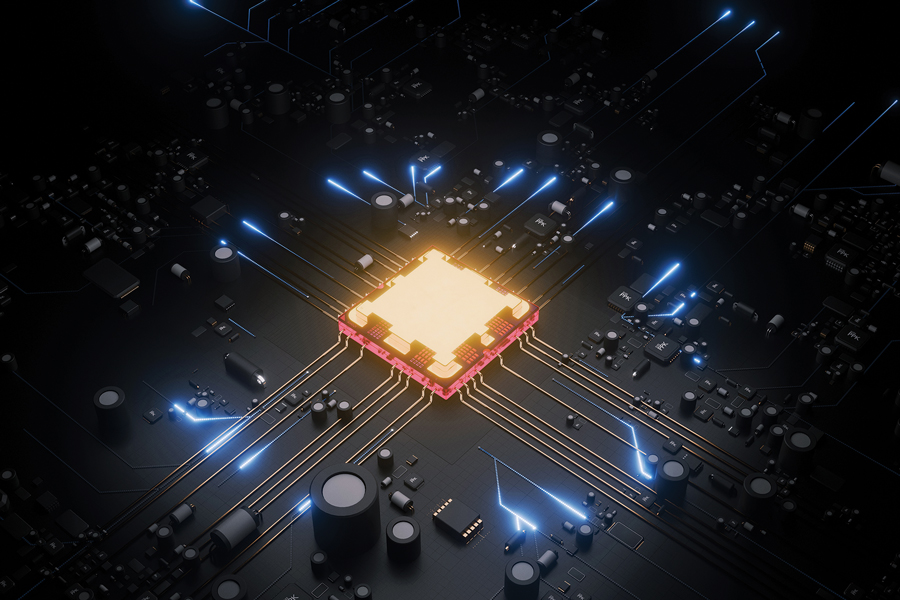
In previous phases, servers relied primarily on the CPU, which is characterized by its ability to execute general tasks and manage operating systems and applications efficiently. However, this type of processor was not designed to handle massive numbers of similar operations simultaneously, which became essential with the rise of AI applications, image and video processing, and big data analytics.
To address this challenge, data centers began adding graphics processing units (GPUs) to servers. Although these processors were originally developed to accelerate graphics rendering, their architecture, which comprises thousands of small cores, made them capable of executing a vast number of parallel operations at the same time. For this reason, they became the optimal choice for running AI applications, training deep learning models, scientific simulations, and other applications that rely on executing massive amounts of repetitive calculations.
With the widespread adoption of GPUs, computing power experienced massive growth, making them the backbone of modern data centers and supercomputers. For instance, the Titan supercomputer required an electrical power capacity of approximately 8.2 MW to run its components, a figure that reflects the scale of energy required to deliver this level of computing performance.
At the same time, major companies did not rely on the GPU alone; they also began leveraging other specialized processors like FPGAs. Instead of the central processor executing all operations itself, certain tasks—such as encryption, data processing, or network acceleration—were offloaded to these specialized chips, alleviating the burden on the CPU and raising the server’s overall performance.
This stage marked the beginning of a new era in the data center industry, where the benchmark for advancement was no longer the number of servers inside the facility, but rather the capability to run massive workloads, distribute them intelligently, and leverage specialized processors to achieve the highest possible performance.
THE NEXT GENERATION OF DATA CENTERS
As modern data centers grew increasingly complex, hardware development alone was no longer enough to maintain performance and reliability. These centers now house thousands of servers, cooling systems, power sources, and sensors that generate massive amounts of data every second. The real challenge became not collecting this data but analyzing it and making the right decision at the right time. From here, digital twins and intelligent automation emerged as a new phase in data center evolution, in which management no longer relies on traditional monitoring but on a live digital model that mirrors the center’s actual state and interacts with it continuously.
Digital twins rely on a constantly updated digital replica of the data center that receives data directly from sensors deployed across power systems, cooling units, and servers, and then analyzes it to simulate the center’s behavior in real time. For example, cooling systems need to process thousands of temperature, humidity, and airflow readings within fractions of a second. If all this data were sent to remote cloud computing hubs to be processed before sending decisions back to the data center, data latency could delay the response—something highly undesirable in environments requiring instantaneous decisions. Therefore, modern data centers turned toward integrating edge computing with the digital twin, allowing data to be processed within or near the data center itself. This enables instantaneous decisions, such as increasing cooling fan speeds or redistributing thermal loads, before they impact system stability.
The role of the digital twin is not limited to monitoring individual metrics; it relies on understanding the relationship between a vast number of variables simultaneously. This includes not only computing and environmental parameters but also the operating condition of critical electrical assets such as uninterruptible power supply (UPS)systems, transformers, generators, and power distribution equipment. Instead of triggering an alert merely because a component’s temperature rises, anomaly detection algorithms can analyze relationships among power consumption, voltage, current, equipment temperature, loading conditions, and other indicators across both IT and electrical infrastructure. If the temperature of a transformer rises while its electrical loading remains within normal levels, for example, the digital twin can identify this deviation from expected behavior and support further investigation of a developing abnormal condition. Similarly, changes in UPS operating parameters, battery condition, or power-system loading can be evaluated together with other facility data to identify patterns that may indicate degradation or an emerging fault. This analysis allows abnormalities to be identified at an earlier stage, enabling corrective action before they lead to equipment failures or unplanned service disruptions.
For digital twins to perform this role efficiently, all data center components must be capable of exchanging data with one another, regardless of their manufacturers. In reality, a facility might house servers from Dell, cooling systems from Schneider Electric, and backup generators from Caterpillar, alongside equipment from other companies. If each company used its own proprietary communication language, integrating these systems would become complex and costly, and organizations might be forced to rely on a single vendor to avoid compatibility issues.
For this reason, modern data centers rely on the concept of interoperability, ensuring that all devices and systems can exchange data and work together even if they are from different manufacturers. This is achieved through the use of open communication standards and protocols, which facilitate the construction of a unified digital twin and give organizations the freedom to choose the best equipment from various companies without being locked into a single vendor or trapped by monopolistic constraints.
Thus, modern data centers are no longer just about operating infrastructure; they have become capable of understanding their own behavior, predicting failures, and making autonomous decisions based on real-time data. This shift marks the beginning of a new phase, moving data centers from human-managed environments into intelligent systems capable of continuous monitoring, analysis, and optimization, making digital twins and smart automation one of the most critical pillars of the next generation of data centers.
CONCLUSION
The evolution of the data center industry was not merely a transition from small server rooms to larger facilities; it was a continuous journey to redefine the concept of digital infrastructure and how it is designed and managed. From the early days that relied on isolated servers and manual management, the industry has witnessed a series of technological transformations that radically altered how data centers operate. Virtualization and cloud computing helped raise resource utilization efficiency, while hyperscale data centers paved the way to run millions of services and serve users simultaneously. With the emergence of specialized processors, such as GPUs and FPGAs, data centers became capable of handling artificial intelligence and high-performance computing applications with unprecedented efficiency, while energy efficiency surfaced as one of the most critical challenges guiding the design and operation of modern data centers.
At the same time, data center management shifted from relying on traditional monitoring to relying on data and intelligent analytics. Digital twins, automation, and edge computing technologies have enabled data centers to monitor their infrastructure in real time, detect failures before they occur, and continuously optimize the performance of power and cooling systems. The objective is no longer confined to maintaining uptime but has become about achieving the highest levels of reliability, efficiency, and sustainability, alongside the capacity for rapid scaling to keep pace with the growing demand for digital services.
As AI, the IoT, and advanced computing technologies continue to evolve, data centers are expected to enter a new phase that relies even more heavily on autonomous systems capable of making decisions and optimizing their performance without direct human intervention. Therefore, understanding the evolutionary journey of this industry is not just about reviewing its history, but it forms the baseline for understanding future trends and the technologies that will shape the next generation of data centers. Amid this rapid evolution, data centers will remain the foundational pillar of the digital economy and the engine on which various sectors depend to deliver faster, more reliable, and more sustainable services in the coming years.
REFERENCES
- Moore, F. “Enterprise storage report for the 1990’s.” (1991).
- Kratzke, N. “A Brief History of Cloud Application Architectures.” Applied Sciences 8, no. 8 (2018): 1368.
- Mittal, S., & Vetter, J. S. “A Survey of Methods for Analyzing and Improving GPU Energy Efficiency.” ACM Computing Surveys 47, no. 2 (2015): Article 19.
- Zhang, J., Deng, C., Zheng, P., Xu, X., & Ma, Z. “Development of an Edge Computing-Based Cyber-Physical Machine Tool.” Robotics and Computer-Integrated Manufacturing 72 (2021): 102042.
- Caulfield, A. M., Chung, E. S., Putnam, A., Angepat, H., Fowers, J., Haselman, M., Heil, S., et al. “A Cloud-Scale Acceleration Architecture.” In Proceedings of the 49th Annual IEEE/ACM International Symposium on Microarchitecture (MICRO), 7–19. IEEE, 2016.
- Kestelyn, X., G. Denis, V. Champaney, N. Hascoet, C. Ghnatios, and F. Chinesta, Towards a Hybrid Twin for Infrastructure Asset Management: Investigation on Power Transformer Asset Maintenance Management. In 7th International Advanced Research Workshop on Transformers (ARWtr). 2022.

Ahmad Ayman Naimat is an Electrical Engineer at Commissioning Services International (CSI), where he is involved in testing, commissioning, and power system analysis. He received his BEng. degree from Al-Balqa’ Applied University in Jordan. Naimat is also a NETA Level 3 Certified Electrical Testing Technician, demonstrating his expertise in advanced electrical testing and commissioning procedures.