
As renewable energy continues its rapid expansion, the grid is evolving faster than traditional designs, standards, and maintenance practices can adapt. Inverterbased resources are introducing unfamiliar electrical behaviors that are directly affecting equipment reliability, protection schemes, and testing methods across the industry. Against this backdrop, EPIC26 convenes this October in Fort Worth, Texas, bringing together power professionals to explore how renewable integration is reshaping the grid—and what engineers, technicians, and asset managers must do now to stay ahead of these changes.
Renewable energy is transforming the electrical power landscape at a pace that challenges long‑standing engineering assumptions, equipment designs, and maintenance practices. Solar, wind, and energy‑storage installations are expanding across North America, driven by decarbonization goals, regulatory incentives, and rising demand for clean power.
Yet behind this momentum lies a complex reality: Renewable energy introduces electrical behaviors that differ fundamentally from those of traditional synchronous generation. These differences are reshaping how transformers, cables, protection systems, and substations must be designed, tested, and maintained. As the industry adapts, electrical service professionals are encountering both significant challenges and unprecedented opportunities for innovation.
INVERTER‑BASED RESOURCES ARE CHANGING SYSTEM BEHAVIOR
At the heart of renewable energy integration is the inverter. Nearly all modern solar, wind, and storage systems rely on inverter‑based resources (IBRs) to convert DC or variable‑frequency AC into grid‑synchronous AC. Unlike synchronous machines, inverters do not inherently produce smooth sinusoidal waveforms. Instead, they rely on high‑frequency switching and pulse‑width modulation to synthesize AC output. This creates elevated harmonic content—often extending well beyond the traditional 50th harmonic—and introduces high‑frequency electrical noise that permeates the system.
These characteristics, combined with the inherently variable and intermittent nature of renewable energy generation, create new stressors on electrical equipment. Transformers, generators, cables, and insulation systems are exposed to operating conditions that legacy designs were never intended to withstand. The result is accelerated aging, unexpected failure modes, and a growing need for updated engineering practices.
PREMATURE TRANSFORMER FAILURES ARE INCREASING
One of the most visible consequences of inverter‑rich environments is the rise in premature transformer failures. Units designed for decades of service are failing in a fraction of their expected lifespan—sometimes within months of commissioning. Several factors contribute to this trend.
Harmonic heating is a major driver. Higher-order harmonics increase eddy‑current losses in transformer cores and windings, elevating temperatures and accelerating insulation degradation. Thermal cycling, caused by fluctuating renewable output, further stresses the insulation system. Many transformers were designed for stable, unidirectional loading, yet renewable installations often require reversible power flow and highly dynamic duty cycles.
In some cases, extremely high harmonic orders—such as the 120th harmonic—have triggered sudden pressure relays or produced alarming dissolved gas analysis (DGA) results. These events underscore the need for improved transformer specifications, more frequent monitoring, and testing practices tailored specifically to renewable applications. As renewable penetration grows, transformer design standards must evolve to reflect the realities of inverter‑dominated systems.
INVERTER TRANSPARENCY AND STANDARDS GAP
A persistent challenge in renewable integration is the lack of transparency in inverter behavior. Many inverters operate as black boxes, with manufacturers restricting access to diagnostic data, especially during warranty periods. This limits the ability of engineers and technicians to analyze system behavior, troubleshoot issues, or validate performance.
Compounding the issue is the absence of unified standards governing inverter response during faults. Traditional protection schemes rely on predictable synchronous‑machine behavior, but inverter response is dictated by software logic rather than physics. Without clear standards, protection coordination becomes more complex, and modeling inverter behavior for power flow or short‑circuit studies becomes increasingly difficult.
The industry is actively working toward improved standards and greater transparency, but progress is uneven. As renewable installations proliferate, the need for consistent inverter behavior and accessible diagnostic data becomes increasingly urgent.
LIQUID INSULATION CHOICES AFFECT SAFETY AND LONGEVITY
Transformer liquid insulation plays a critical role in renewable environments. Mineral oil, long the industry standard, has shown poor performance when exposed to partial discharge and high harmonic stress. In such conditions, mineral oil can generate dangerously high hydrogen levels—sometimes reaching tens of thousands of parts per million—creating a significant explosion risk.
Natural ester fluids, such as FR3, offer several advantages. They generate far less hydrogen under partial discharge, tolerate moisture more effectively, and help keep solid insulation drier. These properties improve both safety and transformer longevity. While concerns about viscosity and pour point are sometimes raised, especially in cold climates, the more consequential factors are insulation aging and moisture management. As renewable installations expand, ester‑based fluids are becoming an increasingly attractive option for long‑term reliability.
DIGITAL SUBSTATIONS AND IEC 61850 ARE BECOMING ESSENTIAL
The integration of renewable energy is accelerating the adoption of digital and hybrid substations built on IEC 61850. These systems replace extensive copper wiring with fiber and IP‑based communication, enabling modular, scalable substation designs that can more easily accommodate new renewable sources. Digital substations also offer advanced testing capabilities, such as dedicated test modes that allow technicians to validate relay behavior without affecting live equipment.
IEC 61850 requires technicians to develop new IT‑centric skills, including network configuration, data modeling, and cybersecurity awareness. However, digital substations do not replace foundational protection knowledge. Instead, they modernize the tools used to apply it. Technicians still perform metering tests, end‑to‑end tests, protection function validation, and synchronization checks—just through different interfaces and communication protocols.
PROTECTING INVERTER‑BASED RESOURCES REMAINS A CHALLENGE
Protecting inverter‑based resources is one of the most active and complex areas of research in modern power engineering. Traditional protection schemes assume predictable synchronous‑machine behavior, but inverter response during faults is determined by software logic. This creates significant challenges in modeling, coordination, and system protection.
Key questions include how inverters should contribute fault current, whether they should inject negative‑sequence components, and how their behavior should be standardized across manufacturers. Without consistent models, engineers struggle to design reliable protection schemes or conduct accurate short‑circuit studies. Industry committees are working to develop standardized inverter models, but the technology continues to evolve faster than standards can keep pace.
CABLES ARE EXPERIENCING HIGHER STRESS AND FAILURE RATES
Cables in renewable installations—particularly wind farms—are experiencing increased stress and higher failure rates. High‑frequency switching, thermal cycling, and installation quality issues contribute to partial discharge activity and insulation degradation. Offshore and high-voltage DC cable repairs are especially complex and costly, often requiring specialized vessels and extended outages.
New diagnostic methods, such as online partial discharge testing and low‑voltage frequency sweeps, show promise for identifying emerging issues. However, inverter noise remains a significant barrier to accurate assessment. As renewable installations expand, cable testing and monitoring will become increasingly important components of electrical service work.
WORKFORCE DEVELOPMENT IS A CRITICAL PRIORITY
The industry faces a widening skills gap as experienced technicians retire faster than new workers can be trained. Renewable integration requires technicians to master both traditional electrical skills and new digital competencies. Training needs include IEC 61850 communications, a deeper understanding of test‑set operation, advanced cable diagnostics, inverter troubleshooting, and specialized safety practices for offshore environments.
Younger technicians may adapt more easily to digital systems, but structured training is essential for all personnel. Workforce readiness will be a defining factor in the industry’s ability to support renewable growth.
CONCLUSION
Renewable energy integration is no longer a future challenge—it is already reshaping how electrical systems behave, how equipment fails, and how protection and testing must be performed. From inverter-driven harmonics and transformer stress to evolving protection schemes, digital substations, and workforce readiness, the changes outlined in this article are directly affecting reliability, safety, and day-to-day service work across the industry. Understanding these issues is essential for engineers, technicians, and asset managers who must make informed decisions in increasingly complex environments.
This article offers practical insight into what is changing, why it matters now, and how the industry is responding—setting the stage for deeper discussion and learning at EPIC26 for those responsible for keeping the grid reliable, resilient, and ready for what comes next.
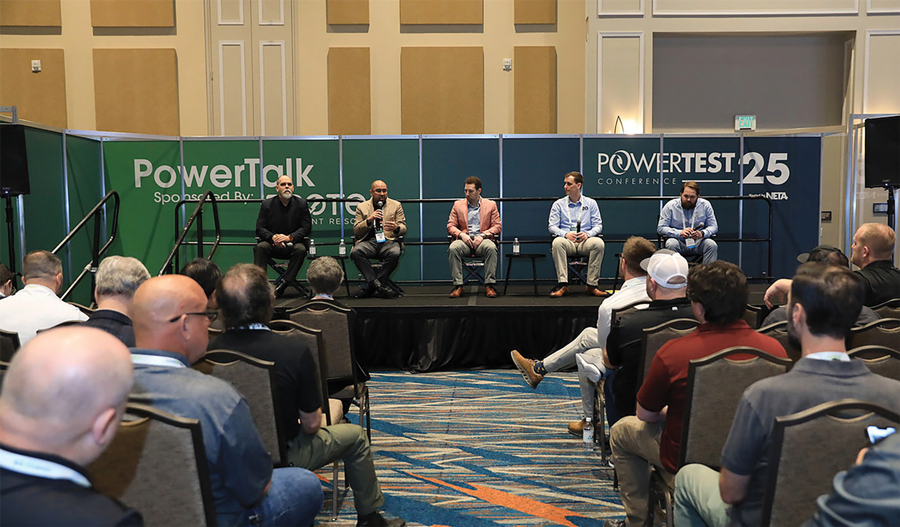
Article content credited to PowerTalk Stage Panelists:
Stephen Cialdea, Sigma C Power Services
Brett Cursi, Megger
Abel Gonzalez, Megger
Derek Jacobsen, EA Technology
Volney Naranjo, Megger