

The electric power industry is undergoing the largest transition since widespread energization began more than a century ago. Inverter-based resources, data centers, and rapidly changing load profiles are exposing operating conditions that were never envisioned when many IEEE standards for machinery were originally developed. As a result, IEEE and other standards organizations are revising existing standards while developing new guidance to address these emerging challenges. This article discusses why testing standards are changing, the technical forces driving these changes, and what engineers and technicians should expect as electrical systems continue to evolve.
Many of the changes to electric machinery standards relate to the transition of the grid and the impacts of new loads. While we continue to see advances in materials and designs, the electrification of everything has a significant impact on the reliability of, well, everything.
I’ve served on IEEE Power Engineering Society (PES) Materials Subcommittee, Motors Subcommittee, and Generator Subcommittee standards since I first became a member of IEEE in 1993. At that time, we were exploring new advances in materials technology and testing technologies, with the backbone of the standards provided by engineers with 30-plus years in the industry, and support from utilities, end users, OEMs, and academics. Effectively, a standards committee or working group is, and was, represented, by as many stakeholders as possible. My service included being a machinery repair and field service technician/engineer, then an academic, then field service and consulting, and an OEM. This provided an interesting viewpoint.
WHY EXISTING STANDARDS ARE BEING REVISITED
Historically, IEEE machinery standards evolved slowly because machine designs, materials, operating environments, and utility systems changed gradually. Today, nearly every assumption surrounding electrical systems, including machinery, is changing simultaneously and dynamically. Utilities are integrating inverter-based resources, industrial facilities are installing variable frequency drives (VFDs) in unprecedented numbers, transportation is electrifying, and hyperscale data centers have become significant non-linear electrical loads. These developments have fundamentally altered the electrical environment experienced by motors, generators, transformers, and associated insulation systems.
IEEE Std. 1415, IEEE Guide for Induction Machinery Maintenance Testing and Failure Analysis, originally released in 2006, represented an ambitious effort for its time. Rather than simply serving as another testing guide, its scope extended to selecting appropriate maintenance tests, interpreting results, investigating failures, and conducting root-cause analysis (RCA). The guide combined visual inspections, more than 40 diagnostic methods, maintenance recommendations, and failure analysis into a single document intended to help engineers determine not only whether a machine had a problem, but also why it had failed and how similar failures could be prevented.
While many users appreciated this comprehensive approach, others questioned whether portions of the document extended beyond what an IEEE guide should encompass. The differing technical philosophies, combined with the rapid evolution of diagnostic technologies and industry practices, ultimately resulted in the guide being administratively withdrawn so that it could be completely restructured rather than incrementally revised.
In many respects, the industry had outgrown the original document. The current IEEE 1415 project is therefore not simply an update but rather an opportunity to retain the original vision while incorporating nearly two decades of advances in machinery diagnostics, condition assessment, and modern power-system operation.
From my perspective as both an original contributor and now chair of the rewrite effort, the discussion surrounding IEEE 1415 demonstrates that standards development is rarely about technology alone. It is about reaching consensus among manufacturers, utilities, service organizations, researchers, consultants, and end users, each bringing different experiences and priorities to the same technical problems.
Those who are familiar with the standards might realize that IEEE Std. 62.2, IEEE Guide for Diagnostic Field Testing of Electric Power Apparatus – Electrical Machinery, could be similar. However, IEEE 62.2 focuses on large machines over 3,000 volts, which leaves out specific machines, and it serves as a guide for just the inspection and testing, but not the RCA. This becomes important as the focus of standards development relates to impacts on the modern grid, such that wind turbine generators, of which more than 96% are induction machines, become a serious consideration. So we extended the scope in IEEE 1415 to include asynchronous power generation.
THE MODERN GRID HAS CHANGED THE RULES
As energy production and distribution have evolved, the standards groups have found the need to evolve with them. Written and published in 2018, IEEE PES-TR69, Technical, Report on Coordination of Grid Codes and Generator Standards: Consequences of Diverse Grid Code Requirements on Synchronous Machine Design and Standards, is already making major revisions as the makeup of the transitioning grid continues. The operation, stresses, and capabilities of the modern grid have changed dramatically during the past decade. Systems designed around early 20th-century assumptions must now accommodate operating conditions that were never envisioned by their designers.
New testing systems and methods have been introduced into standards and research through organizations such as EPRI, National Labs, and CIGRE, in addition to studies on the impacts of everything from electric vehicles to data centers. This includes concerns about the impacts of these systems, in addition to cybersecurity considerations, related to mysterious failures of relay systems that were designed around primarily line frequency and lower-order harmonic contributions (up to the 50th). Within recent years, we have just become exposed to supra-harmonic conditions, which are defined as harmonics in the range of 2 kHz to 150 kHz, and associated intra-harmonics that are primarily driven by energy conversion from AC to DC. This does not include conditions that have not yet been discovered or proven.
Perhaps the most significant aspect of this transition is that experienced personnel are retiring while a new generation of engineers and technicians is entering the industry, creating an unprecedented challenge in knowledge transfer. Factors that contribute to this range from the COVID-19 pandemic and what occurred afterward, the focus on computer simulation in academics and engineering, and massive new systems where how they operate is viewed as a trade secret—all hitting at the same time. Add to that how deregulation has impacted generator operation and the amount of time it takes to make adjustments to grid code recommendations.
We have also introduced such technologies as high-voltage direct current (HVDC), which includes converter and inverter switching and related power disturbances, and a variety of independent power sources that play—or don’t—by the rules. The discussions at the grid level and in engineering organizations are quite interesting and often more reactive than they have been in the past. This is partly due to the fact that we don’t have the data to generate the models that most have become dependent on.
WHAT ENGINEERS ARE SEEING IN THE FIELD
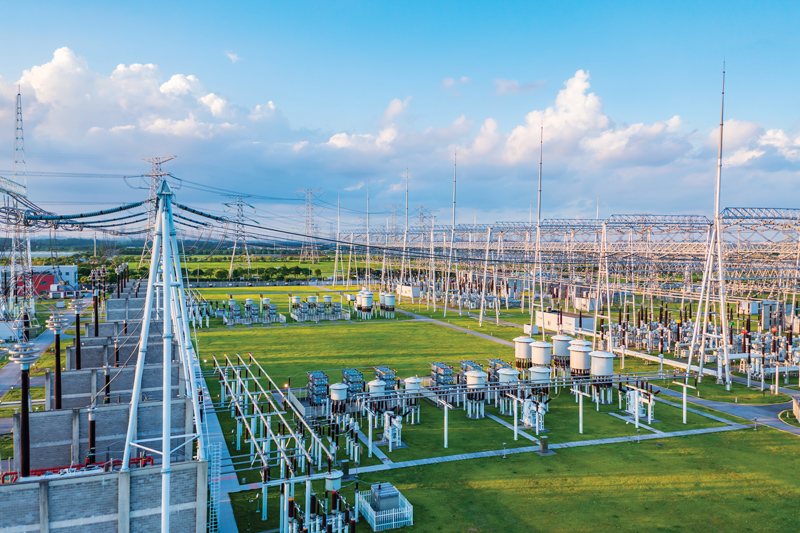
We see this at the power generation side, as synchronous base-load systems age rapidly, new technologies have higher failure rates than expected because of unknowns, systems in buildings and factories fail, and unexplained failures occur in all levels of the electrical systems. We note higher gassing and temperatures in transformers, unexplained relay trips, ferrous materials in generator rotors, electric motors, new lighting systems failing at unexplained frequencies, and far more.
STANDARDS FOLLOW INDUSTRY EXPERIENCE
Standards normally follow conditions. This means that when we are working on these standards, we are looking at the condition and doing several things:
- Knowledge transition. Comparing a standard written in the past 5–7 years, you will note that more explanations concerning the reasons for declarations are provided in the standard. This is the education part, where someone picking up a standard for the first time can have some idea why things are done per the standard.
- New standards. As information is learned and testing methods are incorporated, they are being added to standards. This does leave a lag, as an average non-controversial standard will still take 3–5 years to complete.
- Rapid harmonization. Different standard groups work hard to ensure that standards across organizations,
such as between IEEE and IEC, etc., are similar enough not to contradict.
The result of these changes is a new generation of standards that do more than specify test procedures. They provide engineers and technicians with the technical background needed to understand why tests are performed, how the tests should be interpreted, and the capabilities and limitations of each method. This allows testing, inspection, maintenance, and engineering decisions to be supported by sound technical reasoning rather than simply following a procedure.
NEW CHALLENGES DRIVING STANDARDS DEVELOPMENT
Due to the impact of the modern grid, there have been improvements to existing standards, from large generator and motor core inspections to the dissection of coils in electric machines.
At American Clean Power Association (ACP), we had to perform several studies on transformers, as inverter-based (IBR) resource-related transformer gassing did not meet any existing standards. This has resulted in the development of several new standards (in process) based on measurements, experience, and failure rates for these industries. The question of where supra-harmonics are primarily generated has been enough of an issue that several organizations are kicking off studies to look at where they are actually generated, or if they are the result of multiple conditions. This is because bias, assumptions, and misinformation in several standards and peer-reviewed (and non-peer-reviewed) papers continue to propagate opinion over studied fact.
So what have we been doing in the standards arena? A lot. We are updating standards to reflect what is known about existing conditions. New standards are being developed that provide a deeper understanding of the data being obtained in order to make technicians and engineers more effective. We have studies in place to expand existing and new standards as new information unfolds. We have collaborative work between organizations, including between NETA and ACP on splicing in wind, solar, and battery storage locations (the ACP splicing guide is a best practice, not a standard).
CURRENT IEEE MACHINERY STANDARDS UNDER REVISION
Here’s an example of how it is being handled in the standards arena using the IEEE PES Materials Subcommittee as an example (the following is based upon the presentation given at the PES General Meeting in July 2026). The theme relates to new challenges in power generation equipment. This focus is due primarily to the introduction of renewables and data centers, resulting in voltage and frequency issues, reactive power issues, rapid changes in load, and out-of-spec operations.
As mentioned, owners and OEMs both realize that older equipment, and some newer, are experiencing rapid aging across all power generation. The standards within the subcommittee are being adjusted to accommodate the new environment, including:
- Thermal classification of materials: IEEE 117 and 1776 (in working group)
- Testing of electrical insulation systems: IEEE 286 and 433
- Testing of turn insulation (surge testing form-wound equipment): IEEE 522
- Assessing insulation quality and general condition: IEEE 3149
- Maintenance/repair/inspection of machines: IEEE 56, 62.2, 1719
- Testing with direct voltage: IEEE 43, 95, 97 (new)
- Simulated aging of insulation systems: IEEE 1043, 1310, 1553
- Partial discharge measurement: IEEE 1434, 1799, 2465
WHAT THESE CHANGES MEAN FOR ENGINEERS AND TECHNICIANS
A review of these standards and a comparison to even the last versions will demonstrate to the reader that there have been major changes. In another group, where I chair the new 1415, the work will result in a complete rewrite as we incorporate the changes, test methodologies, and how they are now interpreted. Picking up and referencing an older standard may no longer provide the correct answers, which makes it incumbent upon the engineer or technician to become familiar with the changes when testing and reporting. We have noted significant failures over the past decade resulting from misunderstandings or misinterpretations of the standards or the mistaken belief that something not mentioned in the standard must not be a concern.
Engineers, technicians, and asset owners can no longer assume that guidance contained in decades-old standards fully reflects today’s operating environment. Modern power systems continue to evolve rapidly, and standards are evolving with them. Remaining current with these revisions is no longer simply a matter of compliance; it is becoming essential for accurate testing, correct interpretation of results, and reliable operation of critical electrical assets of all types.
For those of us involved in standards development, the objective remains unchanged: Provide engineers and technicians with guidance that reflects real operating experience, supports sound engineering judgment, and continues to improve the reliability and safety of the electrical infrastructure on which modern society depends.
Howard W. Penrose, is President of MotorDoc LLC, a veteran-owned small business, and Founder/CEO of Human Reliability Intelligence Labs. He is Chair of the CIGRE-USNC A1 Study Group (power generation), Chair of IEEE 1415, Chair of ACP transformer DGA standards, convenor of CIGRE A1.78, and serves on IEEE, ACP, and CIGRE standards and related committees. Penrose also serves on the IEEE PES Grid Code Committee responsible for the power generation section and is a leading researcher in supra-harmonic impacts.