
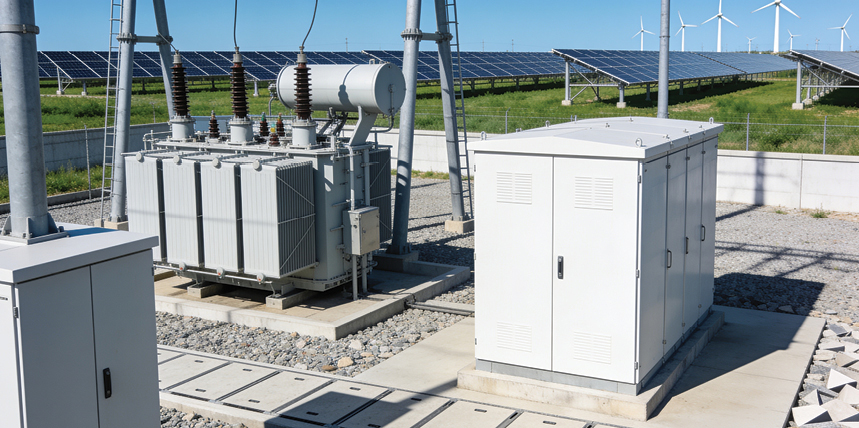
Power transformers used in renewable-energy applications are subjected to elevated thermal, electrical, and mechanical stresses due to the dynamic nature of solar and wind generation. Although these transformers are often specifically designed to withstand such operating conditions and achieve their intended service life, they frequently exhibit higher dissolved gas levels and may experience accelerated insulation aging compared to conventional power transformers. As renewable generation continues to expand, understanding the impact of these unique operating stresses on transformer condition assessment is becoming increasingly important.
This article examines the mechanisms that drive gas generation and insulation degradation in renewable-energy transformers and discusses the limitations of relying solely on absolute DGA gas concentrations. Particular emphasis is placed on continuous online monitoring and the importance of dissolved gas rate-of-change (RoC) analysis as a tool for early anomaly detection.
TRANSFORMER STRESS AND DEGRADATION
Power transformers are subjected to several forms of stress throughout their operational life, including thermal, electrical, and mechanical stresses. These stresses accelerate the aging of the solid and liquid insulation system.
Thermal Stress
Thermal stress is typically associated with overloading and cooling-system deficiencies. In renewable-energy transformers, however, thermal aging is often driven by frequent load fluctuations, inrush currents, harmonics, and cyclic loading associated with solar and wind generation. These conditions can accelerate insulation aging, promote oil degradation, and increase dissolved gas generation, ultimately reducing transformer life expectancy.
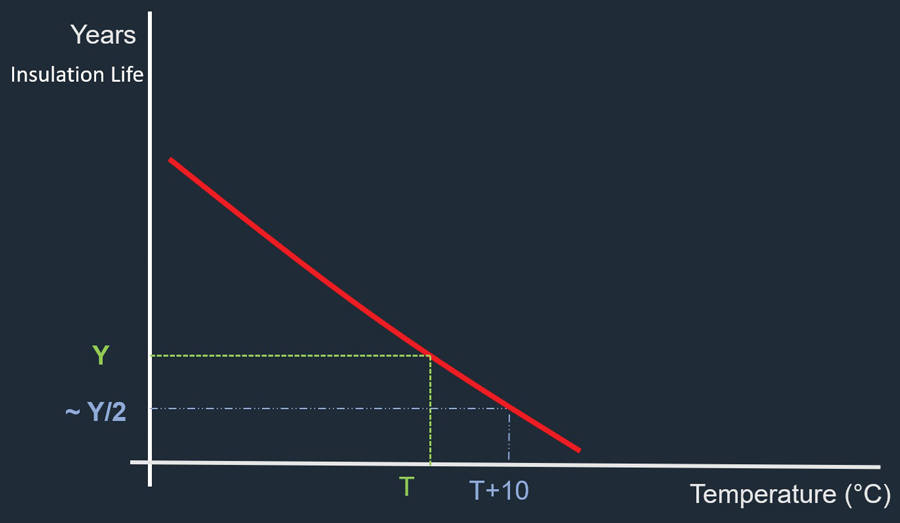
Figure 1 shows that a 10°C increase in the operating temperature of a transformer can reduce its insulation lifespan by approximately half [1].
Electrical Stress
Electrical stress is commonly associated with switching surges, transient overvoltage, partial discharge, and arcing. In renewable-energy transformers, electrical stress can be further intensified by power-electronic converters, harmonics, frequent switching operations, and fluctuating power generation. These conditions can accelerate insulation degradation, promote partial discharge activity, and increase gas generation, potentially leading to premature insulation failure if not detected early.
Mechanical Stress
Mechanical stress is often caused by sudden changes in current, including inrush currents, fault currents, and frequent load variations. In renewable-energy transformers, these stresses can be intensified by intermittent generation, turbine start-stop cycles, and rapid power fluctuations. Repeated mechanical forces may lead to winding displacement, deformation, or insulation damage, creating weak points that can accelerate aging and increase the risk of future electrical faults.
Moisture
In addition to thermal, electrical, and mechanical stresses, moisture is a major threat to transformer insulation systems. High moisture levels reduce dielectric strength, limit loading capability, and accelerate insulation aging [2].
Figure 2 illustrates the significant impact of increased moisture content on transformer insulation life, showing that even relatively small increases in moisture (from 1% to 3%) can dramatically reduce expected transformer lifespan. However, while the focus of this article is on rate-of-change analysis, routine testing and condition monitoring remain essential. Rate-of-change diagnostics should be viewed as a complementary tool.

DGA MONITORING VERSUS OIL SAMPLING
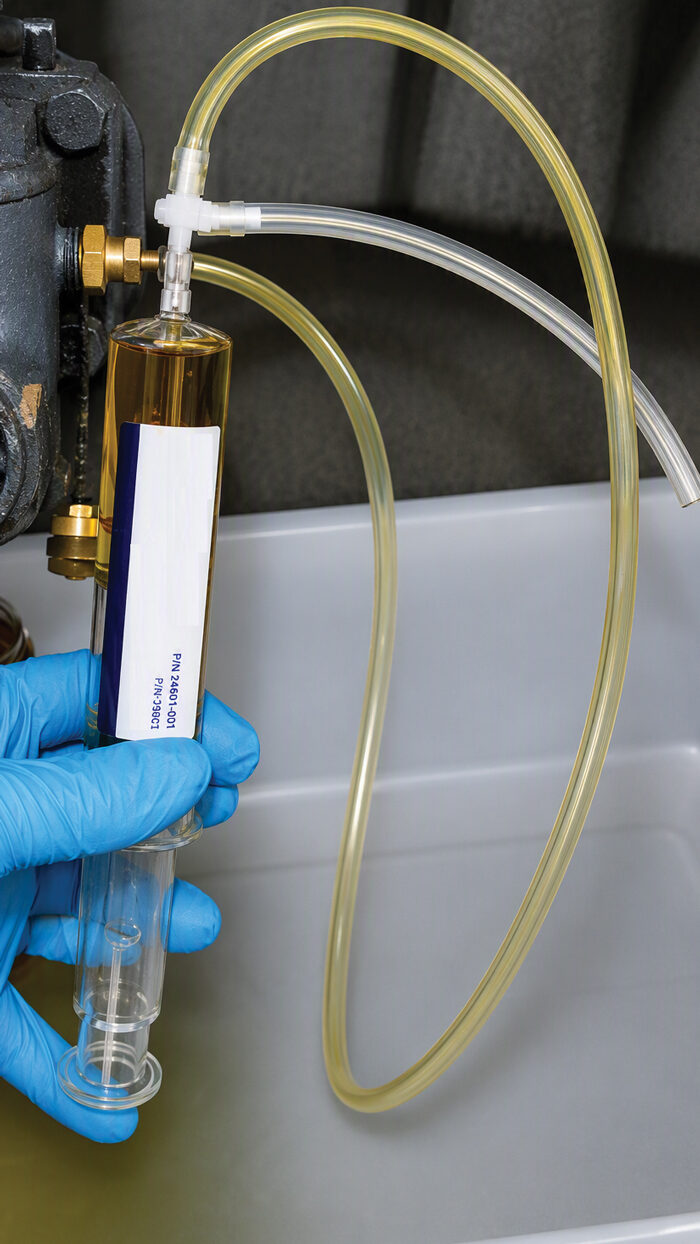
Oil sampling can be compared to a blood test for the human body. Transformer oil carries evidence of insulation aging, overheating, electrical faults, and contamination, making it an excellent indicator of transformer health.
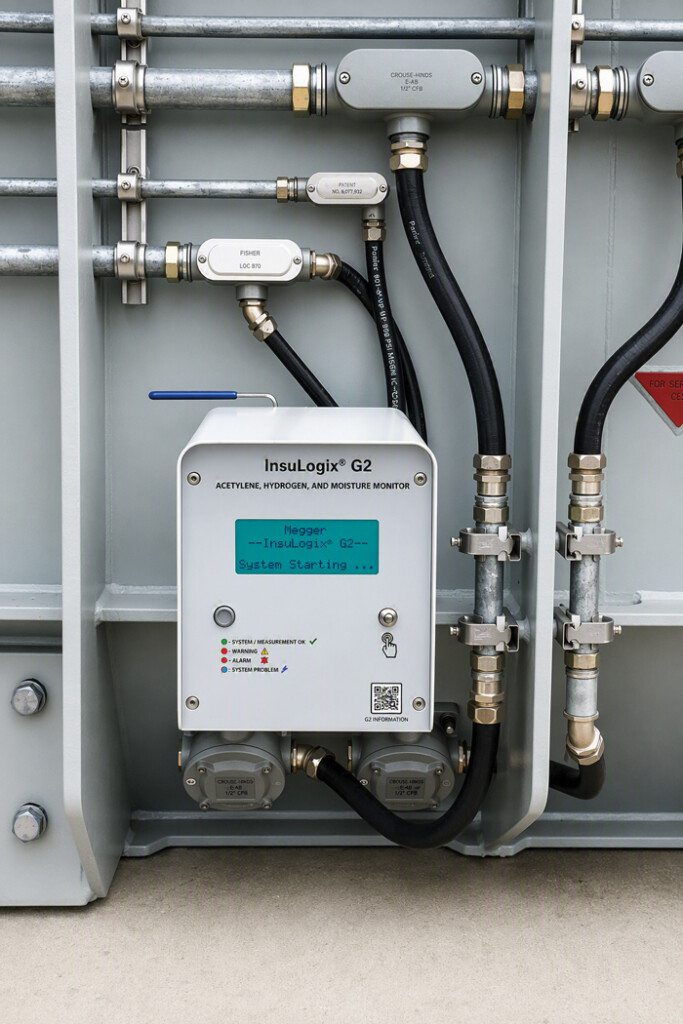
Oil sampling is typically performed every 6 to 12 months, depending on asset criticality and condition, providing periodic snapshots of transformer health. However, these snapshots may miss rapidly developing events in renewable-energy transformers. In contrast, online DGA monitoring provides continuous trending, enabling earlier detection of changes and developing faults.
RENEWABLE TRANSFORMER CHALLENGES
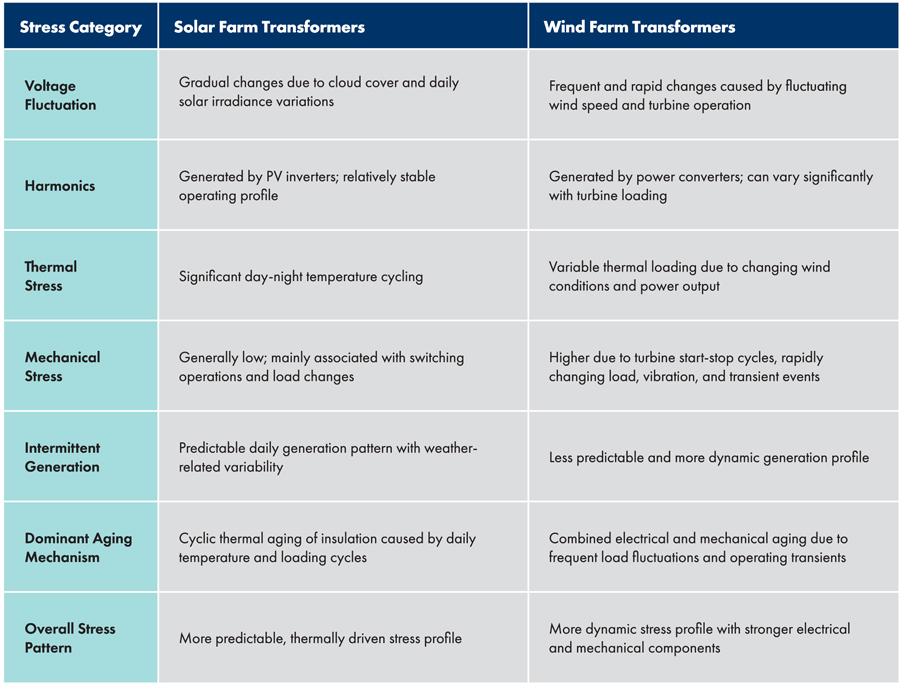
Renewable-energy transformers are typically subjected to elevated thermal, electrical, and mechanical stresses due to the variable and intermittent nature of solar and wind power generation. While transformers in both solar and wind farms experience these stress mechanisms, their magnitude and dominant characteristics differ between the two applications. Consequently, the resulting aging processes and failure modes may vary.
Table 1 summarizes the key differences in transformer stress profiles in solar and wind farm environments. Conventional oil sampling and dissolved gas analysis (DGA) are valuable for transformer diagnostics, but in renewable-energy applications, dynamic loading can elevate baseline gas levels. This may limit the effectiveness of relying solely on absolute gas concentrations for early fault detection.
ELEVATED GAS LEVELS IN RENEWABLE-ENERGY TRANSFORMERS
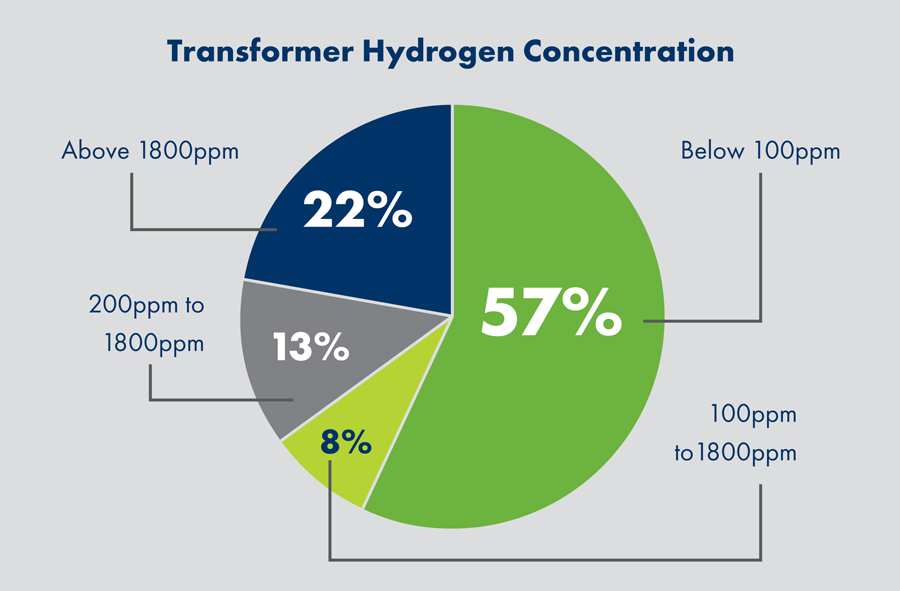
A large-scale study of transformer oil samples from wind power plants found hydrogen concentrations significantly higher than those typically observed in conventional transformer applications. Figure 4 illustrates the distribution of hydrogen concentrations observed in the sampled wind-farm transformer population.
Transformers designed for solar and wind farms are better equipped to withstand thermal cycling, harmonics, and mechanical stresses. However, their unique operating conditions often require a different approach to DGA interpretation.
GAS RATE-OF-CHANGE
Rate-of-change (RoC) analysis is valuable for renewable-energy transformers [5], where normal operation can result in elevated gas levels. By tracking gas-generation rates rather than relying solely on absolute gas concentration, developing faults or abnormal stresses can be identified earlier. As shown in Figure 5, the RoC spikes well before the gas concentration reaches an alarm threshold, providing an early warning of a deteriorating condition.

Figure 5 demonstrates why RoC can be more informative than absolute gas concentration when monitoring transformers. The chart shows three trends:
- Blue line: Absolute gas concentration (ppm)
- Orange line: Rate of change (gas generation rate)
- Green line: Alarm level or accumulated trend indicator
Before the concentration (blue line) reaches an alarm threshold, the rate of change (orange line) spikes sharply, indicating accelerated gas generation due to a developing fault or elevated operating stress. This provides an early warning even when absolute gas levels remain below critical limits.
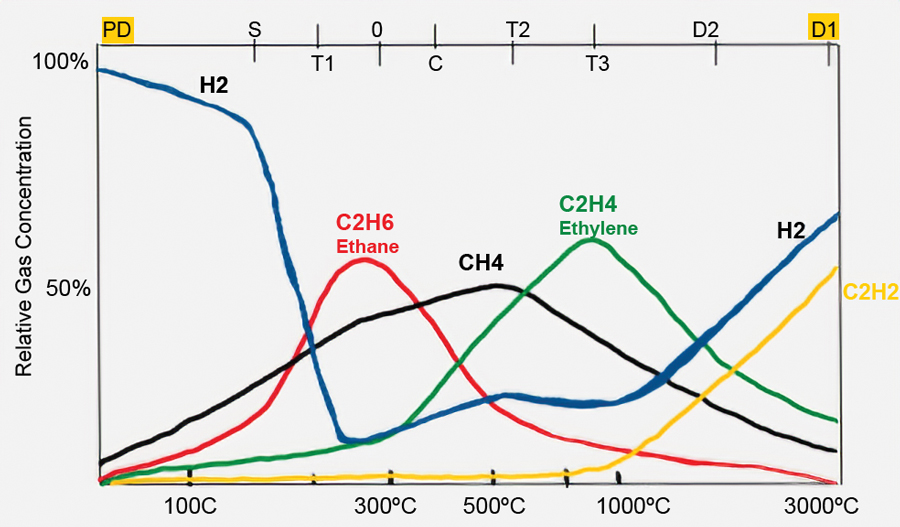
Most of the time, DGA interpretation relies on gas formation patterns, absolute gas concentrations, and gas ratios to identify fault types. However, the elevated and fluctuating gas levels commonly observed in renewable-energy transformers can limit the effectiveness of this approach, as seen in Figure 6.
Continuous DGA monitoring can range from single- or few-gas sensors used for fault detection to full-gas monitors used for fault diagnostics. In renewable-energy transformers, early fault detection often provides the greatest value, making continuous monitoring and RoC analysis particularly effective tools for asset management. RoC analysis is most effective when used alongside conventional DGA interpretation, historical trending, and other transformer diagnostic information.
LOW-COST DGA MONITORING STRATEGIES
DGA monitors as fault detectors provide an affordable and effective solution for fault detection in renewable-energy transformers, making them well-suited for large-scale deployment across solar and wind sites. These monitors typically measure H₂ and one or two additional gases. To maximize their value, alarm strategies should combine both absolute gas concentration (ppm) and RoC thresholds. This approach improves sensitivity to developing faults while minimizing nuisance alarms, enabling earlier intervention without increasing false alarm rates.
CONCLUSION
Renewable-energy transformers operate under more dynamic thermal, electrical, and mechanical stresses than conventional transformers, often resulting in elevated dissolved gas levels and accelerated insulation aging. While traditional DGA interpretation based on gas concentrations, ratios, and fault-gas patterns remains valuable, these methods may be less effective in renewable-energy environments.
Continuous DGA monitoring, combined with gas RoC analysis, provides earlier visibility of developing faults and abnormal operating stresses. By combining RoC and absolute gas concentration thresholds, asset owners can improve fault detection sensitivity while reducing nuisance alarms. Rather than replacing conventional diagnostic techniques, RoC-based monitoring enhances condition assessment and supports more effective asset management.
REFERENCES
- CIGRE. CIGRE TB 962, Guide for Transformer Maintenance, 2024.
- IEEE. IEEE Std. C57.91–1995, IEEE Guide for Loading Mineral-Oil-Immersed Transformers, IEEE Power & Energy Society, 1995.
- A. El-Rasheed and V. Naranjo. “Enhancing Wind Farm Reliability through Regular Transformer Testing and Monitoring Solutions,” Paper 10955, CIGRE 2025, Montréal, Québec, Canada, Sep. 29–Oct. 3, 2025.
- S. Farhang, M. Pinard, K. Yeboah, and M. Marinoiu. “Layered Online DGA Strategies for Cost-Effective Grid Reliability,” accepted for presentation at CIGRE Canada 2026.
- CIGRE. CIGRE TB 771, Advances in DGA Interpretation, 2019.

Shahryar “Sha” Farhang, PE, is an Applications Engineer at Megger, where he specializes in partial discharge testing and online monitoring. His expertise lies in providing technical and engineering support for PD testing of medium-voltage cables, transformers, and gas-insulated substations. Prior to his current role, Farhang collaborated with Magna IV Engineering on numerous commissioning and maintenance projects involving medium- and high-voltage systems in the US, Canada, and Chile. Farhang is a Professional Engineer (P.Eng), an experienced electrical field engineer, and a Master Electrician in the United States and Canada. He earned his BS in electrical and electronics engineering at Razi University in Kermanshah, Iran, and an MS in information technology and econometrics at the University of Information Technology and Management (UITM) in Rzeszow, Poland.

Volney Naranjo joined Megger in 2011 as an Application Engineer, specializing in diagnostic solutions for transformers, low- and high-voltage circuit breakers, and battery systems. Now serving as the Key Account and Business Development Manager for Renewables in North America, Naranjo bridges the gap between asset owners and advanced engineering resources to optimize utility-scale wind, solar, and storage performance. He is an IEEE Senior Member and a frequent technical contributor, with published articles and presentations across industry platforms including NETA World, TechCon, PowerTest, TSDOS, BattCon, IEEE EIC, Offshore WindPower, NABCEP, and IPF. Naranjo received his BSEE from Universidad del Valle in Cali, Colombia, beginning his career in power systems electrical design, testing, and commissioning as a field engineer and project manager.