

PART 2: FROM CLASSROOM TO CAREER AND BEYOND
Part 1 in the Spring issue of NETA World provided a retrospective on the implementation of the NETA Electrical Power Testing Technician (EPTT) curriculum at Long Beach City College (LBCC). That story is important, but it is only half of it. The real measure of success is what happens after students leave the classroom and enter the field.
Over the past several years, a growing number of LBCC High Voltage Test Technician (HVTT) program graduates have successfully transitioned into the workforce, and some of them have joined NETA Accredited Companies. One of those graduates is Manuel Coronado Perez, who is now employed by RESA Power, a NETA Accredited Company. Manny’s path into the industry is a great example of what this program was designed to do. I recently interviewed Manny.
A GRADUATE’S PERSPECTIVE: MANUEL CORONADO PEREZ (RESA POWER)
Q: Can you tell us about your background before enrolling in the LBCC High Voltage Test Technician program?
Perez: Before enrolling in the LBCC High Voltage Test Technician program, I was a baker working in high-end bakeries around the Los Angeles area. I lost my passion for that trade, so I went online to see if I could learn how to become an electrician.

Q: What initially attracted you to the LBCC High Voltage Test Technician program?
Perez: What drew me to it was that it was an exclusive program at LBCC. I didn’t realize you could make a career out of electrical testing. In my head, I thought electrical work was just lineman work, but I decided to check it out and see what was involved.
Q: What were your career goals at the time, and how did this program fit into those plans?
Perez: My career goal at the time was to find something more meaningful and not be boxed in one area. I knew this program was a chance to get out of that situation.
Q: What was your overall experience like in the program?
Perez: My experience was overall positive. I learned a lot about the world of NETA and more about the test-technician side of the trade. I have to thank Erfan Bamdad and Neil Sepulveda for making the experience an enjoyable one.
Q: Were there any specific courses, labs, or topics that stood out to you as particularly valuable or impactful?
Perez: The hands-on lab environment was one thing that stood out to me, especially since I was in a completely different trade. We learned on the equipment that is being used in the field, figured out how it worked, and used it on test equipment. Now that I’m with a NETA Accredited Company, those hands-on lessons are putting me ahead of other new hires in the field and helping me excel in the company’s bootcamp orientation.
Q: How would you describe the instructors and their approach to teaching?
Perez: Their approach to teaching was as though the students were brand new to the field with no prior knowledge of electrical work. Erfan and Neil were eager to answer questions and willing to help any student who was engaged in the material being taught.
Q: What was the most challenging part of the program, and how did you overcome it?
Perez: The most challenging part was the math. Trigonometry is involved, and that was a shock to me. I would never have imagined using trigonometry in my field of work.
Q: How did the program prepare you for entering the electrical testing field?
Perez: Everything we did in the program is involved in what we do in the field. Hi-pot testing, insulation testing, transformer turns-ratio testing, and much more. Safety was a big thing while in the HVTT program, and it is an even bigger topic in the field.
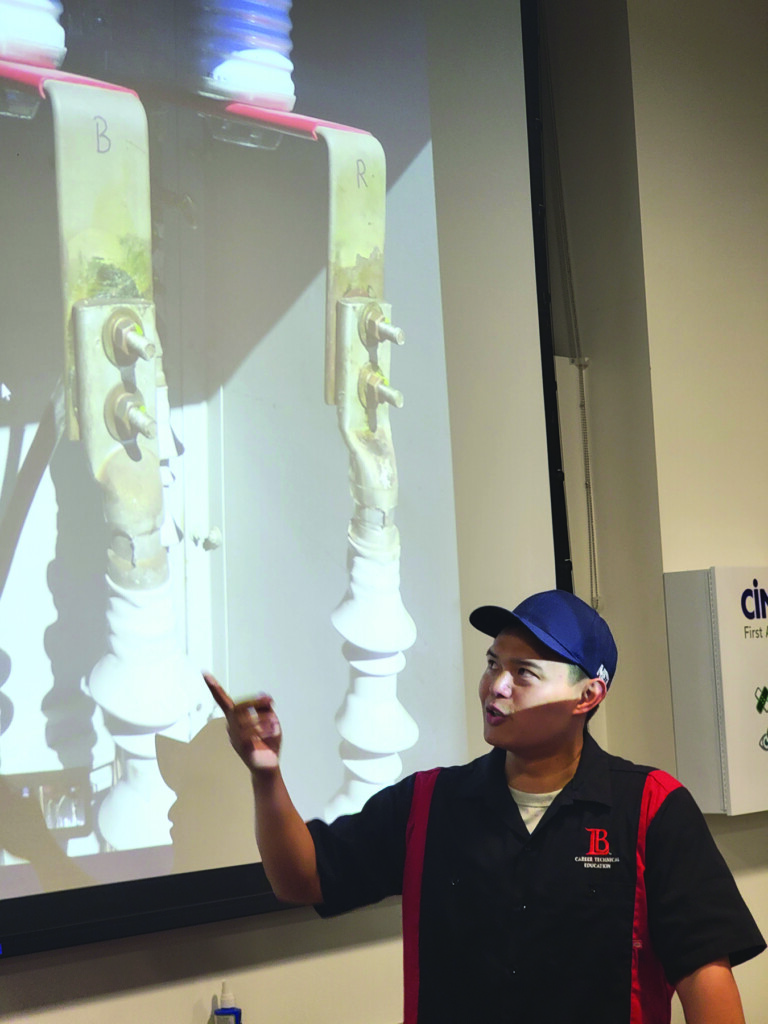
Q: How did completing the program help you get your current job? Are you planning to take the NETA Level 2 Certified Assistant Technician exam?
Perez: Representatives from my current company came to LBCC to recruit students who were on the path to complete the HVTT program. They saw value in the students and were willing to offer very enticing pay and benefits to work for them.
Yes, I plan on taking my Level 2 exam. The company I’m with is encouraging me and helping me make that happen.
Q: Looking back, how has completing the program impacted your career and personal life, and what advice would you give to someone considering enrolling?
Perez: A lot of places claim to have something for you once you finish schooling, and you end up with nothing. Not this program. This program has significantly impacted my life in being able to support myself and my loved ones. I will say that before considering enrolling, you have to be okay with travel work. There will be instances when you will travel out of state, away from family, for long periods of time.
Manny’s experience reflects exactly what we were aiming for when we pushed to establish this program. It creates a direct path from the classroom to the field, providing immediate value to both the student and the employer, but frankly, also to the world.
PROGRAM GROWTH
As the program continues to grow and mature, it is also being evaluated to ensure it remains aligned with NETA, its current standards, and the many developments that have taken place since the program was first launched in 2018. The NETA Training Committee will review the HVTT program as part of its broader effort to evaluate all NETA-approved training. This includes looking at potential updates, enhancements, and the addition of new subject areas. One example already under discussion is adding relay testing to the curriculum, which would further strengthen the program and better reflect the industry’s evolving needs. The program will then undergo a regular three-year review.
A Look at the Numbers
As of today, a total of 55 students have completed the HVTT coursework since the program’s inception. Of that number:
- 23 students graduated with an AS in electrical technology.
- 32 students earned the LBCC Electrical Technology, High Voltage Test Technician Certificate of Achievement or the LBCC High Voltage Test Technician Certificate of Achievement
Next Steps
In my opinion, the next logical step is to align the program more closely with NETA’s new National Guideline Standards (NGS) Apprenticeship framework. The opportunity here is significant. LBCC already provides the academic and hands-on foundation, and the apprenticeship model can build on that by formalizing on-the-job training, wage progression, and long-term career development.
My vision is a hybrid structure where students complete the HVTT program and then transition directly into a registered apprenticeship with a NETA Accredited Company, creating a seamless pipeline. This approach would also allow flexibility, with portions of the apprenticeship-related instruction delivered through LBCC, NETA’s new Learning Management System, or a combination of both.
MOVING FORWARD
Looking beyond LBCC, one important takeaway is that the model is replicable. The framework is built. The curriculum exists. The industry demand is clear. What made LBCC successful was not only timing, but also alignment. Strong industry support from NETA Accredited Companies to NETA Corporate Alliance Partners, committed faculty, and a willingness to work through administrative and structural challenges were all key factors. Other colleges can do the same, but it requires engagement from all sides early in the process.
Many lessons were learned along the way, but three stood out:
- First, having a committed internal champion at the college level is critical. In our case, there were two: Scott Fraser, at that time LBCC Electrical Technology Professor and Trades & Industry Department Chair, and the late John Hauck, at that time LBCC Electrical Technology Instructor, played that role.
- Second, industry involvement cannot be passive. It requires continuous engagement, from curriculum input to equipment support and classroom participation.
- Third, expectations must be managed on all sides. Building something like this takes time, persistence, and a willingness to adapt. Many hours went into it all: meetings, discussions, brainstorming over lunches and dinners, bypassing hurdles and obstacles along the way.
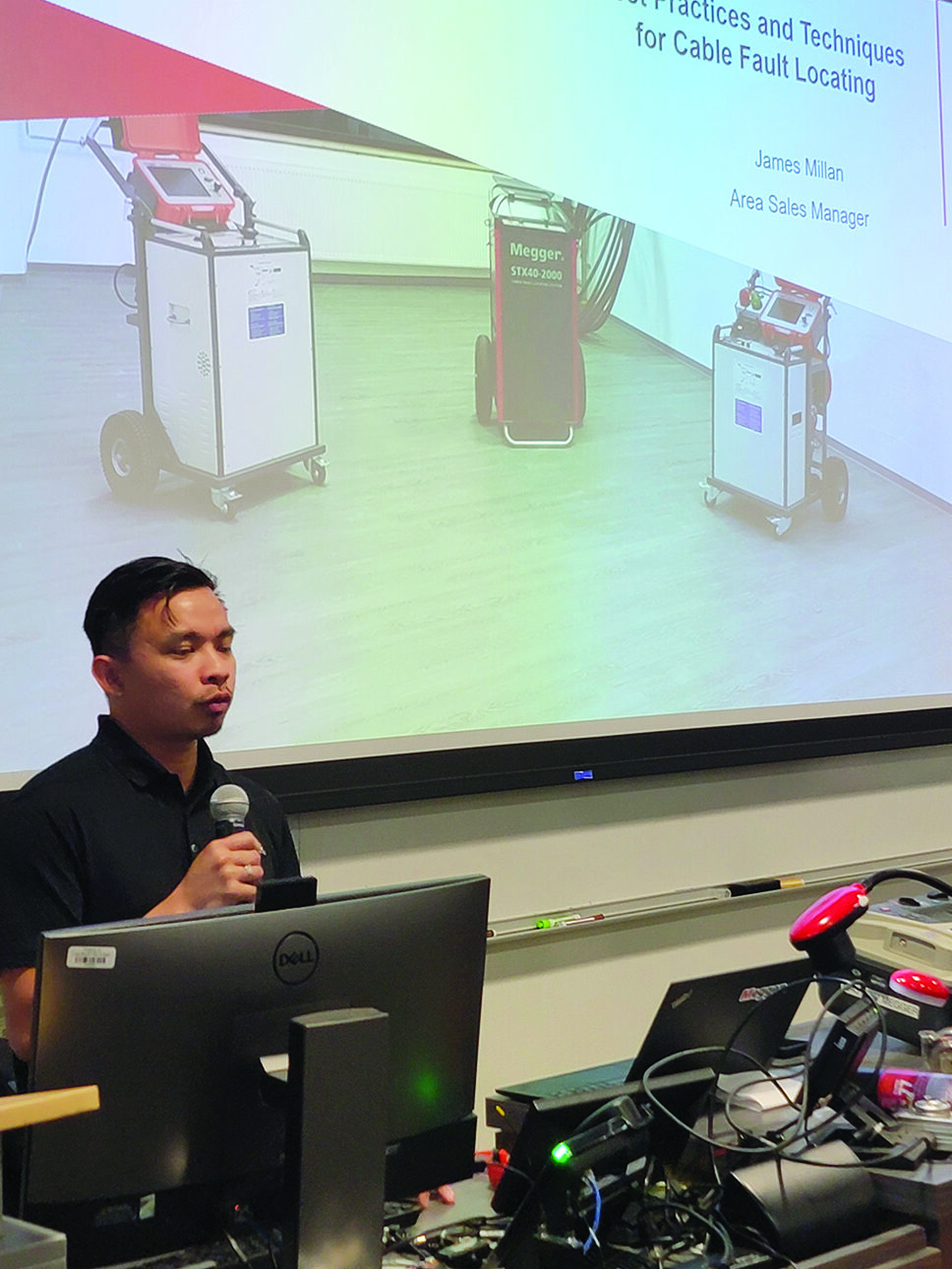
Writing articles, giving presentations at NETA PowerTest and EPIC conferences, visiting evening classes, and talking to students and staff are important to support ongoing engagement with the program. One such visit took place on May 12, when NETA Board Member Leif Hoegberg of Electrical Reliability Services and I gave a presentation about NETA to the LBCC students. NETA provided each student with a NETA tool bag containing additional giveaways (NETA pin, cap, water bottle, etc.) as well as additional giveaways for other attendees. Other attendees at this and similar events usually include other LBCC Electrical Technology students and staff. The idea is to spark their interest in the HVTT program and encourage them to choose it as their career, especially those who are undecided and attend LBCC General Industrial Electrician classes and coursework. Doble also brought their Demo Van to LBCC again in May.
Employer partnerships have proven to be one of the program’s strongest components. NETA Accredited Companies like Tony Demaria Electric (TDE), RESA Power, Vertiv, and others have not only hired graduates but also actively participated in recruiting and provided guest speakers and mentors. Others, like Asplundh Electrical Testing, recognize the opportunity and have scheduled classroom visits to present potential employment and internship opportunities to LBCC HVTT students. A more structured mentorship model, where students are paired with experienced technicians early in the program, could further accelerate readiness and retention. This is already happening informally, but formalizing it would strengthen the overall pipeline.
The need for qualified electrical testing technicians will only increase. The infrastructure we support is becoming more complex, more critical, more overloaded, and more dependent on reliability. At the same time, the workforce is aging, and the number of new entrants is not keeping pace. Training programs like LBCC’s HVTT are not just helpful; they are a must! Technology will continue to evolve, testing methods will continue to advance, but the need for well-trained, safety-focused technicians will remain constant.
At its core, this program shows what can happen when the right people come together with a shared goal and are willing to put that vision into practice, dedicating and volunteering significant time to making it happen.
CONCLUSION
The LBCC HVTT program is not just a success story. It is a working example of how to build a sustainable pipeline for the next generation of electrical testing technicians.
If educational institutions, industry leaders, unions, and organizations like NETA can align and set aside competing interests, there is potential to significantly expand this model nationwide. The need is there. The framework is there. What remains is execution.

Neno Pasic is a NETA Accredited Representative and Tony Demaria Electric (TDE) Chief Information Officer. Neno has been working with TDE for over 24 years. He is the NETA Volunteer Engagement Committee Chair, a NETA Training Committee Member, a NETA Promotions and Marketing Committee Member, and an IEEE and NFPA Member. Neno earned a BS in computer information systems, business administration from California State University, Dominguez Hills (CSUDH), along with project management and information technology management certificates from the University of California, Los Angeles (UCLA). He received the 2021 NETA Outstanding Achievement Award and the 2025 NETA Excellent Service Award.