

For electrical testing and maintenance professionals, international work is never simply a matter of exporting a North American maintenance program to a new region. The core principles remain the same—safety, reliability, documentation, and disciplined testing—but the operating environment changes everything. That is especially true in the Caribbean and Latin America.
From a Quanta Services perspective, these two markets matter because they combine growing infrastructure needs with very different grid realities: islanded systems, hurricane exposure, aging thermal generation, expanding renewable portfolios, long transmission corridors, mining and industrial loads, and diverse regulatory frameworks. The result is a maintenance challenge that is both technical and operational.
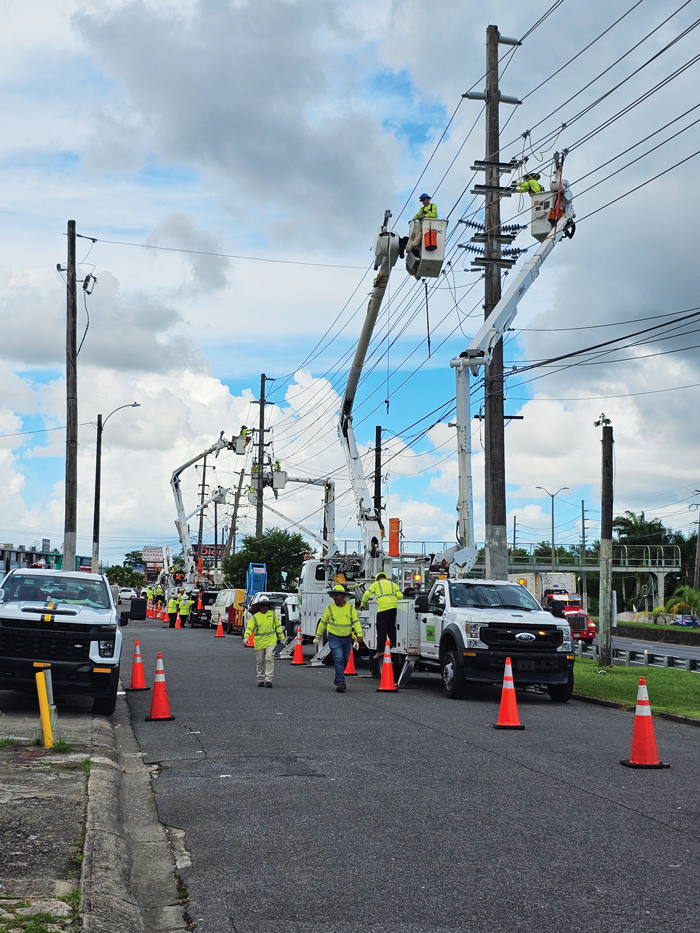
Quanta Services has had a meaningful presence that supports this view. Quanta Services has experience in the Latin America platform serving Chile, Colombia, Costa Rica, Guatemala, Mexico, Panama, and Peru. In Puerto Rico, Quanta Services has also been associated with operating, maintaining, and modernizing the island’s transmission and distribution system.
Within the broader Quanta Services family, Power Engineering Services adds a NETA-accredited testing and commissioning perspective, providing acceptance testing, protective relay testing and calibration, and utility substation commissioning and maintenance. That combination of regional execution, supported by testing, engineering, commissioning, construction, and lifecycle services, makes a practical Quanta Services perspective possible.

THE CARIBBEAN
The Caribbean presents perhaps the clearest example of why maintenance strategy must be shaped by local conditions. Many Caribbean systems are small and isolated, with limited interconnection to neighboring grids. In practice, that means operators have less room for error. Generation outages, relay misoperations, delayed spare parts, or storm damage that might be absorbed elsewhere can quickly become system-level events on an island grid.
The region also remains heavily dependent on imported petroleum products, with aging diesel-based infrastructure still playing an outsized role in electricity supply. Those conditions create high power costs and constant pressure on utilities and private operators to keep aging assets in service while also integrating cleaner and more resilient technologies.
For maintenance professionals, that Caribbean profile shifts the emphasis from simple periodic testing toward disciplined, risk-based asset management. A reliability-centered program in this environment starts with the fundamentals: accurate equipment inventories, baseline acceptance and maintenance test data, relay and control verification, infrared and visual inspections, insulation assessment, breaker and transformer condition evaluation, and clear maintenance intervals tied to duty, age, and consequence of failure. The logic is consistent with ANSI and NETA maintenance testing principles, which focus on verifying that equipment is operational, within applicable tolerances, and suitable for continued service. It also aligns with the broader NETA philosophy that the ideal maintenance program is reliability-based and unique to each plant and piece of equipment.
In the Caribbean, however, that framework must also account for marine and tropical realities. Salt contamination, humidity, corrosion, heat, and windborne debris can accelerate degradation in switchgear, substations, line hardware, and protective equipment. Hurricane exposure raises the stakes even further. The widespread collapse of Puerto Rico’s transmission and distribution system after Hurricanes Irma and Maria demonstrated how quickly a grid can move from stressed operation to catastrophic failure. From a maintenance and management standpoint, that means storm preparation cannot be treated as a seasonal checklist alone. It must include hardening priorities, vegetation management, spare parts strategy, emergency switching plans, black start readiness, restoration sequencing, contractor mobilization, and post-event damage assessment protocols that are practiced before the storm arrives.

This is where Quanta Services’ relevance in the Caribbean becomes concrete. The Quanta Services and ATCO-led LUMA joint venture was selected to operate, maintain, and modernize Puerto Rico’s transmission and distribution system. Whatever the political debate around utility reform, the maintenance lesson is straightforward. Island system reliability is inseparable from long-term asset management. Operators need current asset condition data, credible work packaging, disciplined outage planning, and the ability to move from deferred maintenance to structured renewal. For a NETA audience, the key point is that testing is not a standalone event. It is the evidence base that allows operators to prioritize limited capital and maintenance resources where they matter most.
LATIN AMERICA
Latin America presents a different, though equally demanding, maintenance landscape. Unlike the Caribbean’s small isolated systems, Latin America includes large continental grids, major industrial corridors, extensive transmission networks, and a wide mix of generation assets. The region’s energy transition is also further advanced in several respects. Clean energy investment across Latin America and the Caribbean continues to expand, while renewable electricity grows alongside increased grid investment in modernization, storage, and flexibility. For maintenance managers, that means the installed base is becoming more diverse, not less. Hydroelectric, gas, and legacy thermal assets continue to operate even as wind, solar, battery systems, and new substations are added to the system.
That diversity creates two parallel maintenance responsibilities. The first is to preserve the performance of incumbent infrastructure that still carries the bulk of real-time system responsibility. In much of Latin America, hydroelectric generation remains central to system stability, but severe weather events and changing climate patterns can damage hydroelectric assets and disrupt supply. Thermal plants, meanwhile, often remain essential for reserve margins, system support, or industrial self-generation. These assets require disciplined outage management, protection system testing, balanced plant maintenance, and condition-based interventions to extend useful life without accepting hidden reliability risk.
The second responsibility is to commission and manage a newer class of assets whose maintenance philosophy is still evolving in many markets. Solar plants, wind plants, battery systems, digital substation equipment, and inverter-based resources bring different failure modes, monitoring needs, and protection challenges. As renewable penetration increases, the maintenance conversation broadens from equipment condition alone to system behavior, voltage regulation, fault-current response, protection coordination, communications reliability, control system cybersecurity, and the performance of interfaces between generation, substations, and transmission infrastructure. In that setting, acceptance testing and commissioning are not merely project closeout activities. They establish the baseline data, settings discipline, and documentation quality that determine whether long-term maintenance will be effective or reactive.
Latin America also places a premium on local execution. The regional opportunity is real in Chile, Colombia, Costa Rica, Guatemala, Mexico, Panama, and Peru, but there is no single Latin American maintenance model. Mining-driven systems in the Andes, industrial loads in Mexico, urban utility systems in Central America, and renewable corridors in Chile each demand different maintenance priorities. Remote access, altitude, heat, rainfall, logistics, customs, permitting, and local labor capability can all shape outage windows and work packaging as much as the technical scope itself. In other words, good maintenance management in Latin America requires the same thing NETA standards demand everywhere: objective test results and disciplined procedures, combined with local operating knowledge.

INTEGRATION IS KEY
From a Quanta Services standpoint, the most durable lesson across both regions is that electrical power maintenance works best when it is integrated rather than fragmented. Quanta Services capabilities include transmission and substation construction and maintenance, emergency restoration, asset management, testing and commissioning, system planning studies, and closeout and commissioning support. That matters because asset reliability is rarely improved by testing, construction, or engineering alone. It improves when those functions are linked. A transformer test that identifies deterioration has greater value when engineering can assess system impact, operations can plan the outage, supply chain teams can source materials, and field crews can execute repair or replacement safely and quickly.

For that reason, the strongest maintenance programs in the Caribbean and Latin America are likely to share a common structure.
- First, they establish an asset baseline through acceptance testing, documentation review, relay file validation, and field condition assessment.
- Second, they rank assets by criticality and consequence of failure rather than by calendar alone.
- Third, they blend preventive, predictive, and corrective maintenance instead of relying exclusively on any one model.
- Fourth, they align maintenance with resilience goals, including storm hardening, spare equipment strategy, and restoration readiness.
- Finally, they use every outage as a data opportunity, improving future work scopes through test results, failure analysis, and lessons learned.

MOVING FORWARD
That approach is also well-suited to the region’s future trajectory. The Caribbean is moving toward cleaner, more resilient, and more affordable energy systems, but it still faces high electricity prices, imported fuel dependence, and aging infrastructure. Latin America continues to attract investment in renewables, grids, and industrial development, but it must manage that growth while preserving reliability on mixed generation systems. In both cases, maintenance and management are no longer back-office functions. They are strategic disciplines that determine whether capital investment actually delivers resilience, safety, and availability.
For Quanta Services companies and NETA-certified professionals, that is the opportunity. The value is not simply in performing tests or completing maintenance tasks, but in helping owners translate technical data into operating decisions. In the Caribbean, that may mean prioritizing the substation, feeder, generation, or spare-parts risks that most affect restoration time after a storm. In Latin America, it may mean building maintenance programs that support renewable integration without neglecting hydroelectric, thermal, or industrial backbone assets. In either market, the central objective is the same: creating electrical power systems that are not only functional today, but also maintainable, resilient, and manageable over their full life cycle.
CONCLUSION
The international feature of this discussion is important, but the underlying principle is universal. Power systems do not become reliable because they are new, nor because they are ambitious, nor because they include renewable technology. They become reliable when owners apply disciplined standards, generate trustworthy field data, respect local operating conditions, and act on maintenance findings before those findings become failures.
That is the most useful Quanta Services perspective for the Caribbean and Latin America. Reliability is built in the field, proven by testing, and sustained by management.

Ken Peterson is Vice President of Operations at Power Engineering Services, a NETA-Accredited electrical testing and commissioning firm and a Quanta Services company. He holds NETA Level IV Senior Technician certification and has more than 35 years of experience in electrical power system maintenance, testing, and commissioning.