

In today’s tight labor market, retaining top talent is a challenge, especially as some firms race to the top with salary offerings. The data center market expansion and the onshoring of our country’s manufacturing base have created unprecedented demand. Project timelines continue to compress, requiring more man-hours in a shorter duration of time to complete work that just a few short years ago would have taken three to four times as long. This compression requires more of the already-taxed resource pool.
This is great news for NETA technicians and those wanting to enter this career path. There has never been a better time to be in this industry. But money alone doesn’t drive or satisfy most employees, and there is always someone willing to pay more. Replacing an employee can cost 80–100% of their annual salary, eroding your company’s bottom line. So, how do you retain and attract the best while unlocking your team’s potential? It starts with culture!
FIND A PURPOSE
People want to know that their work contributes to something greater—that the time they spend on the job connects to something more than profits. How are those profits used? Is the company giving back to the community in a meaningful way? Even the largest employers in the NETA space are small compared to the consumer brands that catch the eye of the common household. How can we stand out as a non-consumer-facing brand? Obviously, we cannot compete with the marketing budgets of the huge consumer brands, so we must concentrate our efforts where they matter most: in the communities where our technicians live and play.
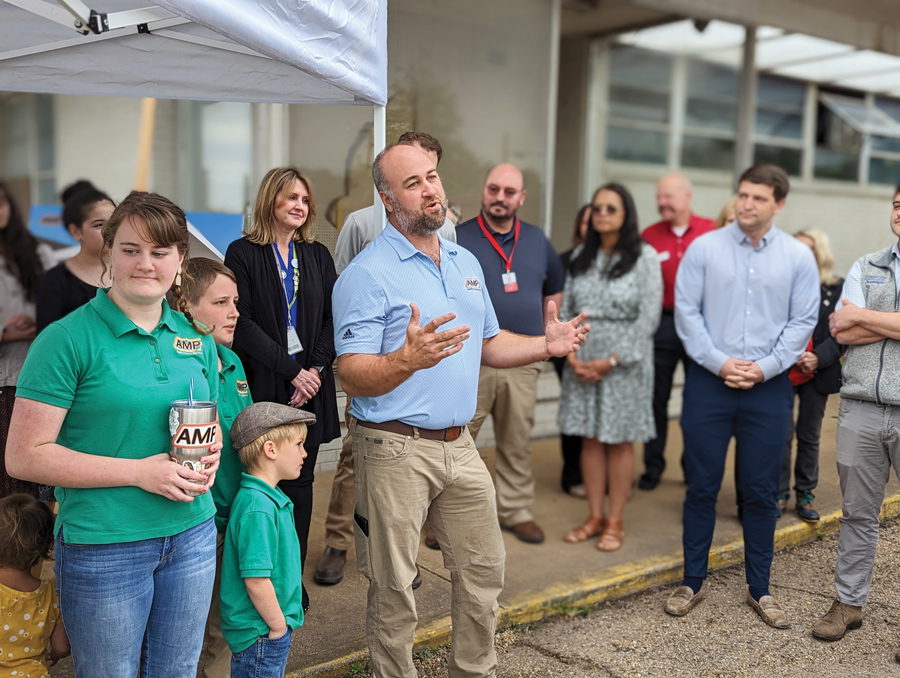
Very little builds loyalty like hearing from someone you just met that they love how helpful your employer is to the community. I know it cheers me to hear “Oh yeah, I know AMP. They donated to an organization I serve.” Or “They are really engaged in the community.” Our technicians like to hear that the profits from the work they perform are being used as a force for good in their communities.
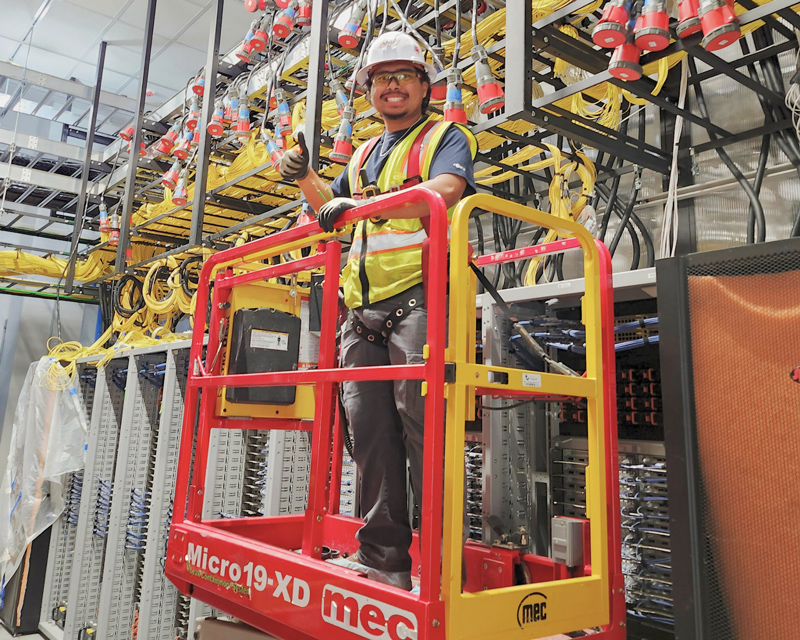
Connect your employees’ daily efforts to a larger purpose. In the electrical testing industry, their work saves lives, creates safer environments, and reduces costs for consumers. This isn’t an exaggeration—it’s the truth. We need to make sure we frequently remind those in our organizations that what they do matters.
Over the past few years, NFPA has included equipment maintenance in NFPA 70E, and NFPA 70B has been adopted as a standard instead of just a recommended practice. This indicates a shift in the industrial world of recognition and the inclusion of maintenance into the cost of goods—not just something that is done when we have extra capital. It removes maintenance from the bucket of expenses that can contract or diminish when the company is in a tight spot. Instead, maintenance becomes a requirement to meet requirements. Herald these changes to your employees. Spotlight them so your frontline workers and support staff connect the jobs they perform to the overall safety of the industrial machine!
BUILD A MISSION, VISION, AND CORE VALUES
To inspire your team, make your organization’s mission, vision, and core values the heartbeat of every decision and action. Many leadership writers say this is the first place to start moving a company’s culture. I recognize that not everyone has the decision-making responsibility to create or change the mission, vision, or core values. We all, however, can share and promote the ones we do have.
Make sure your mission is something your team can get behind and be inspired by. The company vision should be BHAG: a big, hairy, and audacious goal—something that when achieved will make a real difference in the world or at least the area of the world where your organization operates. Lead all major decisions by reviewing your vision, mission, and core values.
At AMP, our mission outlines our desire for what we believe to be beneficial to the whole world: “To further the Gospel while sustaining exceptional employment, providing quality services to the energy industry.” The shorthand version is God, Employees, Clients. We believe that if we prioritize them in that order, we will provide the best service within our capabilities. Your vision and mission statements can be anything you feel can inspire and create unity.
We can even define mission statements and core values for subcultures in our organization. Several of our lead technicians have created their own team mottos. They were not in opposition to the whole, but in support of it. We see this often in military units that still belong to their service division, but they have their own logo or insignia and motto that connects them to one another and brings brotherhood.
If you find yourself within a larger organization, rally your team and come up with something together that each of you can get behind. Spend a few bucks and put it on some t-shirts, but even more important, make sure your work each day reflects the principles that you agreed are important. Even if your statements aren’t perfect, unity around a shared purpose is better than scattered efforts. Involve your team in refining these statements to foster ownership and alignment.
BUILD TRUST THROUGH COMMUNICATION
A winning culture hinges on trust. Trust enables vulnerable communication, which drives collaboration and mutual benefit for all—not just shareholders. But how do you build trust in a skeptical or jaded team? It starts with care. Show employees their goals matter to you. Support them with training and education that allows them to continue their careers and supports their personal life goals. You will not know their personal life goals unless you engage with them at all levels, empower them, and train your management team and front-line supervisors to do the same.
Showing how much we care ultimately builds trust in our teams. Trust enables vulnerable communication. Vulnerable communication drives collaboration. We will not get to know the personal issues we need to respond to without first being vulnerable and providing a safe place for our team members to be vulnerable.
Vulnerable communication isn’t without risks, but avoiding it guarantees stagnation. We all know how demanding this industry can be on your time. Craft a collaborative environment where technicians can speak freely when they have demands outside of work. Don’t expect them to respond to that 2:00 AM call unless we are willing to provide time for them to attend that 10:00 AM dance recital. Flexibility and collaboration are key to the give and take that is required to run a successful business.
PROVIDE TRAINING
Training and development must encompass more than just the technical aspects of the work. We must provide paths of upward movement within our companies, or they will be more inclined to listen to the often-false advertisements of recruiters from other companies. Of note here: If you are a technician, the whole industry needs techs, so it often feels like the burden to accomplish the increased workload falls directly on frontline personnel. The grass is not greener in many places; the whole industry is at a deficit for technicians.
I highlight leadership training early on, as it can sometimes be overlooked. We all provide safety and technical training, but do we do it as well as we could? Even in my own organization, we are always looking for ways to improve the technical and safety training we provide. As one COO wisely said, “What if we train our people, and they leave? What if we don’t, and they stay?”
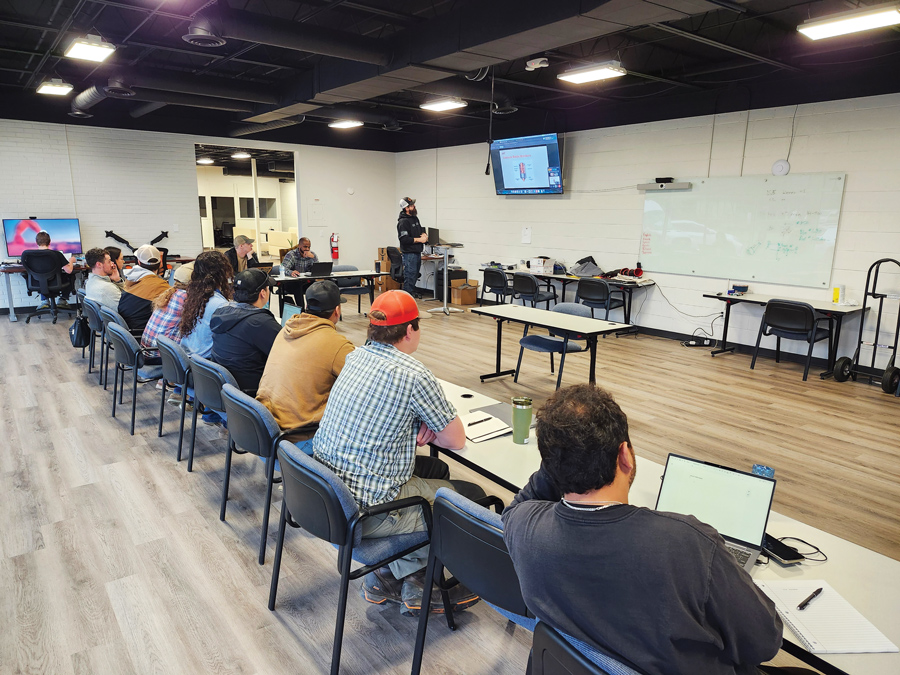
As younger technicians enter the workforce, the opportunity to provide life skills, investment, money, and time management training will become evident. The skillset that young people bring with them to the workforce seems to be diminishing every year, or maybe I just can’t remember how dumb I was 25 years ago. Our educational system and the homelife culture most of our employees come from do not inherently include basic life skills. Incorporating those into our workforce development programs will go a long way toward creating loyalty and trust.
Recruiters will tell your employees whatever they think they want to hear. They benefit greatly from the transaction when you move from one company to the next, and recruiting is one place in our industry where margins continue to grow. Encourage your employees to be smart. Don’t just take their word for anything; demand that they allow you to speak with frontline technicians in the organization who will be truthful about the work environment you will experience once you jump ship. I have heard from many technicians who have gone from one company to another about how the issues were mostly the same or worse. They just had a different logo on their hat.
MAKE THINGS RIGHT
I believe that most NETA companies have a strong desire to perform high-quality work and do right by their people. Our organizations are all made up of humans, and humans inherently are faulty. We all make mistakes, so sometimes we experience those faults personally. These injustices are real and can impact our decision to stay with an employer or not. Just know that it is often easier to work through those issues than to run from them.
This leads me to my next point: It is not if, but when, we fail as an organization. We will let our people down; we will make decisions they do not agree with, and we may even emotionally hurt someone with our actions and words. When we do, our response and reaction to our own words and actions may be the most important part of our culture.
Our COO often says it is not your action but your re-action that counts the most. Humility and a willingness to make things right go a long way in saying you care about your employees. When we have been out of line or have not visibly represented our core values, it is important to ask forgiveness. Some of the most impactful moments I had with one of our employees were when I became angry and reacted in a way that was not suitable to the situation or a professional environment. Going back to that employee and soliciting forgiveness was incredibly powerful. It connected us in a way that had not seemed possible just moments before.
Be sure to stay humble, take time to read the situation and the person’s emotional indicators. Some of us are gruff and abrasive, and we may have a harder time noticing when we have done damage with our words. We tend to be focused on the physical work, so our workers are not likely to come to us and reveal that we hurt their feelings. If they did, would we take the opportunity to support that, or would we dismiss it as if they needed to toughen up?
Construction mental health costs are significant, driven by high stress, long hours, job insecurity, and physical demands. These issues lead to workforce shortages and impact productivity. Support your employees’ mental health. Unaddressed mental health issues can cost companies $15,000 per employee annually, not to mention the high cost of turnover. Suicide rates in the construction industry are second only to mining.
It is appropriate to point out that we have a significant number of veterans in our industry, and most would argue that they make some of the best technicians. Veterans from the 249th Battalion are particularly in high demand. But veteran suicide rates are nearly double that of non-veterans. We have had many successful veterans in our business through the years. We love those guys dearly. We also need to keep in mind that they can be dealing with things non-veterans cannot even imagine. Coordinate closely with HR and make sure to help connect them with any resources that may benefit them, and allow them schedule flexibility to meet with doctors and counselors.
CONCLUSION
Ultimately, we all want a team that provides excellent results for the customer, in a safe manner, while providing financially for the team’s family and stakeholders. Vulnerable communication, connecting their work with what matters, and building trust through investing in their lives brings about collaboration and mutual benefit for all. Without trust, success is fleeting. Invest in care, communication, and a purpose-driven culture to retain talent, boost performance, and build a team that thrives.

Brian Rodgers is the founder and CEO of AMP Quality Energy Services. He has been involved in NETA committees for 25 years and is a NETA Level 4 Senior Technician. Rodgers lives on Freedom Farm in Somerville, Alabama, with his lovely wife and ten of their eleven children. Their oldest daughter is married to Zechariah Freeborn (also a NETA Technician), and they have two small boys. One of Brian’s greatest joys is spending time on the farm with his grandsons.