

As CEO of a global metallurgical equipment supplier, I watched a surveillance video in horror as our young engineer approached an electric furnace in a critical failure mode, instead of running away. It was painfully clear that we had not adequately trained him to safely perform his job. In a stroke of extraordinary fortune, he escaped unharmed from what would typically have been a fatal explosion. Until then, we had been more lucky than safe. That day, our company was even luckier.
That began my safety journey.
Over the following years, I have observed that companies across various industries, sizes, and numbers of employees are often unknowingly exposed to serious electrical hazards.
We founded Guidant Power in 2024 to help companies—mostly outside of electrical services—recognize the strategic importance of electrical safety and reliability without living through the consequences themselves, enabling them to lead with foresight instead of regret.
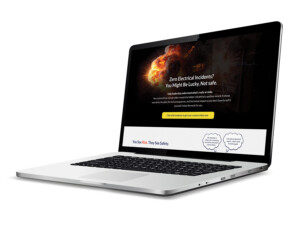
This article introduces RULuckyOrSafe.com, a free website that creates a short, customized video to encourage stronger conversations with senior leaders about electrical risks.
THE ESW COMMITMENT
The idea was born at the 2025 IEEE Electrical Safety Workshop, the leading annual conference focused on advancing electrical safety culture, technology, and practices. It is attended by professionals who share a passion for electrical safety, including technicians, engineers, senior executives, and regulators. In speaking with attendees, I recognized that many of the smaller and mid-size companies, where I had spent my career, rarely have access to this level of expertise, and for these safety experts to make an impact, their senior executives must understand the strategic importance of electrical safety and adequately prioritize and resource it.
Later in the session, Lanny Floyd, one of the industry’s leading voices on electrical safety, asked participants to make a commitment for the coming year. I made two:
- Help educate senior leaders who fund and staff safety programs about electrical risks.
- Find ways to extend electrical safety expertise into smaller, privately held enterprises that often lack internal electrical experts.
WHY THIS MATTERS
Electrical testing and maintenance company leaders understand electrical risk. The challenge is largely outside our community, particularly in small and midsize commercial and industrial companies. This gap creates both responsibility and opportunity. Testing companies are often the most trusted electrical experts for their clients. When you identify deferred maintenance or equipment operating beyond its limits, you are protecting workers and operations. These conversations frequently lead to upgrades and maintenance programs that improve safety and uptime. Expanding electrical safety knowledge is central to all our businesses.
WHY ELECTRICAL RISK IS HARD TO SEE, EVEN IN WELL-RUN ORGANIZATIONS
Most company leaders care deeply about safety and want to do the right thing. Yet, even in well-run organizations, systemic factors make it difficult for untrained executives to perceive and respond to serious electrical risks. This is not a failure of leadership or intent.
Electrical accidents happen rarely, even when real exposure exists. Using our model, a 250-person firm has a 95% chance of going 13 years without experiencing an accident. When humans go for years without experiencing an incident, it feels like safety, even though it is statistically normal. Our brains have evolved to discount rare risks.
Most company incentives and KPIs reinforce this problem. They focus on what happens often, such as production interruptions, downtime, injuries, and cost, while electrical risk rarely appears in a way that attracts this type of attention. At the same time, clear ownership and visibility are often lacking because responsibility for electrical risk is frequently shared between safety, engineering, and maintenance.
Finally, when risky work produces no immediate harm, organizations may normalize the behavior, mistaking silence for safety. The Challenger disaster illustrates this effect. These forces are common across organizations. They are predictable features of human nature and how organizations respond to low-frequency, high-consequence hazards. Recognizing these blind spots is the first step toward addressing them.
WHY THE PEOPLE WHO SEE THE RISK OFTEN STAY SILENT
In small and mid-size organizations, the people best positioned to recognize electrical risk are the supervisors, engineers, maintenance leaders, safety professionals, and contractors who work closely with the equipment. Although these advocates may understand the risks, many hesitate to speak up. This is not because they do not care. It is because speaking up carries real human and organizational costs.
Many potential advocates worry about knowledge gaps and credibility. Electrical risk can be complex, and executive conversations require framing uncertainty and consequences in business terms. Even confident technical professionals may hesitate when asked to persuade rather than explain.
This dynamic creates a dangerous gap: Leaders do not see the risk, and advocates hesitate to speak up. Everyone is acting rationally, yet the organization drifts closer to harm.
The tool described here was created to support these potential internal advocates by giving them an easier, more confident way to begin conversations with senior leaders about electrical safety.

Figure 1a: Screenshots from the Luck to Leadership video available on ruluckyorsafe.com show personalization and dramatization of a fictional accident.

A PRACTICAL WAY TO HELP LEADERS SEE ELECTRICAL RISK CLEARLY
To cut through the psychological and organizational barriers, the Guidant team built a personalized video tool at RULuckyOrSafe.com that is now offered free to all users. The RULuckyOrSafe.com resource is built around three questions executives naturally ask:
- Are we safe or just lucky?
- What will happen to the business if we have a serious electrical incident?
- What will an incident mean for my people, my customers, and me?
These questions are answered by three underlying models: the Luck Model, the Consequence Model, and the Impact Model. Together, they give leaders a grounded view of electrical risk.
THE LUCK MODEL: WHY ZERO IS NOT PROOF OF SAFETY
The first model uses national injury and fatality data to show how long organizations can go without serious electrical incidents. Electrical injuries are rare events. A facility can maintain a spotless record for a decade or more and still be operating with major exposures.
In the personalized video, this argument is presented in simple terms using the organization’s own size and industry. Seeing their own data reframed through probability helps leaders shift from “We are fine” to “We may have been lucky so far.”

THE CONSEQUENCE MODEL: WHY ONE EVENT CHANGES EVERYTHING
The second model shows how a single electrical incident can erase years of progress, disrupt the business, and impact executive careers. It walks leaders through the realistic consequences:
- Human toll on workers and families
- Damage to equipment and long lead-time repairs
- Operational downtime and impact on customers and revenue
- Regulatory and legal exposure
- Damaged reputation
- Derailment of strategic plans
When leaders see the full risk in the context of their own company, we can expect that electrical safety becomes more of a strategic initiative than a delegated compliance task.
THE IMPACT MODEL: WHY STORY DRIVES ACTION
The third model recognizes that information alone is not enough. Leaders act when risk becomes personally relevant. Research shows that narrative-based messages—those that connect risk to real people, real events, and real consequences—are more effective in motivating change.
In the personalized video, risk is made real through a short, dramatized scenario partly personalized with the company’s information. It shows what a serious event would look like with people in roles like theirs. It does not exaggerate and keeps consequences realistic enough that leaders feel a responsibility to act.
The goal is not fear. It is understanding and clarity.
HOW THIS HELPS ADVOCATES
Advocates need simple, factual tools that are easy to share.
- Reframes the conversation toward understanding. Many leaders assume electrical safety is handled by someone else. The RULuckyOrSafe.com tool shows why low incident rates are not proof of safety, reducing defensiveness and opening the door to meaningful discussion.
- Explains risk in business terms. Executives respond to operational, financial, and strategic impacts. The video ties electrical safety to those priorities in clear language.
- Lowers the barrier for advocates. Advocates do not have to memorize data or become experts at safety and reliability. The video does the heavy lifting. They just need to guide the conversation.
HOW COMPANIES CAN USE THE TOOL
For electrical testing and maintenance companies, RULuckyOrSafe.com provides a practical way to support difficult conversations. Many companies identify reliability and safety concerns during testing, inspections, or maintenance work, but may struggle to help client leadership understand the broader risk behind their findings or to give their recommendations appropriate priority.
The tool allows service providers and internal advocates to generate a short, customized video based on basic information about the client’s company. The video can be shared before or during a meeting to explain, in neutral terms, why long periods without incidents do not necessarily indicate low risk, and why electrical safety deserves leadership attention.
Strengthening Safety Culture
Every strong safety culture starts with leadership, and leadership starts with understanding. When executives understand the risk, they can begin to view electrical safety as a strategic imperative, with increased awareness and communication by senior executives, better aligning training and preventive maintenance budgets with the actual risk.
The tool does not replace an electrical safety program or important core elements like arc flash studies, breaker testing, or electrical preventive maintenance programs. It supports the people who already understand electrical safety and need help communicating its importance to leaders in the organization.
It is important to be clear about intent. We do not know how widely this video or website will be used. That uncertainty is not the point. What matters is the commitment to help non-electrical executives better understand electrical risk and to extend stronger safety practices to a wider corporate population.
The lasting value of this effort is not a website or a video. It is the use of three well-supported models—probability, consequence, and impact—to structure conversations that are often avoided or poorly framed. These models are grounded in research and real-world experience, and they apply whether the conversation happens through a video, a meeting, or a discussion in the field.
For companies that want to improve electrical safety and reliability, this is a practical starting point. Educating leaders, spreading electrical safety thinking into a wider universe of organizations, and creating shared understanding before an incident occurs are worthwhile goals.
Try It Yourself
If you want to see how the tool can support your conversations, internally or with clients, visit RULuckyOrSafe.com, enter a few basic details, and watch your personalized video.
Then decide where it fits best. Perhaps a one-on-one with your CEO, your company’s leadership meeting, or planning a client’s work.
If it sparks even one honest conversation, it has already served its purpose.

Paul Decker is the CEO of Guidant Power, an electrical safety, reliability, and training partner to North America’s leading companies. He brings over 25 years of leadership experience in industrial technology companies. He was previously the CEO of ABP Induction, a metallurgical equipment company acquired by Mitsubishi Heavy Industries. Paul holds a BSE in mechanical engineering from the University of Michigan and an MS in management from Kellogg Graduate School of Management. In his free time, he enjoys cycling, swimming, sailing, and spending quality time with friends and family.