


This issue of NETA World’s “Insight and Inspiration” series features Ken Peterson, Vice President Testing and Commissioning, at Power Engineering Services, where he combines deep technical expertise with strategic business leadership to ensure the successful delivery and activation of critical infrastructure projects. He leads the full lifecycle of testing and commissioning and oversees marketing and sales efforts, bridging the gap between operational excellence and business growth.
Peterson’s responsibilities include ensuring that every system brought online meets the highest standards of safety, quality, and performance. He leads cross-functional teams, develops robust testing protocols, and implements proactive solutions to keep projects on track and aligned with client expectations. He also plays a key role in driving regional commercial strategies by identifying new market opportunities, building strong client relationships, and helping shape go-to-market plans that support long-term growth. With a passion for delivering reliable infrastructure and creating value for clients, his mission is to be a driving force behind the company’s success across all company regions.
Peterson currently serves on the TechCon North America Technical Conference Planning Committee, the NETA New Membership Application Review Committee, the NETA Training Committee, the NETA Technical Resource Committee, and the NETA Promotions and Marketing Committee. He earned a BS in sociology and an MBA with a concentration in management and leadership at the University of La Verne in La Verne, California.
NW: What attracted you to the electrical testing field?
Peterson: I consider myself fortunate to have had the opportunity to start my career in underground construction. After returning to college at the age of 21, I was offered a position at a small electrical testing company. As I advanced in the electrical testing field, I realized that I had better career prospects in this industry compared to the social science field.
NW: Please share your 35-year career path in the electrical and power industry.
Peterson: After graduating from high school, I began working for a contractor in the telecommunications and underground construction industry. Realizing that I did not want to master the shovel, I returned to college and had the opportunity to start working for an infrared testing company. As time progressed, I transitioned from power quality and infrared scanning to maintenance and startup testing as a field supervisor. A few years later, I was offered a regional manager position that allowed me to focus on long-term preventative maintenance outages.
During my early years as a regional manager, I had the opportunity to support the company as it looked at becoming an accredited NETA company and was exposed to NETA PowerTest conferences. Being introduced to NETA standards opened my eyes to the vast opportunities in the market, sparking my quest to be part of a NETA-accredited company.
My first accredited company in the NETA industry was in 2006, when I became a field supervisor and project manager over a regional office. As we developed our region, we began working with local utilities, exposing me to the high-voltage market. This experience opened my eyes to even bigger opportunities within the sector.
After turning 40, I transitioned to focusing on renewable and utility markets, starting a new division for my employer. After a few years of growing the business, I was promoted to the director level, where I continued to mentor and grow other managers. It was at this point in my career that I discovered the importance of delegation, mentorship, and developing others. After being appointed to my first vice president position, I pursued a graduate degree in leadership. As I continue to grow in my leadership role and responsibilities, I value raising others up and keeping them motivated with what they can achieve within our industry.
NW: What about this work keeps you committed to the profession?
Peterson: I have experienced the peaks and the valleys of overcoming challenges in the industry. One of my favorite aspects is what I like to call “triage,” which involves customer recovery on a large scale, whether at a substation or a power generation facility, including renewable energy or gas turbine plants. The process of recovering and assisting customers in this industry is never dull. Just when we settle into a routine, a curveball comes our way, and the reward of seeing the customer back online is immensely satisfying.
Reflecting on those peaks and valleys, I began my career in the late 90s, so I witnessed the construction of data centers. Today, with the advancement of AI, we are experiencing another data center boom. I was also part of the early renewable energy race in the early 2000s, working on large-scale testing and commissioning opportunities for renewable projects that were initially just bid opportunities before government funding. Now, we see these projects integrated into the high-voltage grid, creating a mature market maintained by our testing industry. It is a full circle, driven by power demand and consumption in North America.
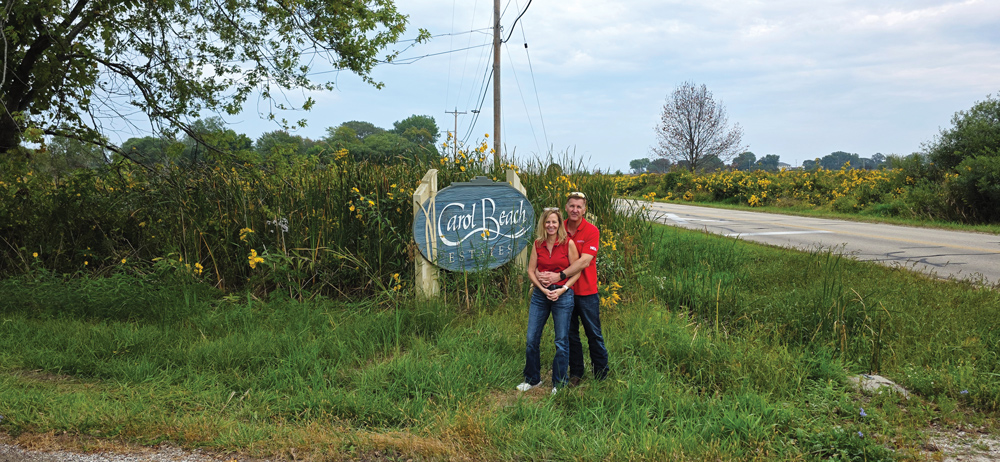
I believe it is a great time to be in the power industry. In recent years, my wife Carol and I have become empty-nesters, which has added a new dimension to my career. Having her as a companion on many of my work-related travels has made it easier to be away from home, as I have my best friend by my side.
NW: What has been the proudest moment of your career?
Peterson: My proudest moment in the industry is watching two of my sons begin their careers alongside me. Recently, my middle son, Travis, began his journey as a journeyman electrician and is currently enrolled in the electrical power engineering program at Arizona State University. Last year, my youngest son, Matthew, began his journey as a pre-apprentice lineman at the age of 19. During his journey, he decided that building substations like his father was the path he wanted to pursue. We all have our own career paths, and leaving a legacy for the next generation is something I am absolutely proud of.
NW: What do you see as your mission?
Peterson: With 35 years in the power engineering industry, my mission has always been to ensure that every project I lead delivers the highest standards of safety, reliability, and performance. I am passionate about bridging deep technical expertise with strategic leadership — guiding teams, strengthening client partnerships, and driving growth, while keeping infrastructure dependable and communities powered. What fuels me most is the opportunity to combine engineering precision with a vision for long-term success, creating solutions that stand the test of time and add lasting value for clients and stakeholders.
REBUILDING PUERTO RICO’S ELECTRICAL GRID
Peterson recently spent 23 months on-site in Puerto Rico as Director of Substations — Large Projects at Luma Energy, rebuilding and managing the electrical grid and assisting with project planning and execution to modernize it. He worked in close collaboration with FEMA and local federal agencies to provide funding for the large substation projects.
NW: For those who missed PowerTest, please give us a 30,000-foot overview of your work with the Luma Energy project to rebuild and manage the electrical grid in Puerto Rico.
Peterson: In 2022, I had the opportunity to observe what Quanta was doing on the island of Puerto Rico. I learned they were seeking industry experts to support the rebuilding of the entire utility grid on the island. The task was to go to Puerto Rico and assist in building an internal utility-scale construction and commissioning team. Early in the journey, it was crucial to ensure we had the right capabilities and resources to bring to the island and support the influx of high-voltage breakers and transformers needed to stabilize the current grid. I was also tasked with evaluating contractors who would be awarded contracts for building utility-scale substations for long-term projects. As we developed the teams, we had the opportunity to support a few of the tropical storms that came through, which tested our ability to work under pressure while maintaining a safety culture. Overall, in my two years on the island, we successfully replaced the majority of the older oil circuit breakers and several transformers that were out of service due to past hurricane events. The overall goal was to rebuild a total of 48 substations that would support the grid stabilization and modernization plans.
NW: Puerto Rico is using the latest technology in building a new power distribution infrastructure. What does that technology look like, and how is it different than the technology we find across the United States today?
Peterson: That’s a great question. In many ways, the technology used in Puerto Rico looks similar to what we see in the U.S. today. The difference is in how it’s being applied and the impact it has on reliability.
One of the first big improvements was the rollout of smart meters. These meters give the utility real-time information about outages and voltage issues across more than 1.5 million customers. Instead of waiting for customers to report problems or sending crews out to investigate, the utility can now see issues as they happen and respond more quickly.
Another major step has been the automation of the distribution lines. In the past, a single fault could take down an entire line, leaving as many as 2,000 customers without power. With automation, the system can now isolate the problem and limit the impact to a much smaller group of customers — sometimes just 250. The system can also attempt to restore power automatically when faults are temporary, which often happens during storms.
Looking ahead, Puerto Rico’s modernization efforts are focused on building resilience. New projects include microgrids and energy storage systems that will help communities keep power during larger outages and recover faster when the main grid is affected. At the same time, the utility is replacing older infrastructure with hurricane-resistant poles and stronger transmission structures, making the grid better able to withstand severe weather.
Taken together, these upgrades — smart meters, automated lines, microgrids, storage, and stronger equipment — are creating a more reliable and storm-ready grid for Puerto Rico. For customers, that means fewer outages, quicker recovery, and a stronger foundation for clean energy growth in the years ahead.
NW: What is the utilities’ perspective on the current power maintenance requirements from NERC? Are utilities concerned about NFPA 70B?
Peterson: In my experience working with bulk electrical systems as a contractor, I have seen firsthand how asset management departments at utilities are heavily focused on compliance with North American Electric Reliability (NERC) standards. These requirements, particularly those related to protection and control (PRC), are taken very seriously because the penalties for non-compliance can be severe. For example, I supported a smaller municipal utility that faced more than $10 million in fines and was forced to update its entire maintenance program after deficiencies were identified. Situations like this underscore why utilities devote so much attention and resources to meeting NERC standards.
NFPA 70B provides recommended practices for the maintenance of electrical equipment. While these standards are sometimes referenced in the course of utility work, I have not seen the same level of concern from asset management teams in the transmission, distribution, and substation areas where I’ve primarily worked. The focus there tends to remain squarely on NERC compliance. However, NFPA standards may have greater relevance in corporate facilities and property management, where building safety, fire prevention, and equipment reliability are directly tied to NFPA guidelines, but that has not been my focus within the utility space.
NW: Have you seen common ground between utilities and NETA?
Peterson: From my experience, the relationship between utilities and NETA centers on the recognition of standards and technician certifications. Many utilities rely on contractors to support capital projects, and part of the vetting process is confirming the qualifications of the people doing the work. Over the years, I’ve seen NETA certification consistently recognized as a credible benchmark of technical competence and field experience during this qualification process.
More recently, I’ve also seen utilities go a step further by referencing ANSI/NETA testing standards directly in their project specifications for third-party work. In fact, I’ve used these standards myself when developing test plans for large-scale utility projects, and I’ve noticed that their acceptance has grown steadily over the past 15 years. Today, NETA is viewed as an authoritative reference in utility projects across the industry.
The common ground between utilities and NETA is clear: reliability, safety, and standards. Just as utility standards are designed to ensure that power systems are installed, tested, and ready to operate as intended, our ANSI/NETA standards provide the framework to confirm that equipment performs reliably before being energized. On the safety side, utilities require every contractor to maintain a robust safety program as part of the qualification process. NETA certification also validates that accredited companies meet high safety standards, which creates a direct alignment between the two.
In short, utilities and NETA share the same goals: ensuring that power systems are safe, reliable, and held to consistent standards. My experience has shown that NETA’s role as a recognized authority in testing and certification makes it a valuable partner to utilities as they continue to build and maintain critical infrastructure.