

NETA’s Corporate Alliance Partners (CAPs) are industry-leading companies that have joined forces with NETA to work together toward a common aim: improving quality, safety, and electrical system reliability.
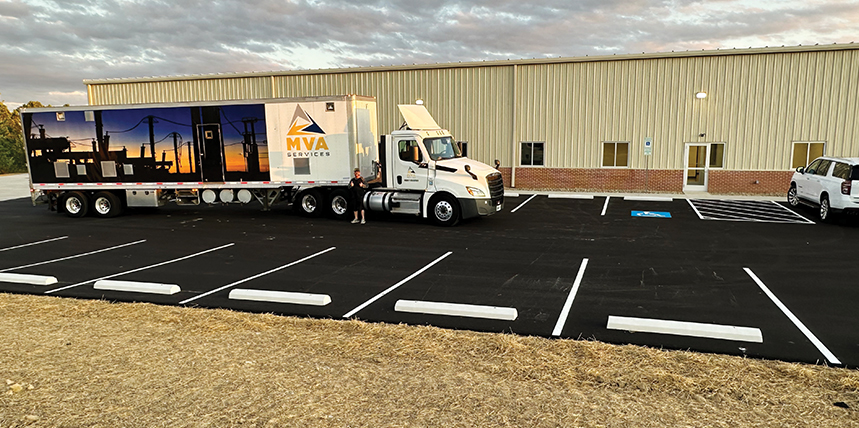
This ongoing NETA World series focuses on the thought leadership behind these successful companies. For this issue’s CAP Spotlight, we talked to President Scott Reed, who founded MVA in 2014. “Many in the NETA community know MVA Diagnostics for its industry-leading transformer oil testing and analysis. However, fewer realize that the company also operates a full-service field division — MVA Services — that provides on-site solutions for transformer performance and reliability. While MVA Diagnostics focuses on interpreting test data to assess equipment health, MVA Services turns that insight into action by working with NETA members to address and resolve transformer issues in the field.”
Reed’s role in the IEEE Transformers Committee allows him to provide IEEE updates to NETA World readers. He serves as an Executive Officer for the Transformers Committee and will move into the role of Vice Chairman in January 2026. In addition, Reed is Chairman of the IEEE Guide, Installation and Maintenance of Liquid-Filled Power Transformers; Vice Chairman of IEEE Std. C57.166, Acceptance and Maintenance of Insulating Liquids in Transformers; and Vice Chairman of C57.637, Guide for the Reclamation and Reconditioning of Insulating Fluids. Reed holds three U.S. patents, presents and serves on the Transformer Panel at PowerTest conferences, and has published numerous papers for the industry. He received his BS in electrical engineering from North Carolina State University with a concentration in Power.
NW: Is this a good time to be in the electrical power testing business?
Reed: If you look at the history of the electrical power industry, only a few periods mimic the level of change we’re going through today.
- The first major transformation was the electrification era in the late 1800s. This was the period of Edison, Tesla, and Westinghouse, where direct current gave way to alternating current, allowing the transmission of electricity over long distances. This was the birth of the industry as we know it. It was disruptive, creating new industries, and it fundamentally reshaped society.
- Next came the power demand era: Post–World War II expansion through the 1970s saw the onset of industrial factories and suburban homes with appliances and air conditioning. Utilities were forced to add generation and expand their transmission networks to meet the power demand. It was this moment in history when society no longer accepted outages. Reliability was expected, leading to the development of testing standards and maintenance practices to meet the public’s expectation to eliminate all outages.
- The third surge arrived in the early 1990s when utility deregulation began and digitalization arrived. Utility monopolies were forced to compete, allowing independent power producers to form. This era also saw the introduction of digital relays and SCADA systems, replacing electromechanical relays and analog equipment.
Fast forward to today, and we are experiencing all three of those transformations at once.
- Like the late 1800s, we’re seeing new technologies from renewables, storage, distributed generation, and microgrids that are disrupting and fundamentally changing our approach to generation.
- Like the post-war era, we’re seeing explosive demand growth from EV charging networks, an electrified industry, and especially AI data centers and cloud computing. This growth burdens capacity and forces new transmission and distribution construction.
- And like the digital revolution of the 90s, we are again changing how the grid is operated, controlled, and managed. Only now, it’s being done with predictive analytics, advanced monitoring, AI, and cyber-physical integration.
This is an unprecedented era. The grid is growing and being reinvented. For those of us in high-voltage testing and services, this is a once-in-a-lifetime opportunity. Electrical testing has never been more critical, and the transformation ahead will define the industry for the next 50 years, just as those earlier eras did.
NW: What is the biggest challenge facing your company?
Reed: There is a myriad of challenges in our industry. Supply chains are strained trying to supply components, and costs are rising while market pressures force us to stay competitive with pricing. Safety is always an ongoing risk because of the nature of high-voltage work. But without question, the biggest challenge our company faces is attracting and training highly skilled people.
MVA specializes in analyzing transformer oil samples and repairing Extra-High-Voltage (EHV) transformers. Working on 69-kV through 765-kV-class transformers requires an exceptional skill set, demanding theoretical knowledge as well as advanced field experience. Our industry is not for employees with entry-level skills. The technician must not only understand the technical theory, but also needs to have the situational awareness and judgment to work safely around energized equipment. That’s not something you can teach in a classroom; it comes from years of mentorship, hands-on experience, and exposure to real-world troubleshooting.
Demand for field services is growing rapidly. Our reputation, safety record, and service quality all depend on the caliber of the employees who work in our laboratory and in the field. I have always said and truly believe that MVA’s assets are not found on our balance sheet. They are found in our people. They are the true assets of MVA.
NW: What are the biggest challenges facing your customers?
Reed: Our customers, similar to MVA, are struggling to support the demands and challenges of the expanding grid while continuing to provide maintenance services on aging transformers, breakers, switchgear, and cables. The reality is that everything is more expensive and there are longer lead times for new deliveries. Equipment owners are forced to prioritize which assets are scheduled for replacement and which are prioritized for maintenance and repair.
As an electrical service contractor, whether MVA or a NETA-accredited testing company, it comes down to the available supply of quality people. It has been fascinating to observe the evolution of our industry and the acceleration of demand for services throughout my career. When operating a company, having too much demand for services is a good problem, but it illustrates the importance of continuously developing new employees for our industry. This is where I believe NETA offers tremendous technical support for electrical testing companies to help them expand their workforce.
NW: Which industry trends are you keeping an eye on?
Reed: I am focused on four key areas as I look to the future.
- Safety. Without question, safety is my number one focus for MVA. Providing an environment where employees feel safe and comfortable to point out potential hazards is critical to the success of our organization. It requires investing in proper tools and equipment that minimize the risk of injury. The cost is beneficial financially, too. It protects our safety record, allowing us to continue to work for our customers.
- Technology. As an operator of a service company, I am keenly focused on how technology will force our industry to advance forward. AI will drive power demand growth for data centers while also reshaping our industry. AI will increasingly become an important tool as the algorithm will refine over time to help identify pattern recognition from minute changes in operating conditions that can indicate potential issues before they become major problems. It will also become a major tool to help identify systematic issues such as manufacturer-specific failure modes, allowing the owner to proactively perform predictive maintenance to prevent future failures.
- Renewables. Despite decreasing political appetite for renewable energy, demand is still strong. The increase in wind and solar generation and battery energy storage is fundamentally impacting the grid. Power is no longer flowing in one direction to end users. Harmonics, switching transients, and variable loading are introducing additional stresses on transformers, breakers, and protection systems, demanding even more predictive maintenance services.
- Workforce. My expectation is that the demand for qualified workers will continue to exceed available supply. While this is an exciting period in our industry, travel, long hours, and safety risks complicate the ability to hire proficient personnel. MVA just constructed a new facility to handle our oil testing volume and purchased additional oil processing rigs to meet the demands of our customers, but the challenge of finding employees to ensure we can meet our customers’ needs is critical. Our focus is on developing our own employees to provide future growth opportunities with more responsibilities, but we will continue to look outside our organization to seek programs that offer employee training as a resource to identify potential candidates. That’s why employee retention is so critical to ensure we can meet our customers’ needs.
NW: What do you predict will impact your business in the near future?
Reed: The next few years are going to be transformative for both our industry and for MVA. The power industry is changing faster than it has in decades, and those shifts will create opportunities and new pressures for our business. The wave of capital investment to replace aging transformers and new load growth will drive demand for our services. The challenge won’t be finding work; the challenge will be continuing to operate efficiently while maintaining quality and safety at the level we demand of ourselves.
For MVA, that means more transformers under stress and more demand for diagnostic testing to ensure reliability. These systems can’t afford failure. Our services will become increasingly critical to help customers maintain uptime, and the loss of experienced engineers and technicians will continue to impact our customers. As customers lose in-house expertise, they’re looking for service partners who can fill that expertise gap, not just perform tests. That’s where MVA is strongly positioned. Our combination of lab diagnostics and field expertise makes us a technical partner, not just a vendor.
NW: If you could change one thing about how your business operates, what would it be?
Reed: We already collect and process a tremendous amount of test and diagnostic information — oil samples, field test results, and more. We’ve built a strong foundation with our patented sampling app, and we continue to expand its capabilities. So it’s not about changing something wrong — it’s about continuing to innovate. MVA is focused on how to be a stronger resource for our customers as we navigate this new era.