
“I want to talk about the need for switchgear modernization and why it’s important.”
Nathan Dunn
INDUSTRY TRENDS AND CHALLENGES
Our industry is facing several trends today, including increased energy demand due to the growth in electrification and data center expansion, digitalization including new technologies for relays, and communication and sustainability trends where companies are looking to incorporate new assets at their generation facilities that will alter their network and system.
At the same time, companies are facing their own challenges with aging equipment and a loss of expertise. Finding skilled labor that understands their systems is becoming more difficult, coupled with newer technologies that require investment in employee training, and the need for outside services support increases.
LIFECYCLE FIELD SERVICES
All of this requires services and solutions to support our customers throughout their equipment lifecycle. Lifecycle services can start with a simple assessment, evaluating the current equipment status and creating a prioritization of recommendations. NFPA 70B now requires a similar assessment to determine the condition and criticality of equipment prior to building a maintenance plan.
From the moment new equipment is shipped to site, the services work starts with equipment installation, start-up, and commissioning, followed by preventive maintenance, troubleshooting, and repairs. Services support continues until the equipment’s end of life. Switchgear modernization is a way to provide life extensions that give customers another 5, 10, 20, or more years of life for their electrical systems.
SWITCHGEAR MODERNIZATION
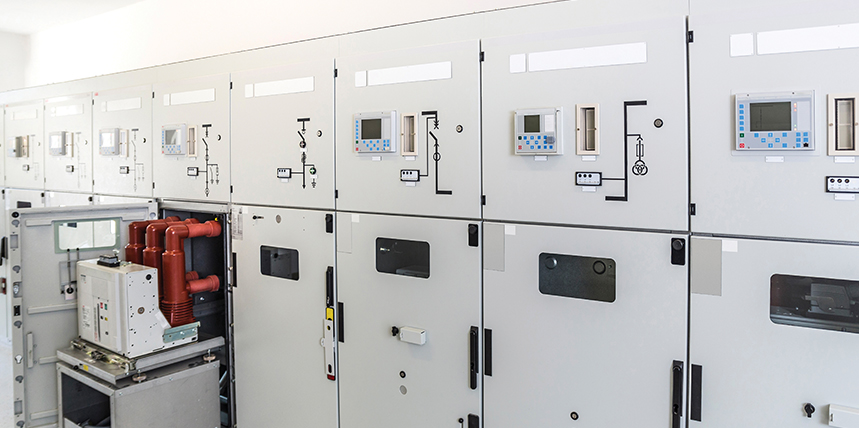
Switchgear modernization solutions involve life extension services and upgrades. These solutions include regular maintenance, breaker reconditioning, equipment modification, and equipment replacements. Breaker replacements encompass the same or newer technology that utilizes plug-in kits to reduce installation time. For example, new retrofit kits can replace older breakers with newer technology to enhance the safety and functionality of your equipment.
Modernization solutions including upgrades of existing equipment such as relays and controls is another option. Many customers still have electromechanical relays, but they often want newer technology and increased functionality that allows those assets to communicate with their broader system to provide more control and monitoring, increasing the overall safety and reliability of their systems.
Customers choose switchgear modernization solutions for a variety of reasons:
- Reduced capital cost. The capital expense for modernizing equipment is lower than the cost for a full replacement, which can be unfeasible due to the equipment location or facility uptime requirements.
- Digitization. Modernization supports customers’ digitization initiatives as newer technology can provide increased ability to monitor and control their systems.
- Newer technology. Increased maintainability and reliability of their systems as newer technology has more readily available spares and expertise to support.
- Reduced downtime. Electrical equipment can have long lead times, and downtime for a full replacement project can impact a facility, so modernization to just one piece of equipment can decrease the overall project duration and customer impact.
CONCLUSION
When engaging with customers around maintenance, the topic of moving toward predictive maintenance often arises. Lifecycle field services, switchgear modernization, and system monitoring technology and software offer practical solutions that extend asset life, enhance safety, and support predictive maintenance. By integrating advanced technologies and data-driven tools, companies can modernize their systems, improve operational efficiency, and build a more resilient, sustainable electrical infrastructure for the future.

Nathan Dunn is the Product Line Manager – Field Services and Aftermarket at Eaton. He began his career 20-plus years ago as a field engineer at General Electric, moved to Schweitzer Engineering, and returned to GE performing various commercial and product leadership roles for distribution and industrial solutions and products prior to joining Eaton. Dunn earned a BS in electrical engineering at the University of Pittsburgh-Johnstown and an MBA from the University of Maryland Robert H. Smith School of Business.
Editor’s Note: This article is a transcription of a presentation at the 2024 EPIC Conference.