

With our increasing dependence on electricity in nearly every aspect of life, it has become essential for responsible authorities to improve the reliability of electrical power networks to reduce power outages and ensure a stable energy supply.
Reliable electrical networks are crucial in society because they are involved in many aspects of life, including healthcare. Power outages in hospitals can lead to life-threatening situations, including patient deaths. Therefore, power generation and utility companies must anticipate potential problems that could cause outages and implement solutions proactively before any interruption occurs.
This article focuses on the environmental challenges in the Middle East and North Africa (MENA) that affect electrical networks and threaten their reliability. Factors such as extreme heat, sandstorms, dust accumulation, and occasional floods can damage equipment, reduce efficiency, and increase the risk of power outages.

MAJOR GRID ENVIRONMENT CHALLENGES IN MENA
Several environmental challenges pose risks to electrical networks in the Middle East. High temperatures, sandstorms, dust accumulation, and high humidity can cause equipment overheating, corrosion, and insulation damage, which may lead to malfunctions and increase the likelihood of power outages.
High temperatures
The Middle East and North Africa (MENA) region is among the most exposed areas to high temperatures, particularly during the summer, when temperatures can exceed 45°C (113°F). Climate studies indicate that the region’s average temperature has risen by approximately 2°C (35.6°F) over the past decades. These extreme temperatures impact not only human comfort but also infrastructure, industrial operations, and electrical systems.
Historically, people adapted to the heat using traditional methods, such as building homes from clay and stone with small windows and high ceilings to reduce sunlight and improve airflow. Sleeping on rooftops, using handmade fans, drinking cold water from clay pots, and staying in shaded areas were common practices. Today, modern solutions, including air conditioners in homes, offices, and vehicles, as well as weather apps, allow people to manage heat more effectively.
In industrial settings, particularly at power plants, technology has improved safety and operational efficiency. Air-conditioned control rooms and protective tools enable engineers and technicians to perform testing and maintenance under extreme heat. However, high temperatures still pose serious challenges to electrical systems. When temperatures exceed equipment design limits, components such as transformers, circuit breakers, and cables experience thermal stress.
For example, extreme ambient temperatures in MENA accelerate the thermal aging of underground cables and transformers. Studies in Oman and Saudi Arabia show that dry soil and elevated summer temperatures reduce cable ampacity and shorten insulation life. Climate-induced heatwaves can cause line sag and increase the probability of outages, threatening system reliability. This creates a feedback loop: Rising heat increases energy demand, which in turn adds to CO₂ emissions, exacerbating the problem further.

Sandstorms and Dust Accumulation
The Middle East and North Africa are known for their desert environments, and many countries in the region experience sandstorms, especially during summer. For example, numerous sandstorms hit Iraq in 2022. At the beginning of April, several storms occurred one after another over two weeks, sending many Iraqi citizens to hospitals.
According to the article published by EcoMENA on November 21, 2024, sand and dust storms have become regular events in the region, and they play an important role in the global dust cycle. They can also temporarily affect the region’s radiation balance and lower surface temperatures by scattering sunlight, sometimes by approximately 1°C (33.8°F).
Major local sources of dust in the Arabian Gulf include the Syrian desert, Jordan, and northern Saudi Arabia, while the Sahara Desert in Africa is one of the main global sources of dust, producing millions of tons of fine particles each year, according to EcoMENA.

PHOTO: © ISTOCKPHOTO.COM/PORTFOLIO/TRANSLUCENT-YY
Sandstorms generally reduce horizontal visibility, and a day is classified as a sandstorm when visibility drops below 1,000 meters. These storms can disrupt daily life, harm the economy, and impact on human health, as they carry fine polluted particles such as bacteria, pollen, heavy metals, and other contaminants that may trigger respiratory issues and allergies. They also pose serious challenges to electrical power systems, as dust and sand can accumulate on insulators, transmission lines, and substations, contaminating surfaces and weakening insulation strength. In severe cases, this buildup can lead to flashovers, equipment damage, and unexpected power outages, jeopardizing the overall reliability of the electrical network.
According to Shenouda et al in “A Review of Dust Accumulation on PV Panels in the MENA and Far East Regions,” sandstorms and dust deposition on photovoltaic (PV) modules cause significant energy losses. The findings indicate that solar power plants may lose up to 70% of their generation capacity due to dust accumulation on panel surfaces, blocking solar radiation.

PHOTO: © ISTOCKPHOTO.COM/PORTFOLIOWHITELACEPHOTOGRAPHY
Humidity
Humidity levels in the Middle East are relatively high because the Arabian Peninsula is surrounded by seas on most sides. High humidity is one of the biggest challenges in the Gulf’s coastal region, especially during summer, when temperatures exceed 45°C (113°F) and humidity can surpass 90%, making the air feel heavy and hard to breathe. Although air conditioners have become indispensable in homes, offices, and cars, the extreme humidity still restricts outdoor activities during the day, leading many people to avoid going outside unless necessary or schedule activities such as walking or jogging at dawn or after midnight.
In coastal cities like Dubai, Doha, and Kuwait, summer weather becomes so hot and humid that it feels like being inside a natural sauna. This can happen even when the actual temperature is lower, but the humidity is high. This is due to what is known as the heat index or feels-like temperature.
Excessive humidity can negatively affect electrical systems and equipment. Moisture in the air can lead to condensation on insulators, cables, and switchgear, reducing their insulation strength and increasing the risk of short circuits or equipment failure.
In many regions, high humidity combined with elevated temperatures can create conditions that affect high-voltage power transmission lines. This can sometimes result in a buzzing or humming sound from the towers, particularly during humid weather. This occurs due to the ionization of air molecules around the conductors under strong electric fields. If electrical equipment is not designed to withstand corona effects, it may lead to electrical discharge, posing a significant risk to the safety and operational reliability of the power system. These environmental factors, common in MENA, highlight the importance of robust design and preventive measures to ensure grid stability under extreme climatic conditions.
STRATEGIES TO IMPROVE ELECTRICAL NETWORK RELIABILITY IN MENA
Ensuring the reliability of electrical networks under harsh environmental conditions requires effective protection strategies. High temperatures, humidity, sand, and dust can adversely affect transformers, switches, and control systems. Practical solutions to improve equipment performance and extend operational life include the following strategies.
Controlled Room
One of the most effective strategies for protecting electrical equipment is to place it in a controlled environment. Electrical rooms and indoor substations are designed with advanced temperature and humidity control systems to maintain stable operating conditions. Keeping critical components such as transformers, switchgear, and control panels inside these enclosures greatly reduces the risks associated with overheating, condensation, and dust ingress. For instance, high relative humidity combined with dust can cause flashovers across insulators, leading to costly outages. Controlled rooms use HVAC systems, air filtration, and thermal sensors to constantly monitor and regulate the internal environment.
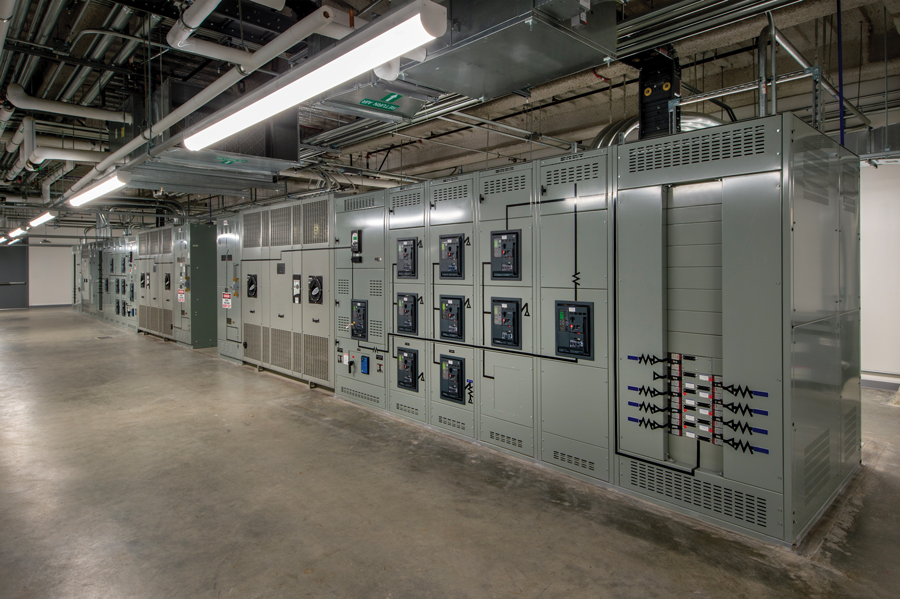
PHOTO: © ISTOCKPHOTO.COM/PORTFOLIO/ALACATR
According to the UAE Electricity Wiring Regulations, all parts of an electrical installation must be designed, constructed, and maintained to operate safely under the expected environmental conditions. In the Middle East, these conditions include high ambient temperatures, with outdoor shaded areas reaching 50°C (122°F), outdoor unshaded areas experiencing additional solar heating, and indoor unconditioned areas heating up to 40°C (104°F). Equipment must also withstand frequent dust, occasional sandstorms, coastal corrosion, humidity levels reaching 100% during certain periods, and variable soil conditions.
These harsh environmental factors make the use of indoor substations or enclosed electrical rooms essential. By providing a controlled environment, indoor substations protect equipment from dust, sand, condensation, and heat, ensuring safe operation, reliable power supply, and extended equipment lifespan, as has been successfully demonstrated in the UAE and Saudi Arabia.

PHOTO: © ISTOCKPHOTO.COM/PORTFOLIO/VALTRON84
Protective Molding and Coating
Another essential method for protecting power equipment is the use of protective coatings and cast insulation materials. These layers act as a barrier against the moisture, dust, and chemical contaminants that are prevalent in the desert and coastal environments of the Middle East. For example, polyurethane and epoxy-based coatings are commonly applied to insulators, cables, and circuit boards to prevent tracking, corrosion, and partial discharges. Protective molding around terminals and joints ensures that dust and humidity cannot penetrate the insulation system, preserving dielectric strength.
Research has shown that equipment treated with such protective coatings experiences significantly less downtime and fewer failures, especially in regions with saline humidity (Gulf coastal areas) and dust-laden air (Saudi Arabia, Iraq, Kuwait). By applying these protective measures, utilities can reduce unexpected outages, improve system reliability, and save on costly maintenance. In modern substations, protective coatings are considered a standard preventive measure to ensure stable operation under harsh conditions.
Maintenance
Preventive maintenance is essential for minimizing problems caused by harsh environmental conditions. This involves routinely inspecting electrical equipment to ensure safe and proper operation, identifying any damage or wear caused by factors such as heat, dust, or humidity before they result in serious faults. Regular cleaning also helps prevent the accumulation of dust and sand on insulators and switches, reducing the risk of equipment failures.
Understanding the importance of proactive maintenance, the MENA has integrated Internet of Things (IoT) technologies into its maintenance programs. This allows real-time monitoring, predictive fault detection, and optimized scheduling, all of which improve system reliability and extend the service life of electrical assets.
Preventive maintenance also plays a key role in enhancing the efficiency and performance of power systems. By systematically inspecting, cleaning, and testing equipment such as transformers, switchgear, and cables, potential issues can be addressed before they escalate into failures. This approach helps avoid unplanned outages, reduces energy losses, and ensures all components operate efficiently. Well-maintained equipment also experiences less wear and tear, lowering resistance and minimizing leakage currents, which directly conserves power. It also prevents emergency shutdowns that consume additional fuel and energy, while extending the lifespan of critical assets and reducing the need for frequent replacements. Overall, preventive maintenance strengthens system reliability, saves energy, and reduces operational costs.
ECONOMIC IMPACTS OF ENVIRONMENTAL STRESSES
Environmental stresses such as sand and dust storms, extreme heat, humidity, and drought impose significant economic burdens on power systems across the MENA region. The combination of rising temperatures, land degradation, and poor water management has increased the frequency and severity of sandstorms, leading to substantial costs associated with infrastructure damage, energy production losses, and health-related expenses.
According to the United Nations World Meteorological Organization (WMO), more than two billion tons of dust are emitted globally annually, over 80% of which originates from the deserts of North Africa and the Middle East. These sand and dust storms affect more than 330 million people in more than 150 countries, causing severe disruptions to daily life and energy sector operations. The economic impact of these storms in the Middle East and North Africa is estimated at US$150 billion, equivalent to approximately 2.5% of the region’s GDP. The World Bank estimates that power outages and clean-up operations alone cost the region approximately US$13 billion annually.
High temperatures significantly impact electricity systems in the Middle East and North Africa region, causing increased energy demand during the summer months in countries such as Saudi Arabia and Jordan. This leads to the operation of additional power plants to cover peak demand, increasing operating costs. Thermal power plants also lose efficiency due to higher water and air temperatures, reducing productivity and leading to direct and indirect economic losses estimated at hundreds of millions of dollars annually due to power outages and their impact on the industrial, service, and agricultural sectors.
CONCLUSION
The reliability of electrical power networks in the Middle East and North Africa (MENA) region faces significant challenges due to extreme environmental conditions. High temperatures, sand and dust storms, humidity, and occasional floods create severe stress on power systems, increasing the likelihood of equipment failures, power outages, and operational inefficiencies. As highlighted in reports from EcoMENA and the WMO, these environmental factors not only threaten the stability of energy infrastructure but also impose serious economic and social consequences on the region.
However, advancements in technology are reshaping the way utility companies manage these challenges. The implementation of controlled environments, protective coatings, indoor substations, and AI-driven predictive maintenance has enhanced the resilience of power networks. Early-warning systems and advanced monitoring tools now enable operators to detect potential faults before they escalate, reducing downtime, and minimizing damage.
Looking ahead, sustaining reliable electrical networks in the MENA region will require a balanced approach that combines technological innovation, proactive maintenance strategies, and climate adaptation measures. As environmental stresses are expected to intensify due to climate change, energy providers must continue to invest in smart infrastructure and sustainable solutions to ensure energy security and protect critical sectors such as healthcare, industry, and transportation.
By adopting these measures, the MENA region can better withstand the harsh impacts of its unique climate while securing a stable and efficient power supply for its growing population and economy.
REFERENCES
- D. Basu, B. Gholizad, R. Ross, and S. Gargari, “Temperature Effect on Electrical Aging Model for Field-Aged Oil Impregnated Paper Insulation,” in CEIDP 2022–2022 IEEE Conference on Electrical Insulation and Dielectric Phenomena, Vol. November 2022, pp. 418-421. IEEE, https://doi.org/10.1109/CEIDP55452.2022.9985251.
- N. Howarth, N. Odnoletkova, T. Al Shehri, A. Almadani, A. Lanza, and T. Patzek. “Staying Cool in a Warming Climate: Temperature, Electricity, and Air Conditioning in Saudi Arabia,” Climate, 8(1), 4. 2020. https://doi.org/10.3390/cli8010004.
- S. Swain. Sand and Dust Storms in the Middle East: Facts to Know. EcoMENA, November 21, 2024, https://www.ecomena.org/sand-dust-storms/.
- K. Hansen. Dust Storm in Iraq. NASA Earth Observatory, April 12, 2022, https://earthobservatory.nasa.gov/images/149695/dust-storm-in-iraq.
- M. A. Abouelsaad, M. A. Abouelatta, B. Arafa, and M. E. Ibrahim, “Environmental Pollution Effects on Insulators of Northern Egypt HV Transmission Lines,” 2013 Annual Report, Conference on Electrical Insulation and Dielectric Phenomena, Shenzhen, 2013.
- M. T. Chaichan, H. A. Kazem, A. H. A. Al-Waeli, K. Sopian, M. A. Fayad, W. H. Alawee, H. A. Dhahad, W. N. R. W. Isahak, and A. A. Al-Amiery, “Sand and Dust Storms’ Impact on the Efficiency of the Photovoltaic Modules Installed in Baghdad: A Review Study with an Empirical Investigation,” International Journal of Renewable Energy Research, 2023.
- R. Shenouda, M.S. Abd-Elhady, and H.A. Kandil. “A Review of Dust Accumulation on PV Panels in the MENA and Far East Regions,” Journal of Engineering and Applied Science, 69, 8, 2022, https://doi.org/10.1186/s44147-021-00052-6.
- J. Pippola, “Protective Coatings of Electronics under Harsh Thermal Shock,” Microelectronics Reliability, Vol. 54, No. 9, pp. 1516–1522, 2014. ISSN 0026-2714, https://doi.org/10.1016/j.microrel.2014.07.106.doi.
- DEWA. DEWA’s R&D Centre Invests in AI & Machine Learning to Improve Efficiency, Reduce Costs and Carbon Emissions, Dubai Electricity & Water Authority (DEWA) | DEWA’s R&D Centre invests in AI & machine learning to improve efficiency, reduce costs and carbon emissions.
- AP News. (2022). “Sand and Dust Storms Taking an Increasing Global Toll, UN Agency Says.” Sand and dust storms taking an increasing global toll, UN agency says | AP News.
- PreventionWeb. (2023). Middle East: Rising Heat Drives Crippling Sandstorms, Middle East: Rising heat drives crippling sandstorms | PreventionWeb.
- Department of Energy. (2020). Electricity Wiring Regulations (2020). Abu Dhabi: Department of Energy, https://www.doe.gov.ae/-/media/Project/DOE/Department-Of-Energy/Media-Center-Publications/EWR-2020-EN-V8-B-Online.pdf.

Khaled Shadi Morshed currently works as an Electrical Engineer at Commissioning Services International (CSI), where he is involved in testing, commissioning, and power system analysis. He is a NETA Level 3 Certified Technician, demonstrating his expertise in advanced electrical testing and commissioning procedures. Morshed received his BEng in electrical engineering from Balqa’ Applied University, Jordan.