
The electric power sector’s workforce is older than that of most industries and is grappling with a crisis that has been building for over a decade and has now reached a critical point.
UNFOLDING CRISIS IN THE ENERGY WORKFORCE
An aging workforce, combined with surging energy demand driven by EV charging infrastructure, massive data center growth, the expansion of renewable energy projects, and rapid technological change, has left the sector facing unprecedented talent gaps. A looming silver tsunami of retirements over the next decade threatens to drain organizations of vital field experience and technical know-how.
At the same time, non-retirement turnover has spiked to record levels, compounding the labor shortage as younger employees leave at higher rates. Front-line experts in operational and maintenance and testing and commissioning — often the guardians of system reliability and safety — are walking out the door with specialized skills that cannot be quickly replaced.
Table 1 shows the recent turnover rates among utility field employees, highlighting the increase in non-retirement departures and the higher exit rates among younger workers.

Compounding this challenge is the lack of ready replacements in the pipeline. Based on the author’s direct industry experience, only a handful of academic institutions in the United States offer programs specifically designed to train the next generation of electrical technicians and frontline energy workers. This is not just an educational gap — it is a systemic failure in workforce development. Traditional college programs aren’t producing enough graduates with the specialized skills electric power jobs require. As a result, companies find themselves competing fiercely for a small pool of qualified technicians to meet basic project staffing needs. Despite early warnings and some progress with educators, dedicated energy workforce training programs remain far too few to meet growing demand.
THE GAP IN TRAINING AND EDUCATION
The shortage of formal training avenues for energy trades is stark. Many critical frontline roles — lineworkers, substation electricians, power plant operators, and apparatus and relay technicians — have historically relied on on-the-job training or apprenticeship programs rather than academic degrees. While these pathways are effective, they cannot scale fast enough to meet growing workforce demands without stronger industry support and investment. This means aspiring power utility and company workers often have limited options: a handful of community college programs focused on utility work, military training pipelines, or seeking an apprenticeship slot.
At the same time, college programs are not producing enough job-ready graduates in electrical power disciplines. This leaves utilities and contractors with two options: Hire from an existing limited labor market or build talent through internal training programs. Often, they must do both, as demand for skilled young technicians faroutstrips supply, leading to bidding wars for talent.
A deeper concern is the persistent gap between what academia teaches and what the energy industry actually needs. Many degree programs focus heavily on theory, offering little in the way of hands-on, applied learning and practical training. This leaves graduates unprepared for critical tasks like grid operations and commissioning — skills that are essential for safety and reliability in the field. As a result, even the most well-meaning academic programs often fall short, forcing employers to invest significant time, effort, and financial resources to bring new hires up to the required level of job readiness.
The shortage of training programs is a long-standing issue. As early as 2009, IEEE warned that workforce aging and lack of new entrants threatened grid reliability. The problem that has only worsened as technical demands grow, while efforts by the Department of Energy and the Electric Power Research Institute (EPRI), though helpful, remain limited in scale. The reality is that most young people entering the energy trades today are not coming from university programs tailored to our industry. It is a glaring blind spot in our national workforce strategy for energy, and one that requires urgent attention from both educational institutions and industry leaders. Figure 1 shows the sharp workforce gap, from openings to retention, highlighting critical shortages and underrepresentation in the U.S. electrical trades.

SHORT-TERM METRICS VS. LONG-TERM RELIABILITY
One thing must change above all else: the mindset of industry leadership. The fundamental challenge is not awareness. Executives across the energy sector are by now acutely aware of workforce demographics and the looming skills gap. They have seen the internal HR data on retirement eligibility, read the trade press headlines about the “critical workforce shortage,” and struggled with delays in hiring qualified personnel.
Yet too many leaders remain paralyzed by short-term financial metrics, pressured to deliver quarterly profits and keep O&M costs low. Investing in training and human capital gets relegated to the back burner, viewed as a cost center rather than a core business imperative. HR reports note that training budgets are often the first to be cut during tough times, as their value and ROI are hard to quantify, making it easy for organization to view them as expendable costs, even though the real benefits, like improved safety and productivity, may not be immediately visible.
This short-term thinking is deeply rooted and requires courageous leadership to overcome. So why does it persist? Consider a few key barriers:
- Immediate cost vs. delayed payoff. Developing high-quality training programs is expensive upfront. The returns (fewer errors, higher efficiency, and talent retention) accrue over years and are hard to tie to a specific line item in the ledger.
- Intangible ROI. It is difficult to quantify the return on investment for training in the same straightforward way one might calculate ROI for a new piece of equipment or project, leading many to view it as a cost to cut rather than a long-term investment.
- Workforce mobility. There is a lingering fear that if we pay to train an employee, they might take those skills to a competitor. But responding by not training anyone is a self-defeating strategy that only worsens the industry-wide skills gap.
- Pressure for short-term results. Public and privately owned companies face constant pressure to hit quarterly targets, making it difficult to justify long-term investments without strong leadership pushing the case.
It takes real courage and vision for a leadership team to push back against the constant pressure to focus only on short-term gains. Leaders must be willing to defend multi-year workforce development investments in the boardroom, armed with the argument that these investments are essential to the company’s future viability. The truth is that failing to invest in human capital will cost far more in the long run, but those costs often appear indirectly, or on someone else’s watch, which is perhaps why they don’t get the attention they deserve.
THE HIDDEN COSTS OF UNDERINVESTMENT IN TRAINING
Put simply, failing to invest in training — or plan for workforce succession — leads to delayed projects, maintenance backlogs, safety incidents, unplanned outages, a weakened safety culture, and rising operational costs. In grid projects, labor shortages often result in extended work shifts to meet deadlines, adding pressure to project timelines and complicating resource planning.
The utility sector’s safety statistics provide a stark warning. According to industry research, nearly 40% of construction worker injuries may occur within the first six months of employment, and close to half within the first year for new workers who have not received adequate training.[7] This unusually high injury rate among inexperienced workers illustrates the price we pay when people learn on the fly instead of through formal training.
In the electric power industry, where mistakes can be fatal, this is unacceptable. The 2023 NERC report found that over 45% of electric power incidents since 2017 were linked to organizational performance issues, many of which can be attributed to inadequate training, poor quality control, and insufficient management oversight.[8] A single misstep — like a dropped line or an incorrect switching procedure — can trigger customer outages or life-threatening accidents. Figure 2 shows the main causes of electrical worker fatalities or the vast majority of incidents.[9]
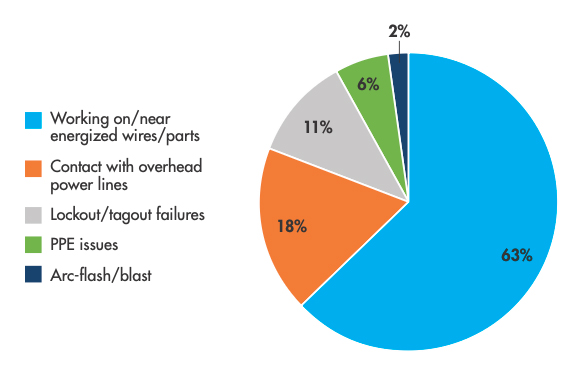
Table 2 shows the average direct and indirect costs associated with different types of electrical safety incidents in the energy sector, highlighting the significant financial impact of arc flashes, fatalities, nonfatal injuries, unplanned downtime, and property damage.

Utilities and companies may experience costs above or below these averages, depending on their size, safety culture, and incident severity.
These hidden costs are like termites gnawing at the foundations of our industry. They may not be immediately visible in a quarterly report, but over time, they undermine the reliability of the grid and the financial health of companies. In other words, investing in training saves money and lives in the long run, and the data backs this up. Conversely, not investing in training is a false economy. Any short-term savings will be paid for tenfold through the costs of outages, injuries, and inefficiencies.
COURAGEOUS LEADERSHIP: INVESTING IN PEOPLE
If short-term thinking is the disease, then courageous, long-term leadership is the cure. We must raise our collective voice in support of the leaders in our industry who fight for quality training and who treat safety and skills as non-negotiable priorities. These are the transformational leaders who understand that an energy company’s greatest asset is not just the power plants or the poles and wires, but the people who design, operate, and maintain them.
Fortunately, there are encouraging signs. A number of forward-looking utilities, companies, and union-backed initiatives have started investing heavily in structured workforce development programs. These efforts range from pre-apprenticeship academies to internal multi-year technician development tracks and mentorship pipelines. Many programs are now pairing technical training with soft skills, leadership modules, and digital tools to build holistic readiness.
Leaders who champion these initiatives sometimes face skepticism or pushback. There can be resistance to spending on training, mentorship programs, or scholarships for trade school partnerships, especially when budgets are tight. But this is where leadership courage and long-term vision must prevail. A true energy industry leader must be able to stand in front of the board or investors and make the case that human capital is every bit as important as physical capital. The return on a lineman or technician and engineering training program may not appear on next quarter’s balance sheet, but it will manifest in the company’s performance over the next 5, 10, 20 years in the form of fewer outages, higher customer satisfaction, and a stronger safety record. It is the classic ounce of prevention that saves a pound of cure — except in our case, that pound of cure could be a life saved or a blackout averted.
A CALL TO ACTION: DO WHAT’S RIGHT, NOT JUST WHAT’S EASY
History will judge how we respond to this pivotal moment. The energy industry is on the point of one of the greatest technological transformations in a century — grid modernization, renewable integration, electrification of transportation, and more. But none of those innovations will succeed if we don’t have the skilled workforce to build and maintain them.
This is a call for leadership at every level. We must collectively support those leaders who stick their necks out to invest in people. That means celebrating the project manager who institutes a new safety training module, backing the utility or company CEO who allocates budget for an apprentice academy, and listening to the veteran worker who says, “We need more guys out here who know what they’re doing,” and then doing something about it. Every unfilled position that remains unaddressed, every preventable incident that occurs because someone lacked the proper training, is on all of us. If we continue to ignore the warning signs, we risk a future of frequent outages, stalled clean energy projects, and workers put in harm’s way — a future where we are constantly reacting to crises rather than preventing them.
We stand at a crossroads where the courage to invest now in the next generation of energy workers will yield dividends for decades to come. The long-term reliability of our electric power system, the safety of our workforce, and the success of the energy transition all hang in the balance. This is our moment to choose vision over shortsightedness, to support the foundation of skills that will power our nation forward. Let it show that we came together — as an industry and as a community — to do what’s right, not just what’s easy.
In the end, the kilowatts and technologies may change, but it is human expertise that will power our success. Now is the time for bold action to reframe this workforce crisis opportunity to build a stronger, smarter, and safer energy workforce for the generations to come.
REFERENCES
- Victoria A. Rocha. “Survey: Energy Sector Job Turnover Remains High Amid Skills Shortage,” Cooperative.com, February 6, 2024.
- Victoria A. Rocha. “Survey: Energy Workers Are Getting Younger, But Their Turnover Is Highest,” NRECA, August 2, 2022.
- Henrique Hein. “Energy Companies Lose Talent and See Turnover Rise in 2024,” Canal Solar, June 13, 2025.
- Angelo Mendoza. “America Needs Electricians: Addressing the Electrician Labor Shortage,” Indeed.com, June 9, 2025.
- Pranav Srikanth, Marissa B. Baker, Hendrika W. Meischke, Noah Seixas, Christopher Zuidema. “Factors Associated with Construction Apprenticeship Completion in the United States,” The Economic and Labour Relations Review. 2024;35(4):939-958. doi:10.1017/elr.2024.50.
- Estel Masangkay. “57 Electrician Facts and Statistics You Need to Know in 2025,” The Workyard Blog, June 11, 2025.
- Gerhard Schneibel, Megan Boehnke. “Study: Construction Injuries Linked to Inexperience,” The University of Kentucky Knoxville News, March 20, 2019.
- NERC. Analysis of Human vs. Organizational Performance in the ERO Event Analysis Process, North American Electric Reliability Corporation, November 9, 2023.
- Daniel Majano. “Workplace Injury & Fatality Statistics 2011–2023,” Electrical Safety Foundation International, March 23, 2025.
- National Safety Council. Injury Facts®.
- Colton Rossiter. “Understanding the Arc Flash Incident Liability & Costs,” Leaf Electrical Safety, August 31, 2023.
- Jennifer Busick. “Don’t Let Arc Flash Cost You,” Electrical Safety, August 25, 2015.
- Sentinel. “The Real Cost of a Workplace Accident Is Five Times What You Think,” Sentinalblog.com, February10, 2017.
- Power Partners Group. “The Cost of Downtime: Beyond Lost Revenue,” powerpartnersblog, August 1, 2024.
- OSHA. Estimated Costs of Occupational Injuries and Illnesses and Estimated Impact on a Company’s Profitability Worksheet, OSHA’s Safety Pays Program.
- OSHA. Business Case for Safety and Health, OSHA’s Safety Pays Program.
- Geetha Waehrer, Xiuwen Dong, Ted Miller, Elizabeth Haile, Yurong Men. “Costs of Occupational Injuries in Construction in the United States,” Accident Analysis & Prevention, Vol. 39, Issue 6, 2007, pp. 1258–1266n=, ISSN 0001-4575.
- Toby Graham. “Construction Injuries: A Look at the Direct and Indirect Costs,” KPA Blog, March 27, 2024.
- John Devendorf. “How Much Does a Construction Worksite Injury Cost?” Lawinfo.com, January 29, 2024.

Morteza Talebi, PhD, SMIEEE, is Vice President of Workforce Development at PowerX. A Senior IEEE Member, he is an engineering leader with over 17 years of experience in electrical engineering, workforce strategy and training, and professional development. Dr. Talebi’s work emphasizes the integration of human performance and quality principles into workforce strategies, connecting business goals, operational needs, and HR initiatives to create alighted, sustainable talent pipelines. He earned an MS in electrical engineering from North Carolina Agricultural and Technical State University and a PhD in power systems from the University of Central Florida.