

Renewable and clean energy have been tremendous growth industries due to various forms of incentive programs at the local, state, and federal levels. Private companies are also interested in renewable and clean energy to satisfy their own internally set global obligations. Year over year, we see more clean and renewable energy being developed due to these incentives.
PROJECT STAKEHOLDERS
A renewable energy project is often under a strict schedule to adhere to construction and commissioning milestones that affect payment. Multiple stakeholders with a voice in the process may require weeks or months of advanced notice for interconnection and testing. The division of responsibilities and the ties to payment milestones can create conflicts of interest that may be counterproductive to the commissioning process or cause the project to work in nonintuitive ways. As NETA companies, we must ensure that these conflicts do not impact the safety of the commissioning and testing process while communicating with our clients to ensure they are getting the best product possible.
The stakeholders in a typical renewable/clean energy project include the investors (and financiers), project owners, offtakers, engineering firms, construction companies, equipment manufacturers, local ISO, local utility, various permitting authorities, the municipality, and the party that will operate the site post-construction.
- The owners want to make sure that the installation is sufficient from a long-term performance standpoint.
- Equipment manufacturers will build their units to the specifications given to them and will not be concerned with the applicability to the overall project.
- The construction team will build the project as quickly as possible and push away or submit a change order for any scope that was not originally identified under their contract.
- The ISO, utility, and permitting authorities will look to ensure that the project does not impact their other various stakeholders.
- The NETA testing company needs to ensure that everything is installed safely despite these potentially conflicting interests.
It is easy to see that each of these stakeholders has different goals and some of the financial stakeholders have an incentive to finish the project as quickly and as efficiently as possible.
PROJECT LIFESTYLE
- The lifecycle of the project starts with the developer. They will first find land that is the correct fit for the type of project considering factors such as grid hosting capacity, proximity to likely interconnection points, towns or cities with favorable ordinances, favorable pricing, available RFPs, and many others.
- Once a site is selected, the developer will find an offtaker to provide funding in exchange for the power and/or renewable energy credits (RECs) if applicable.
- During this time, the developer will continue to perform due diligence in permitting and other site factors to ensure the land is buildable. If it is likely that the site will move forward, they may also start the interconnection process, which includes site development, permitting, equipment modeling, impact studies, and construction.
- When permitting is certain, tax negotiations are complete, interconnection is certain, and the offtaker is under contract, the developer will move to finance the project.
- At this point, the project will move into final engineering and procurement. Detailed engineering is completed so that major equipment, which may have long lead times driving construction dates, can be ordered. Final decisions on contractors are also made during the procurement phase.
- If procurement timelines have shifted before construction begins, there may already be pressure on the construction schedule to meet certain deadlines. These can be tied to RFPs, tax credits, or other constraints.
- Once construction starts, many things can push a project schedule, which can contribute to stress on the timeline. The risk of these issues increases with newer developers who may not have seen as many common pitfalls of these projects.
- It is important to stay on top of your control documents. Trying to complete all testing or commissioning aspects at the end of the project may disrupt the order of construction and require things to be connected and reconnected. As the testing and commissioning agent, the NETA company should ideally drive this process and step up as the record keeper.
- As construction nears completion, the NETA company will start its commissioning activities. It is important to note that all previous delays will now be summed, and there may be a substantial amount of pressure on the commissioning schedule so results can be submitted to the utility, the witness test scheduled, and the site be put online. NETA companies must be open and honest with their clients when setting expectations.
PROJECT COMMISSIONING
To properly commission a renewable or clean energy project, certain preparations must be taken within the project lifecycle.
- The first action should be to review the interconnection process with your customer to ensure their expectations are reasonable and managed. A NETA testing company will have experienced common pitfalls and can provide valuable insight to their client.
- After the project path has been audited, a design review should be completed. This is not meant to question the engineered design or attempt to redesign the site. It is meant to ensure that the specified equipment is appropriately rated, safe, and of proper construction for the installation. As a third-party test agent, it is crucial to give insight into this aspect of the project. The manufacturer will supply what they are asked for and is not responsible for ensuring their equipment is suitable for the application unless they are under a system-wide integration contract, popular with some larger companies.
- Next, proper documentation should be created that outlines the actions necessary to commission the facility in accordance with ANSI/NETA ATS and ANSI/NETA ECS. This includes defining the roles and responsibilities of the stakeholders that have commissioning responsibilities. At this point, you may encounter conflicts or missing portions of the required testing for the site. You should also be working to educate the client if they do not understand the level of testing required for the safe installation of the equipment. These plans should be distributed to the stakeholders so they understand their roles and responsibilities. If multiple parties are responsible for contributing to the commissioning documents, a share drive and document control system must also be put in place.
- At the end of the project, the NETA company will be responsible for providing a final report that adheres to NETA report guidelines. This may include test results from others if it falls within their scope of work. You may need to work with your clients to explain any conflicts of interest that arise if results are submitted that are not truly third-party representation.
- Finally, you may be assisting your customer with the witness testing and in-service testing of the project. It is imperative that you fully review the testing and commissioning results before performing this testing, even if some testing was performed by others. At this point, you will be the one to energize the facility, and due diligence should be performed to ensure it can be energized safely.
CONCLUSION
Various programs have created incentives for the proliferation of clean and renewable energy development across the United States while technological advances have made this type of development more cost-effective. While these incentives have been successful in creating development, they may provide conflicting interests in the project process that can negatively impact the rigor of the commissioning process.
As NETA companies, it is our duty to understand the stakeholders’ goals and incentives to ensure that they do not interfere with safe energization. These goals should not be seen as negatives, rather they should be incorporated into a commissioning plan that satisfies all stakeholders while not sacrificing safety and long-term reliability.
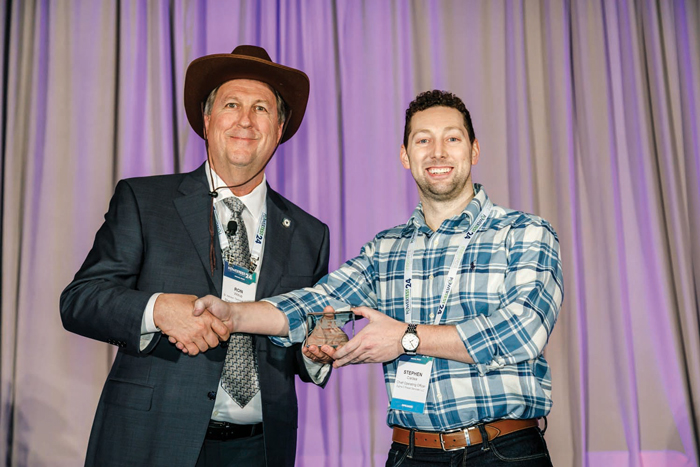
Stephen Cialdea, PE, is the Chief Operating Officer for Sigma C Power Services LLC (SCPS). He oversees all SCPS operational staff on the field service and engineering sides of the business. Cialdea earned a BS in electrical engineering focused on power systems and a thesis master’s degree with a power systems certificate from Worcester Polytechnical Institute in Worcester, Massachusetts. He is a Professional Engineer, earned NETA Level IV Technician Certification, and completed his MBA at Johns Hopkins University with a focus on financial institutions. Cialdea received the award for Best Renewables Presentation at PowerTest24.
EPIC — ELECTRICAL POWER INNOVATIONS CONFERENCE
Speakers, sponsors, and conference participants from across the industry will converge on October 13–15, 2024, at the Hilton Anatole | Dallas, Texas for NETA’s EPIC — Electrical Power Innovations Conference.
EPIC educational sessions will focus on emerging technology and trends that will shape tomorrow’s electrical power industry. This unique conference is a gathering of electrical equipment manufacturers, service providers, engineering firms, power generation and distribution companies, and investment groups that are defining the next generation of electrical power advancements and innovations.
EPIC Knowledge-Sharing Sessions Focus on Four Trending Themes:
- Renewable Energy | Powering the Grid
- Emerging Technology
- Powering EV and IoT
- Workforce Development and Management
Twelve unique EPIC session will cover the four knowledge sharing themes. Presentations, panels, and roundtable discussions will be future-focused and led by industry thought leaders and subject matter experts. Participants include organizations and professionals invested in understanding how to prepare and plan for future power systems and management needs. With an eye on improving power resiliency and safety, join colleagues, along with operations specialists, product engineers, R&D, and business development managers in this unique collaborative experience.
For speaker, sponsor, and registration details, visit EPICPower.org.