Stator ground faults are one of the most common disturbances for high-impedance grounded generators. A resistor is connected across the secondary of a single-phase distribution transformer connected from the machine neutral to ground to insert the high-impedance ground. The purpose of the high-impedance ground (Figure 1) is to limit the magnitude of single line-to-ground fault current flowing in the stator …
Modern Low-Voltage Breakers: Emerging Challenges
The days of low-voltage breakers being simple devices with basic overcurrent protection are long gone. Back then, the biggest challenge was to figure out how to defeat a ground fault or remember which jumper disabled thermal memory. Today, manufacturers are leveraging digital technology to add layers of protection and functionality. These advancements can quickly derail a routine day of testing …
Knowing Electrical Acronyms Matters, Plus an NFPA 70E-2027 Update
If you work around electricity, your career…and maybe your life…depends on what’s hidden in a bowl of alphabet soup. I’m talking about electrical acronyms: NFPA, OSHA, 70E, 70B, NETA, NEC, Z462, EASA, and so on. At first, they may sound like code meant to confuse you. But once you crack that code, everything about your job makes more sense…and becomes …
Working Together for Power System Life Extension and Modernization
As we close out the year and look ahead to 2026, I’m filled with optimism for the continued growth and influence of NETA in the electrical power testing industry. Our association remains a trusted leader in advancing standards, training, and professional excellence, and the opportunities before us have never been greater. Across every sector, the demand for skilled testing and …
Soil Resistivity Testing Gone Wrong
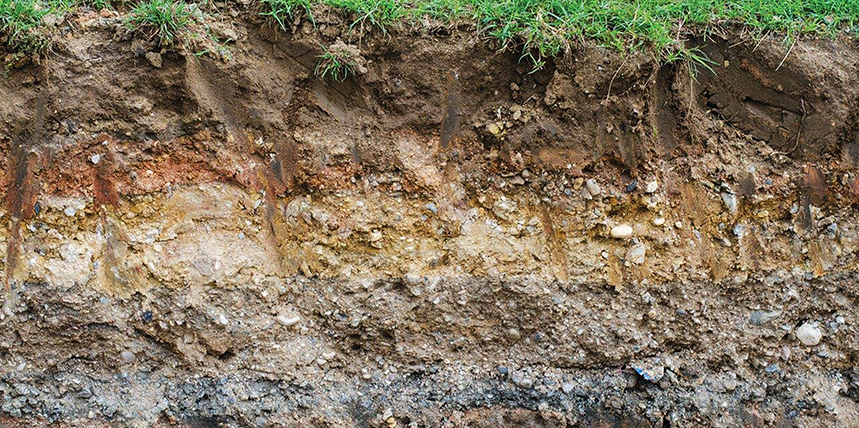
Soil — most think, “Hey, it’s just dirt,” but when it comes to electricity, soil becomes more complex. Electrical resistivity (resistance to current flow) is one characteristic of soil that requires specific knowledge regarding testing and application in grounding system design. Soil is made up of combinations of clay, sand, loam, and various types of rocks. These components have differing …
Workforce Development
Employers must ensure that competent and qualified workers complete electrical work. Focusing on work development is a key part of ensuring your organization meets the qualification requirements. NETA’s Electrical Testing Technician (ETT) certification program helps companies gauge the competency of their electrical workers. 1. How many levels of technician certification does NETA define?a. Threeb. Fourc. Fived. Six 2. Which of …
The Dos and Don’ts of Electrical Equipment Lubrication
Switching devices must be adequately lubricated so they operate smoothly and efficiently as designed. This helps ensure a safe environment for employees working with, on, or near the equipment. Many things must be taken into consideration when selecting a lubricant for electrical equipment. Let’s take a look at some of those factors. First, the correct type of lubricant must be …
The Case for On-Line Assessments
Asset failures versus time are often non-linear. As assets degrade over time, the degree of degradation and the rate of degradation often increase. If asset degradation were linear, the rate of degradation would be constant. This implies that an asset, such as a circuit breaker, could function properly for approximately 30 years, develop a detectable defect at year 31, and …
Be the Hunter: Outsmart the Killer that Never Sleeps
Electricity doesn’t take breaks. It doesn’t sleep. It doesn’t care how experienced you are, how close you are to retirement, or how many safety meetings you’ve sat through. It’s always there…silent, invisible, and deadly. And it’s always hunting. If that sounds dramatic, good. It should. Because electricity kills, and it only takes one mistake. One missed step. One lapse in …
Tackling the Challenge of Workforce Development
In this issue of NETA World, we tackle one of the most pressing challenges facing our industry today: workforce development. Across the electrical testing industry, companies are grappling with how to staff critical projects while pursuing ambitious growth goals. The talent gap is real and growing. Organizations must balance workforce transitions, technological adaptation, and cultural shifts to remain competitive and attract, …