
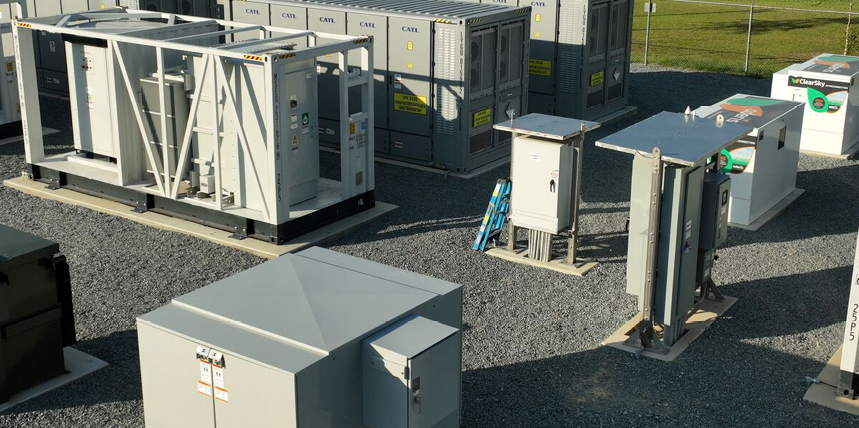
The U.S. power grid is being asked to do two things it was never designed to do simultaneously: absorb unprecedented new electricity demand while accommodating a rapidly growing number of distributed resources sending power back in the opposite direction.
For most of the last century, the model was relatively straightforward: electricity flowed in one direction, from large central generating stations through transmission lines and substations to homes and businesses. Today, that model is giving way to a more dynamic, bidirectional system. Behind-the-meter (BTM) resources—including solar, battery storage, electric vehicles (EVs), microgrids, and on-site generation—can now consume, store, generate, and in some cases return power to the grid.
Regulatory and market changes are accelerating that transition, opening the grid to a wider range of distributed assets and giving customers a more active role in how power is generated, stored, consumed, and ultimately managed. The result is a power system that is becoming more decentralized and considerably more complex.
This transformation is occurring just as electricity demand is accelerating after decades of relatively modest load growth. Data centers and AI infrastructure, expanding industrial activity, and transportation electrification are placing new demands on a grid already facing transmission, distribution, and generation constraints.
For utilities, facility operators, and large power users, that changes the equation. Cost, availability, and reliability can no longer be treated as separate considerations; all three must increasingly be addressed simultaneously. Distributed generation, storage, and increasingly sophisticated controls offer powerful new ways to do that, but they also introduce more equipment, more interfaces, and more potential points of failure. As the grid evolves, testing and commissioning will become even more critical to ensuring that this new energy infrastructure performs safely and reliably when it matters most.
REGULATION OPENS THE GRID TO DISTRIBUTED ENERGY
One of the most significant catalysts for this transformation was the Federal Energy Regulatory Commission’s (FERC) Order No. 2222. Issued in 2020 (and refined in 2021), the rule opened wholesale energy, capacity, and ancillary service markets to aggregate distributed energy resources (DERs). In practical terms, resources such as battery storage, smart building controls, and distributed solar can be aggregated and participate in markets once largely reserved for conventional power plants.
That market access comes with new technical requirements. Aggregated DERs can provide services such as frequency regulation, voltage support, capacity, and reserves, placing greater importance on metering, protection, controls, and coordination at points on the system that historically played little or no role in wholesale power markets.
Several states are moving in the same direction. Illinois built on its Climate and Equitable Jobs Act to expand the Illinois Shines Adjustable Block Program, driving rapid growth in both residential rooftop solar and larger distributed generation projects up to 2 MW. New Jersey expanded its community solar program and interconnection rules as part of its clean energy targets. Connecticut rolled its incentive structure into the Energy Storage Solutions program administered by the Public Utilities Regulatory Authority, pairing distributed generation with battery storage to relieve peak demand.
While the approaches vary by market, the broader trend is clear: more customer-owned energy resources are being connected to systems that were not originally designed around two-way power flow. Together, federal market access and state-level deployment are placing new obligations on utilities to accept generation assets that didn’t exist on their systems a decade ago and to build the substation and interconnection infrastructure needed to do so safely.
Utilities themselves are also adapting. The Tennessee Valley Authority (TVA) offers an interesting example. Under its Long-Term Partnership Agreements, TVA has created pathways for participating local power companies to generate a portion of their own power from distributed resources rather than relying exclusively on centrally supplied electricity. Programs like these reflect a broader shift in grid planning. In the right circumstances, integrating distributed generation can offer a faster or more economical path to additional capacity than relying solely on traditional generation and infrastructure expansion.
NEW TECHNOLOGIES DRIVING THE SHIFT
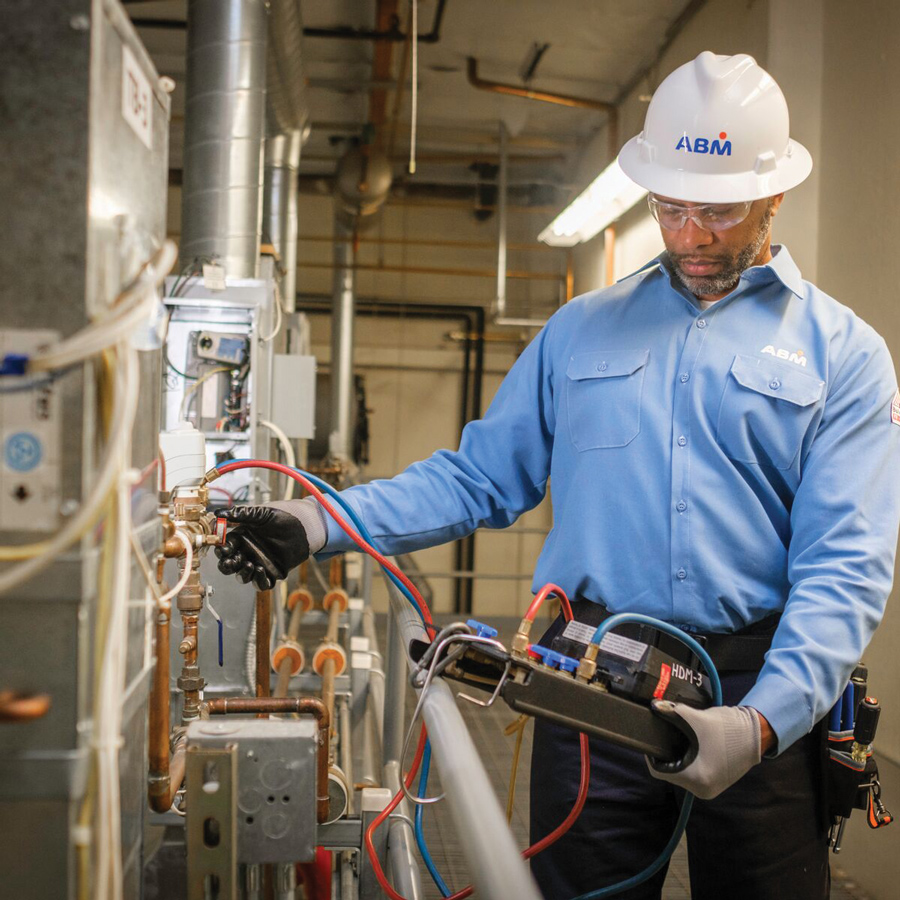
As regulatory changes open the grid to more distributed assets, advances in generation, storage, and controls are accelerating the transition toward a more decentralized energy system. The opportunity is significant, but so is the complexity: each new technology introduces additional equipment, interfaces, protection requirements, and controls that must operate together as an integrated system.
Microgrids and battery energy storage systems (BESS) are becoming increasingly important components of distributed energy infrastructure. Battery storage can complement distributed solar and participate in demand response and other grid services, while microgrids can combine multiple generation sources with storage and controls to operate independently from the broader grid when needed. These systems also introduce power electronics, inverters, and sophisticated control logic that require specialized commissioning and periodic testing beyond what a traditional generator or transformer may require.
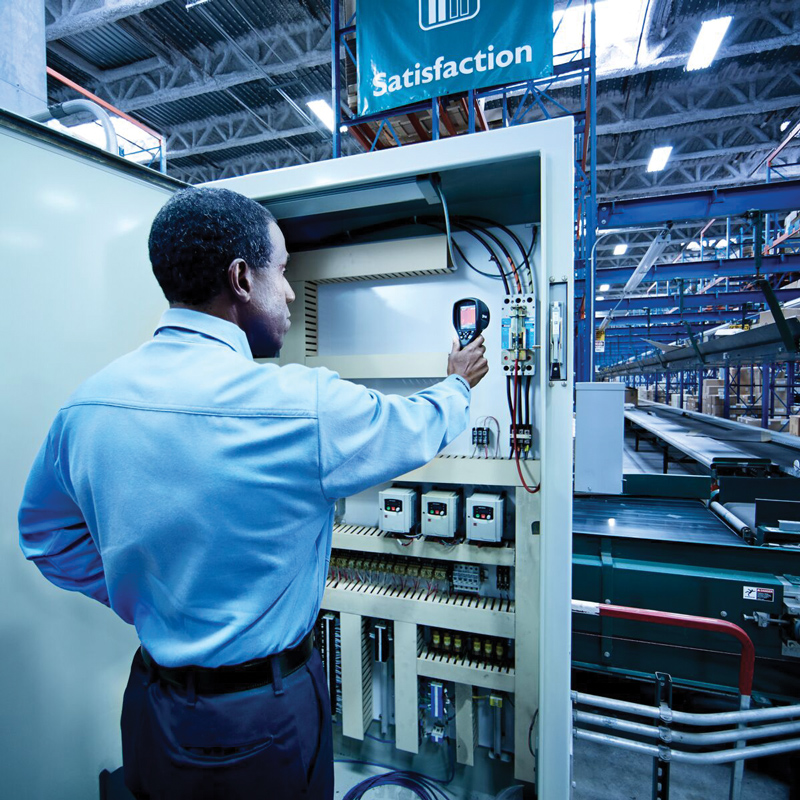
The growing sophistication of these projects is also changing what it means to bring new energy infrastructure online. A modern microgrid may combine solar, generators, fuel cells, battery storage, switchgear, and a control platform within a single system. Each component may perform as designed on its own, but resilience depends on whether the entire system operates correctly, particularly during transitions between grid-connected and islanded operation. That makes integrated testing and commissioning an essential part of system design and deployment, rather than a final step before energization.
Control and monitoring technologies are the connective tissue that makes this increasingly complex operating model work. Distributed energy management systems, advanced metering, and remote monitoring platforms can coordinate large numbers of distributed assets in real time, helping operators understand how and when those resources should respond. But greater connectivity also raises the bar for communication protocols, cybersecurity, and integration testing—particularly when a digital signal, rather than simply a breaker, may be the difference between normal operation and a fault.
The generation mix itself is also expanding. Fuel cells, for example, can provide firm, continuous power alongside intermittent renewable resources, making them particularly relevant for critical facilities and other high-availability applications.
Linear generators are another emerging option, offering modular, dispatchable generation that can operate either in parallel with the grid or independently. Their growing deployment illustrates the expanding range of technologies available to serve large or constrained loads, particularly where traditional grid expansion may take years.
Small modular reactors (SMRs) are advancing and could eventually add another source of firm generation for certain large-load applications. While widespread commercial deployment remains some distance away, the technology is advancing—and its eventual adoption will depend not only on technical viability, but also on regulatory approvals and the development of appropriate interconnection, protection, and commissioning requirements.
Together, these technologies point toward a grid with more generation sources, stored energy, sophisticated controls, and more interconnection points than ever before. The challenge is no longer simply generating enough electricity. It is ensuring that an increasingly diverse collection of assets can operate safely, reliably, and in coordination with one another.
THE RISE OF ELECTRIFICATION
The scale of this transformation becomes even more significant when viewed against the growth in electricity demand now confronting the industry. According to the North American Electric Reliability Corporation (NERC)’s most recent Long-Term Reliability Assessment, summer peak demand across North America is forecast to grow by 224 GW over the next decade—a 69% increase over the prior year’s projection—with winter peak demand growing even faster.
Data centers are among the most visible drivers of that growth, with some projections suggesting they could account for as much as 12% of total U.S. electricity consumption within the next few years. But they are only part of the story. Industrial expansion and transportation electrification are also adding significant new loads. Together, these trends are forcing utilities, grid planners, and large power users to confront a question that was far less urgent during decades of relatively modest load growth: Where will the next increment of reliable power come from?
For some large power users, the answer increasingly includes on-site generation. Where fuel supply, permitting, economics, and site conditions allow, distributed generation can supplement utility power, provide additional resiliency, or help support new loads while traditional generation and transmission infrastructure catches up. Existing generation sites may also offer opportunities for repowering or redevelopment as demand grows.
That demand growth brings the challenge of balancing cost, availability, and reliability into much sharper focus. Large power users can no longer assume that sufficient grid capacity will simply be available when and where they need it—or that the most reliable source will necessarily be the most economical. Increasingly, decisions about where power comes from, when it is consumed, and whether it should be generated or stored on site must account for all three considerations simultaneously.
This is changing the role of the customer as well. Large facilities are no longer simply deciding how much electricity to purchase from a utility. Increasingly, they are evaluating when to buy power, when to store it, when to generate it themselves, and—where market structures allow—when distributed assets can provide value back to the grid.
THE NEW ECONOMICS OF POWER
Those choices are fundamentally changing the economics of power. Today, the cost of electricity increasingly depends not only on how much a customer uses, but also when and where it is consumed, the demands it places on local transmission and distribution infrastructure, and the availability of power within a particular market.
But BTM breaks from that model. Instead of paying into that centralized rate structure and waiting years for new transmission or substation capacity, a customer invests directly in on-site generation, storage, or a linear generator, trading a long-term regulated-rate relationship for upfront capital costs and self-generated power.
The economics can become more dynamic when distributed assets are aggregated through virtual power plants (VPPs). Depending on market rules and utility programs, these resources may create additional value through peak shaving, demand response, or participation in grid services. In that model, a distributed asset is no longer simply equipment serving the facility behind the meter—it can also become a resource for the broader power system.
The trend is particularly visible in the data center market. According to the Cleanview project tracker, 59 planned data centers representing approximately 90 GW of capacity include BTM power generation—more than 25% of planned U.S. data center capacity. While most of that capacity has yet to be built, the scale of planned investment suggests that BTM generation is increasingly being considered part of the long-term power strategy for large, energy-intensive facilities, rather than simply as a temporary response to interconnection delays.
BTM SHIFTS THE COMPLEXITY
BTM generation is not necessarily a one-size-fits-all alternative to a utility connection, as it comes with its own hurdles.
On the regulatory side, emissions permitting is often the primary bottleneck. Some equipment can trigger air permitting timelines that rival the interconnection queues they’re meant to avoid. Fuel storage and delivery permits add further complexity for sites running on diesel, LNG, or hydrogen.
On the engineering side, protection and synchronization are the central technical challenges. A BTM plant that will eventually parallel the grid must be designed and tested to meet utility interconnection standards (commonly governed by IEEE Std. 1547-2018, Interconnection and Interoperability of Distributed Energy Resources with Associated Electric Power Systems Interfaces) well before that connection is made. This means protective relaying, synchronization checks, and anti-islanding controls all need to be commissioned and verified to the same rigor as a utility-scale asset, even if full grid dependence is not the intent.
Getting these elements wrong can result in equipment damage, safety incidents, or commissioning delays that erase the time BTM generation was intended to save. Commissioning is not necessarily a one-time exercise. Protection coordination studies may need to be revisited as load grows, since a system designed for an initial project phase may require reconfiguration as additional generation or grid capacity comes online.
Simply put, BTM can shift complexity rather than eliminate it—trading interconnection queue risk for a set of testing and commissioning demands that deserve the same specialized attention as any utility-scale plant.
TESTING AND COMMISSIONING
A grid built around one-way power flow from a relatively small number of large generating stations demanded one kind of testing and maintenance strategy. A grid built around bidirectional power flow, distributed generation, storage, sophisticated controls, and unprecedented new loads demands another. As more technologies and points of interconnection are layered onto the power system, testing and commissioning must evolve with them.
This is why NETA accreditation matters even more in an increasingly complex power environment. Asset owners, utilities, regulators, and engineering teams still need confidence that electrical equipment has been tested by qualified professionals and is safe to energize, but answering that question is becoming more complicated as the equipment itself evolves.
Inverter-based resources, battery management systems, protection schemes, and increasingly sophisticated control platforms introduce operating characteristics and potential failure points that did not exist in the traditional one-way grid. For a facility navigating an interconnection, a utility accepting a new class of generation, or an engineering, procurement, and construction (EPC) firm commissioning a microgrid, consistent testing standards and qualified technicians help ensure that new technology does not become untested technology.
The next-generation grid will be more distributed, more dynamic, and more dependent on technologies that communicate and respond to one another in real time. That creates enormous opportunity, but it also introduces more interfaces, more complexity, and more points where something can fail. The technologies powering the grid may change dramatically; the obligation to prove that they will operate safely and reliably cannot. Policy and market forces explain why this transformation is happening. Testing and commissioning will ultimately help determine whether it works.
REFERENCES
- Federal Energy Regulatory Commission (FERC). “FERC Order No. 2222: Fact Sheet.” September 28, 2020. www.ferc.gov/media/ferc-order-no-2222-fact-sheet.
- Illinois Power Agency. “Illinois Shines.” Accessed October 8, 2026. ipa.illinois.gov/renewable-resources/illinois-shines-info.html.
- New Jersey Board of Public Utilities. “NJBPU Makes Community Solar Pilot Program Permanent.” Press release, August 16, 2023. www.nj.gov/bpu/newsroom/2023/approved/20230816.html.
- Connecticut Public Utilities Regulatory Authority. “Connecticut Launches Statewide Battery Storage Program with Green Bank and Utilities to Jointly Administer Incentives to Improve Resilience and Benefit Ratepayers.” Press release, January 18, 2022. portal.ct.gov/pura/press-releases/2022/connecticut-launches-statewide-battery-storage-program?archived=true.
- Bentley, T. “TVA Clears Path for Local Power Company Generation.” American Public Power Association, June 24, 2020. www.publicpower.org/periodical/article/tva-clears-path-local-power-company-generation.
- North American Electric Reliability Corporation (NERC). 2025 Long-Term Reliability Assessment. January 2026. www.nerc.com/globalassets/our-work/assessments/nerc_ltra_2025.pdf.
- Thomas, M. “Bypassing the Grid: How Data Center Developers Are Building Their Own Power Plants.” Cleanview. Accessed October 8, 2026. cleanview.co/reports/behind-the-meter-data-centers.
- IEEE. IEEE Std. 1547-2018, Interconnection and Interoperability of Distributed Energy Resources with Associated Electric Power Systems Interfaces. 2018.

Kenneth Vescovi is Vice President of Operations at ABM Electrical Power Solutions, where he oversees power solutions operations, including the commissioning and start-up of transmission, distribution, generation, and critical facilities across the U.S. He earned a BS in mathematics from Youngstown State University in Ohio.