

NETA’s strength has always depended on industry professionals willing to share their experience for the benefit of the electrical testing community. The NETA Volunteer Spotlight recognizes these individuals, highlighting the knowledge, perspectives, and commitment they bring to the association and the industry.
For this issue, NETA World turns the spotlight on the NETA Safety Committee, whose members bring decades of combined field, operational, training, and environmental health and safety experience to their work.
SAFETY COMMITTEE
The Safety Committee helps ensure that safety remains fundamental to the work performed by NETA Accredited Companies and NETA Certified Technicians. The committee develops and modernizes NETA’s minimum safety guidelines for electrical testing, evaluates safety programs, and considers the safety implications of emerging testing methods, equipment, and industry practices.
That work requires more than understanding requirements on paper. Committee members draw on experience in field testing, operations, training, safety program development, standards activities, and leadership to help ensure guidance remains practical and applicable to the conditions that electrical testing professionals encounter every day.
The Safety Committee is chaired by Scott Blizard from Asplundh Electrical Testing, whose involvement with NETA spans numerous committees and industry standards activities. Joining him in this Volunteer Spotlight are committee members Dan Hook from Group CBS, Paul Chamberlain from Asplundh Engineering Services, Shelley Baber from Eaton, and Virginia Balitski from Magna IV Engineering. Their backgrounds differ, but their responses share a common theme: Volunteering provides an opportunity to give back, learn from peers, and help make the electrical testing industry safer and stronger.Here, they share their experiences as NETA Volunteers.
NW: What motivates you to dedicate your time, expertise, and energy to NETA?
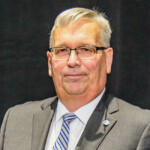
Blizard: My father, Charles K. Blizard Sr., was instrumental in my early involvement in NETA. He believed that giving back to the industry would help it grow and that participating in NETA would benefit not only our organization, but also the industry as a whole. That philosophy has stayed with me throughout my career.
Hook: Working in electrical field testing with CBS Field Services, I saw firsthand how much shared safety guidance matters, both to protect crews and to keep testing programs consistent across the industry. Joining the Safety Committee was a natural way to put that field experience to use and help shape guidance testing professionals rely on every day.
Chamberlain: My company was heavily invested in NETA and its success, so it made sense to contribute my knowledge and expertise where needed. Over time, volunteering has also given me the opportunity to help influence NETA’s direction and contribute to its continued success.
Baber: Throughout my career, I’ve seen the impact that strong industry standards and collaboration can have on safety, reliability, and business performance. NETA brings together professionals committed to doing things the right way and continuously improving the industry. Volunteering allows me to contribute while helping ensure safety remains foundational to the work we do.
Balitski: I wanted to give back to NETA and the electrical industry that has provided me with important professional growth over the years. NETA offered an opportunity to contribute based on my experience and background, with the hope of helping strengthen the industry and support its professionals.
NW: What experience or perspective do you bring to the Safety Committee?
Blizard: I’ve had the opportunity to work as an electrician, a NETA Certified Technician, an operational manager, and eventually Vice President and COO of American Electrical Testing Co., LLC. I also helped create AETCO’s first safety manual in the 1990s and worked on NETA’s early minimum safety guidelines. That progression has given me both field and leadership perspectives.

Hook: Because CBS Field Services is a day-to-day field testing operation, I bring a practical, on-site perspective. When considering new testing methods and equipment, such as VLF cable testing, I think about how they actually work under field conditions. That helps keep guidance realistic and usable as well as technically sound.
Chamberlain: My background includes environmental remediation, heavy construction, trucking, and safety management. I also helped design a complete safety program from the ground up for an international corporation. That broader experience helps me consider concerns outside the typical scope of a testing company and contributed directly to my work on NETA safety program guidelines.
Baber: For more than 25 years, my career has centered on environmental, health, and safety leadership within electrical utility and service organizations, from frontline responsibilities to corporate EHS positions. That experience helps me understand both safety and operational perspectives and reinforces the importance of keeping employees at the center of decision-making.

Balitski: My transition from a field role to work focused on training and safety has been an asset. Field experience, participation in standards activities, and leading training initiatives have helped me understand different areas of the industry and how to bring people together toward a common goal.
NW: What would you tell someone considering becoming a NETA volunteer?
Blizard: It’s the people you meet along the way and the opportunity to work and collaborate toward a common goal. Volunteering allows you to learn, have a voice in the organizations you participate in, and contribute to their improvement.
Hook: It’s an opportunity to affect change where it may be needed and bring practical field experience into the conversation. The lessons learned while doing the work can provide an important perspective when developing guidance for the industry.

Chamberlain: It’s not just what you know, but who you know. Volunteering with an organization connected to your industry introduces you to people you might not otherwise encounter. Those relationships can become valuable resources when your organization faces a difficult problem or unfamiliar challenge.
Baber: The opportunity to learn from and collaborate with some of the best people in the industry is unmatched. Volunteering isn’t only about contributing expertise; it also brings new perspectives, expands professional networks, and provides an opportunity to help shape the future of the profession.
Balitski: I have truly enjoyed volunteering and contributing in any way I can. Together, volunteers can make a real impact and help shape a future for the industry that we can all be proud of.
NW: Why is volunteer involvement important to NETA’s future?
Blizard: Organizations like NETA must rely on their members and volunteers to remain industry leaders. Being able to have a voice in the present while helping the organization prepare for the future is a privilege. I believe in leaving an organization better than when you joined it and helping provide a foundation for the next generation.
Hook: Volunteering brings field experience into the work NETA does. It also creates relationships among testing professionals, manufacturers, and engineers who may not otherwise work together. Those connections allow people to compare experiences, solve safety challenges, and collaborate on broader industry initiatives.
Chamberlain: Volunteers choose to contribute because they care about the organization and its success. That personal investment brings passion to the work and helps NETA continue moving forward.

Baber: NETA’s strength comes from the expertise and commitment of its volunteers. Industry professionals share their knowledge, experience, and time to advance standards, education, and best practices. That engagement helps NETA remain relevant, practical, and responsive to the industry.
Balitski: Volunteer involvement brings together diverse perspectives and expertise that help move NETA’s programs and initiatives forward. Ultimately, that benefits everyone working in the electrical industry.
Who will be recognized in the next Volunteer Spotlight? Watch for it in the Spring 2027 issue of NETA World.