
NETA’s Corporate Alliance Partners are industry-leading companies that have joined forces with NETA to work together toward a common aim: improving quality, safety, and electrical system reliability.
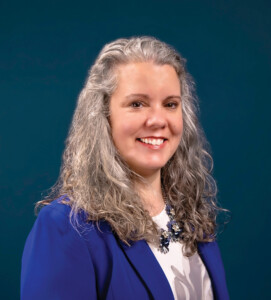
This ongoing NETA World series focuses on the thought leadership behind these successful companies. For this issue’s CAP Spotlight, we talked to Kristy Ford, Marketing Director for AEMC® Instruments (Chauvin Arnoux® Inc., d.b.a. AEMC® Instruments), where she leads marketing, digital strategy, and technical communications for North and South America, Australia, and New Zealand.
“At AEMC, we are passionate about AEMC’s people, leadership, and products,” Ford explains. “We believe that our combination of robust instruments, real-world training, and accessible, knowledgeable support is what truly sets the company apart. Our focus is on pairing solid engineering with clear communication and old-school customer service so crews can work safer, smarter, and with more confidence.”
NW: What is something readers don’t know about AEMC Instruments?
Ford: One thing that often surprises people is how much AEMC does beyond just building great instruments. Yes, AEMC Instruments is known for precision electrical test and measurement, but we’re also very focused on what happens after the tool leaves the box.
We provide accredited training to help people deepen their field skills, and we engineer OEM versions of our instruments and custom solutions when the standard catalog model isn’t the right fit. At the end of the day, our job is to give technicians the right toolsandtheconfidenceto use them.
We’re also in the process of expanding our portfolio here in the U.S. to include auxiliary relays, analog transducers, and panel meters—just to name a few. These products have been working quietly in the background for decades in European nuclear plants and rail applications through our sister company, Chauvin Arnoux Energy, and now we’re bringing that same engineering heritage to the U.S. market under the AEMC name, with the same focus on reliability and long-term support.
NW: What recent company achievement or milestone are you particularly proud of?
Ford: I’m proud that in 2025, a real person still answers the phone at AEMC.
Whether you call tech support or customer service, you get a human being who actually knows the instruments and can help you sort out what’s going on. That may sound small, but when you’re standing in a substation or a plant and the clock is ticking, it’s huge.
We hear it all the time: “You actually picked up,” and “You knew exactly what I was talking about.” It’s a bit old-school, but it’s very intentional. Fast, knowledgeable support is a big part of why people stay with us.
NW: What are the biggest challenges facing your customers right now?
Ford: There’s a lot of pressure in the field today—aging infrastructure, smaller crews, and more compliance and documentation demands. Technicians are being asked to keep systems running, stay safe, prove it on paper, and somehow do it all faster. They really don’t need another complex interface or confusing setup screen.
Our focus at AEMC is to make things simpler and safer with instruments that set up quickly, give you readings you can trust, and help you get through testing and reporting without a lot of extra steps. The goal is pretty simple: Help them save time and money and let them get back to keeping the lights on and the plants running.
NW: Going forward, what challenges do you see for the industry?
Ford: I see three big challenges.
- Aging infrastructure plus rising complexity. Crews are maintaining legacy systems while integrating renewables, EV loads, and modern protection schemes. Nothing is “simple” anymore.
- Lean teams, heavier compliance. Fewer people are doing more work, with more reporting and proof required. No one has time for rework because a test process or instrument wasn’t clear.
- A lot of data, not always usable. We’re collecting more measurements and waveforms than ever, but decisions still have to be made quickly with confidence.
That’s where we see our role: Reduce the noise, reduce the steps, and give people tools that get set up quickly, can capture the right data the first time, and produce reports you can hand to a client or an Authority Having Jurisdiction (AHJ) without a rewrite. Precision, speed, and safety must move together.
NW: Is this a good time to be in the electrical power testing business?
Ford: It’s a phenomenal time. Electrification is accelerating across the board. AI-driven data centers are popping up everywhere, along with ongoing grid modernization and a renewed focus on nuclear for a clean, reliable, low-carbon source. All of that depends on power quality, protection, grounding, and maintenance you can trust. If you can test it, verify it, document it, and do it safely—you’re not just in demand, you’re essential!
NW: What advice do you have for young people entering the field?
Ford: I would boil it down to a few things:
- Nail the basics. Grounding, bonding, insulation testing, power quality, protection coordination—those fundamentals will carry you throughout your whole career.
- Be serious about safety. Live NFPA 70E, understand arc flash risk, and don’t cut corners. The best tech is the one who goes home safe every single day.
- Get hands-on as soon as you can. Certifications (NETA, etc.), time with instruments, and real-world job sites will teach you things no book can.
- Learn to explain things clearly. If you can write a clean report and talk calmly to a customer or AHJ, you’ll stand out quickly.
- Stay curious. Digital workflows, connected instruments, and data analytics are only going to grow. Lean into them.
- Find a mentor—and eventually be one. This industry runs on knowledge being passed down.
“If you show up with humility, a good work ethic, and respect for the craft and the risks, there’s a lot of opportunity ahead of you,” Ford offers.