

Before NETA was established in 1972, electrical testing in the U.S. was fragmented, inconsistent, and largely unregulated, with significant variation in practices depending on region, company, or manufacturer. Various types of companies accomplished the testing.
WHO PERFORMED ELECTRICAL TESTING BEFORE NETA?
Before NETA, consistent test procedures or pass/fail criteria across different projects, companies, and equipment did not exist. Inadequate or skipped testing increased the risk of electrical failures, arc flash incidents, and fires, and test results were often informal or incomplete, making future troubleshooting and evaluation of the equipment difficult.
Technicians often learned on the job with no formal certification or career path. Testing was done by installers or manufacturers rather than independent, unbiased contractors or testing companies.
Electrical contractors often performed limited testing right after equipment was installed. Their focus was primarily on verifying that systems turned on and did not fail immediately, not long-term reliability or performance.
Some manufacturers tested their products during and after installation (factory and field tests). However, that created a conflict of interest. Testing done by the same people who supplied the equipment lacked true independence.
Large industrial facilities, utilities, and government institutions often had their own maintenance departments. These technicians had varying levels of training and may not have followed national standards. On occasion, engineering firms might supervise or write specifications for testing, but did not always have field expertise or staff to do hands-on work.

PHOTO COURTESY AVO TRAINING INSTITUTE
NETA STANDARDIZED FIELD TESTING
NETA introduced a third-party, competency-based approach by standardizing field testing procedures across the industry, developing certification for technicians, creating auditable documentation and traceability, and encouraging preventive maintenance practices, not just post-installation checks.
NETA was founded 50-plus years ago as a non-profit association with the vision to standardize electrical testing practices in the United States. Its founding members included independent electrical testing companies who recognized the need for uniform procedures and standards for acceptance and maintenance testing of electrical power systems and equipment. The goal was to create a third-party standard independent of manufacturers, installers, or owners — a standard focused solely on safety, reliability, and performance.
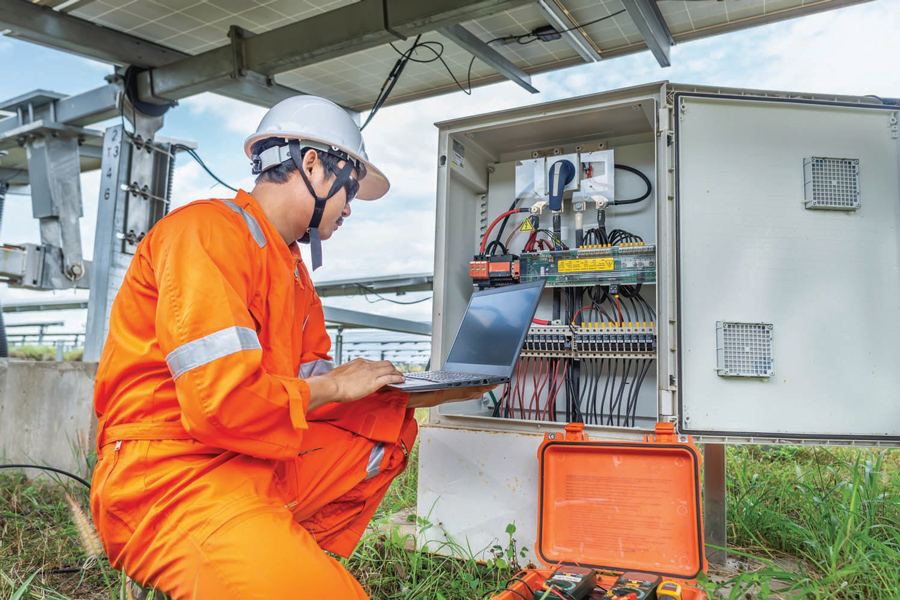
NETA APPRENTICESHIP PROGRAM
After more than 50 years, NETA has taken the next step as an industry leader, introducing its U.S. Department of Labor-approved Electrical Testing Technician Apprenticeship Program. By creating a standardized apprenticeship program with training and testing specifications, NETA can now offer NETA members and the industry a curriculum that will help build an experienced and reliable technical workforce.
In today’s energy-driven world, reliable and safe electrical systems are more crucial than ever. From industrial facilities and data centers to hospitals and utility grids, the integrity of electrical infrastructure directly affects productivity, safety, and economic performance. At the heart of ensuring this integrity are electrical testing professionals — specialists trained to inspect, evaluate, and maintain complex electrical systems. As the demand for highly skilled technicians grows and the workforce ages, apprenticeship programs in electrical testing have become essential for preparing the next generation of professionals.
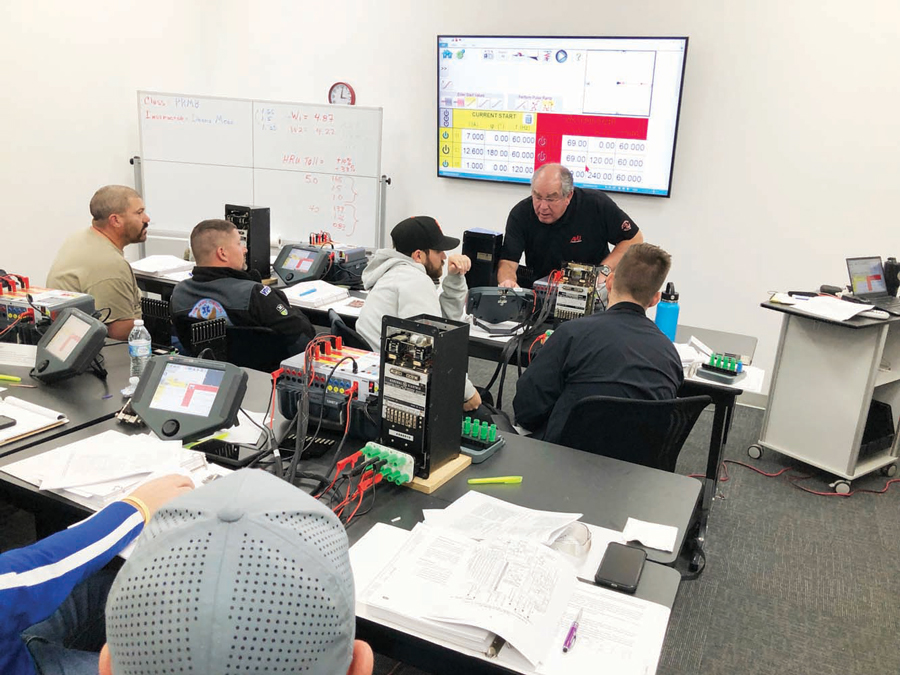
The electrical testing industry is highly technical and governed by national standards and specifications including those from the InterNational Electrical Testing Association (NETA), the National Fire Protection Association (NFPA), and the Institute of Electrical and Electronics Engineers (IEEE). These standards demand dedication, up-to-date knowledge, and hands-on competence.
Yet, many employers face a shortage of skilled workers who can perform this work safely and effectively. Traditional classroom education alone is insufficient to prepare technicians for the wide range of real-world scenarios they will encounter in the field. Apprenticeship programs solve this problem, offering a structured blend of classroom instruction and practical, on-the-job experience under the guidance of experienced technicians.

BUILDING A ROBUST WORKFORCE
Electrical testing involves high-voltage systems, critical safety procedures, and complex diagnostic tools. Apprenticeships provide the only practical way for aspiring technicians to safely build proficiency with this equipment and understand how to interpret test results in live environments. From insulation resistance testing to relay calibration and transformer diagnostics, these skills cannot be fully mastered without time in the field. Apprenticeships also emphasize troubleshooting, problem-solving, and adherence to safety protocols — all vital components of electrical testing work.
Organizations like NETA have helped professionalize the electrical testing industry by establishing clear qualifications and certification pathways, as specified in ANSI/NETA ETT–2022, Standard for Electrical Testing Technicians. Many apprenticeship programs align with these standards, creating a pipeline of technicians who are ready to pursue certification as a NETA Level 1 Trainee Technician and beyond. Structured apprenticeships not only prepare individuals for these certifications but also support long-term professional growth. As apprentices progress, they can become senior field engineers, safety managers, or technical consultants — careers that require the foundational knowledge and discipline only an apprenticeship can provide.
For companies in the electrical testing industry, apprenticeships represent a sustainable investment in their workforce. Hiring pre-trained workers from outside the industry is often difficult, expensive, and risky due to the specialized nature of the work. By developing in-house apprenticeship programs, companies can train new hires in their specific procedures, safety culture, and equipment while retaining institutional knowledge. Apprentices are more likely to stay with the company that trained them, reducing turnover and promoting a strong internal talent pipeline.
Electrical testing apprenticeships offer an alternative career path to individuals who may not pursue a traditional four-year degree. With competitive wages, clear advancement tracks, and nationwide demand, these programs offer excellent opportunities for young professionals, veterans, and those seeking career changes. Apprentices earn while they learn, gaining valuable experience without incurring student debt. This opens doors to a rewarding technical career that blends fieldwork, critical thinking, and hands-on skill.
CONCLUSION
Apprenticeships in electrical testing are vital for developing a qualified workforce capable of maintaining and verifying the integrity of critical electrical infrastructure. These programs ensure that technicians are not only trained to industry standards but are also prepared to handle the real-world complexities of their trade.
In a high-risk, high-demand industry like electrical testing, the apprenticeship model is more than important — it is essential. Investing in these programs benefits individuals, employers, and the broader economy by securing the future of electrical safety, reliability, and performance.

Steve Newton, SET, is the National Training Center Training Program Manager at Integrated Power Services (formerly National Field Service). He is a subject matter expert for the National Institute for Certification in Engineering Technologies (NICET), a certified National Center for Construction Education and Research (NCCER) Instructor, a Master Trainer for the Instructor Certification Training Program, and a Level 4 NETA Certified Senior Technician in electrical power testing. In addition to his duties at IPS, Newton is a certified instructor for electrical, instrumentation, electronic, solar, and various power curricula, holds several professional memberships including IEEE and NFPA, and is actively involved in reviewing and developing training and procedural materials for the electrical industry. He received NETA’s 2023 Outstanding Achievement Award for his exceptional service on the CTD Review and Training Committees.