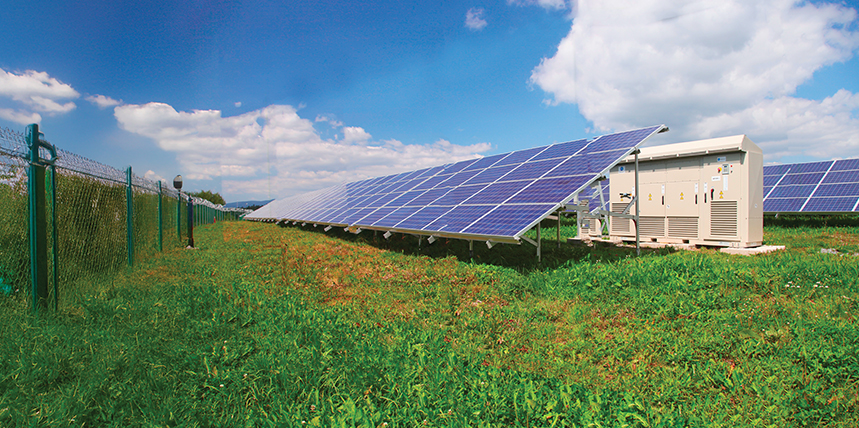
Building Reliability into the Life Cycle of a Substation

Mose Ramieh, CBS Field ServicesIn Every Issue, In the Field, Winter 2026 In Every Issue

Utility and industrial substations are made reliable through testing and validation at each stage of their life cycle. Each stage has its own opportunity to avoid nuisance issues or catastrophic failures. Acceptance testing determines whether the substation starts out as designed. Routine inspections monitor whether it stays that way. Maintenance testing determines how well we understand its condition as it …
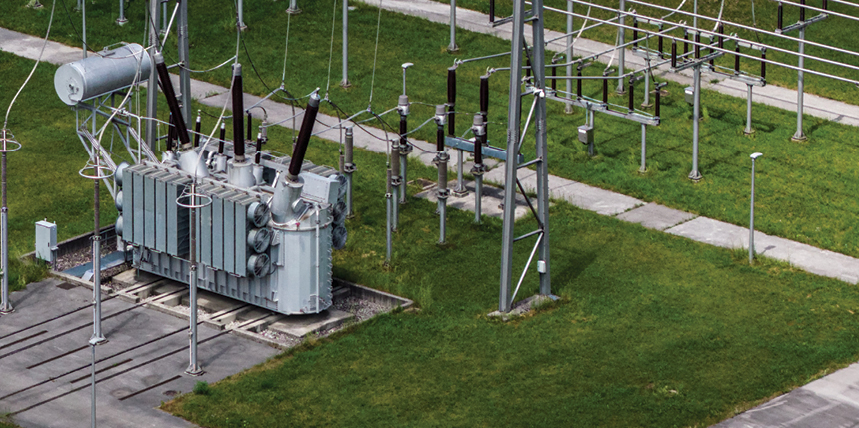
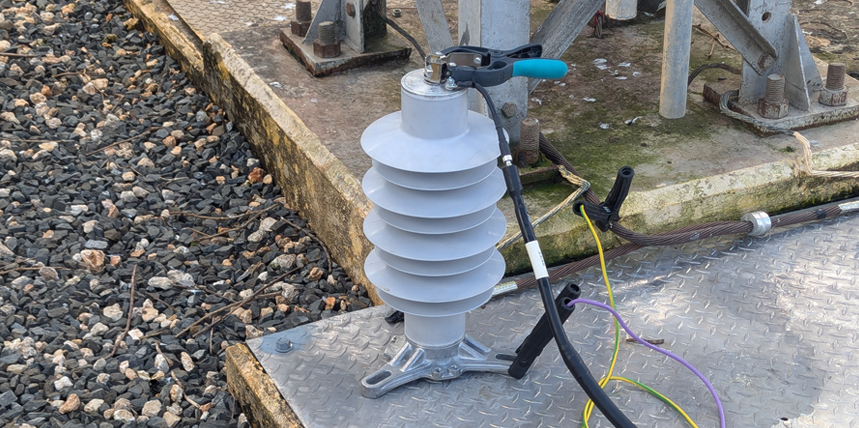
On Surge Arresters and Power Factor

Michael Labeit, ASRC EnergyIn Every Issue, Fall 2026 Columns, In the Field

If you’ve done power factor testing, you will have noticed that while said testing yields multiple valuable parameters—e.g., watts loss, capacitance, total current, etc.—power factor itself gets the most attention. Indeed, power factor is a critical indicator of electrical equipment performance. However, an important exception to this claim exists, and it exists for surge arresters.  Power factor is the ratio …

On Voltage Dividers: Applications and Hazards

Michael Labeit, RESA PowerIn Every Issue, In the Field, Summer 2026 Columns

Voltage dividers are simple devices consisting of series circuits that produce two or more lower voltages from a single source voltage via resistances. This is possible because of this mathematical fact: Given a series circuit with multiple resistances, the sum of the absolute values of all voltage drops across each resistance will equal the source voltage.  This fact is illustrated …

On Transformers with Electrostatic Shields

Michael Labeit, RESA PowerIn Every Issue, In the Field, Spring 2026 Columns

If you’ve worked on transformers in renewable energy circuits, as I have for the past six months, you’ve likely seen many—perhaps most—equipped with electrostatic shields, grounded copper or aluminum sheets wedged between the high- and low-side windings. The existence of these shields inside transformers is normally (but not always) readily identifiable via the unit data plates (Figure 1). Some affirm …

Modern Low-Voltage Breakers: Emerging Challenges

Mose Ramieh, CBS Field ServicesIn Every Issue, In the Field, Winter 2025 Columns

The days of low-voltage breakers being simple devices with basic overcurrent protection are long gone. Back then, the biggest challenge was to figure out how to defeat a ground fault or remember which jumper disabled thermal memory. Today, manufacturers are leveraging digital technology to add layers of protection and functionality. These advancements can quickly derail a routine day of testing …

The Case for On-Line Assessments

Michael Labeit, RESA PowerIn Every Issue, Fall 2025 Columns, In the Field

Asset failures versus time are often non-linear. As assets degrade over time, the degree of degradation and the rate of degradation often increase. If asset degradation were linear, the rate of degradation would be constant. This implies that an asset, such as a circuit breaker, could function properly for approximately 30 years, develop a detectable defect at year 31, and …

A Holistic Approach to Breaker Troubleshooting

Mose Ramieh, CBS Field ServicesIn Every Issue, In the Field, Summer 2025 Columns

No good electrical testing field story starts with “everything went perfectly.” Inevitably, things do not go according to plan. Breakers of all types, makes, and models are the source of great stories and hard lessons learned under pressure to get a circuit back in service. The purpose of this article is to share common issues that fall into a few …

Ensuring Proper Insulation Power Factor Test Procedures

Michael Labeit, Service ElectricIn Every Issue, In the Field, Spring 2025 Columns

Electrical insulation is designed to keep current from flowing where it shouldn’t. Insulation integrity is therefore critical and is assessed via a battery of tests. Many things can compromise the results of these tests, including temperature, humidity, erroneous test procedures, etc. Previously, I wrote about the effects of humidity on insulation integrity tests. This time I  focus on erroneous test …

Keeping Machines Dry

Michael Labeit, 249th Engineer Battalion, U.S. Army Corps of EngineersIn Every Issue, Fall 2024 Columns, In the Field

Equipment underutilization is, by implication, an underdiscussed subject. I am all too familiar with this phenomenon, e.g., relays with useful but unprogrammed protective functions, calibrated test equipment that rarely sees the light of day, fully functional battery chargers next to pallets of long-deceased 12 V valve-regulated lead–acid batteries (VRLAs), etc.  This negligence is no less true of rotating machines, where inexpensive …